
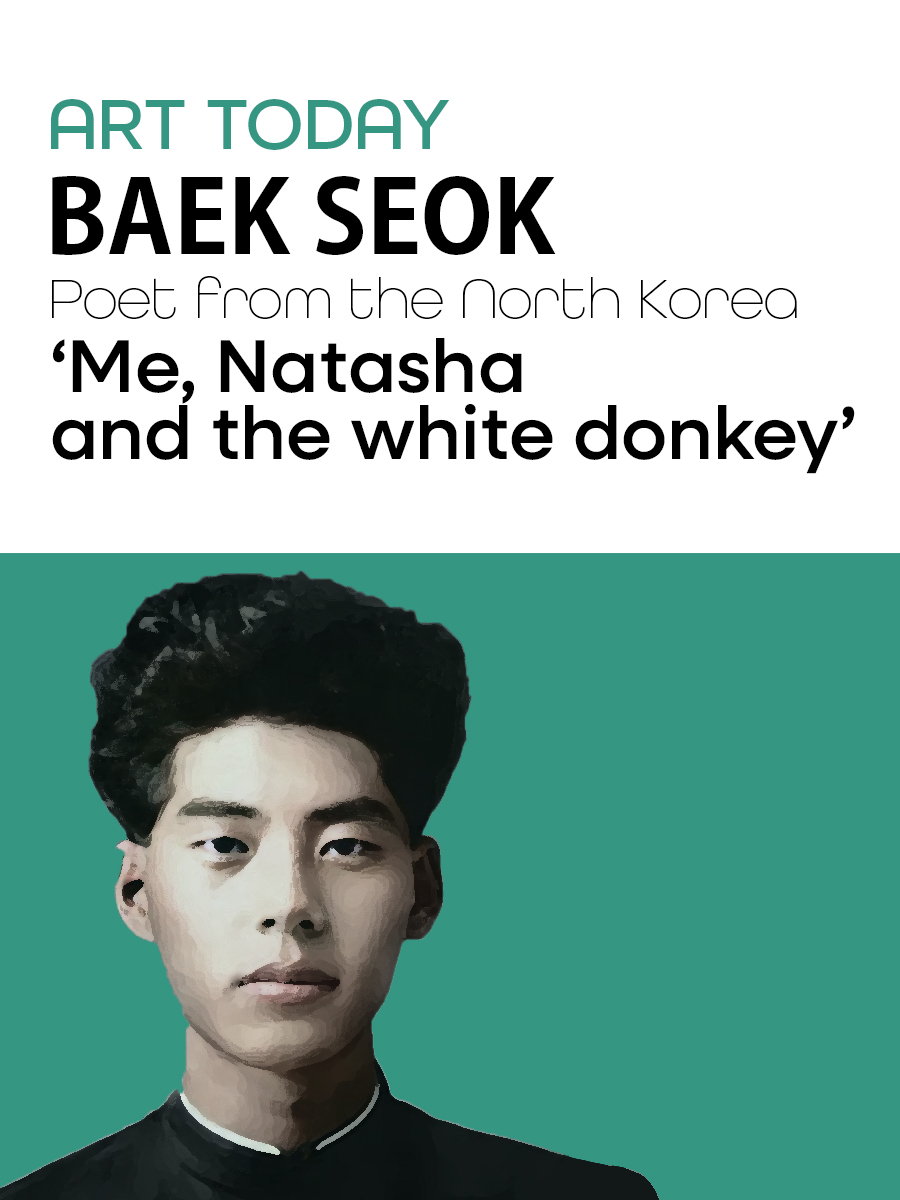
ART TODAY_Poet_01
Seok Baek
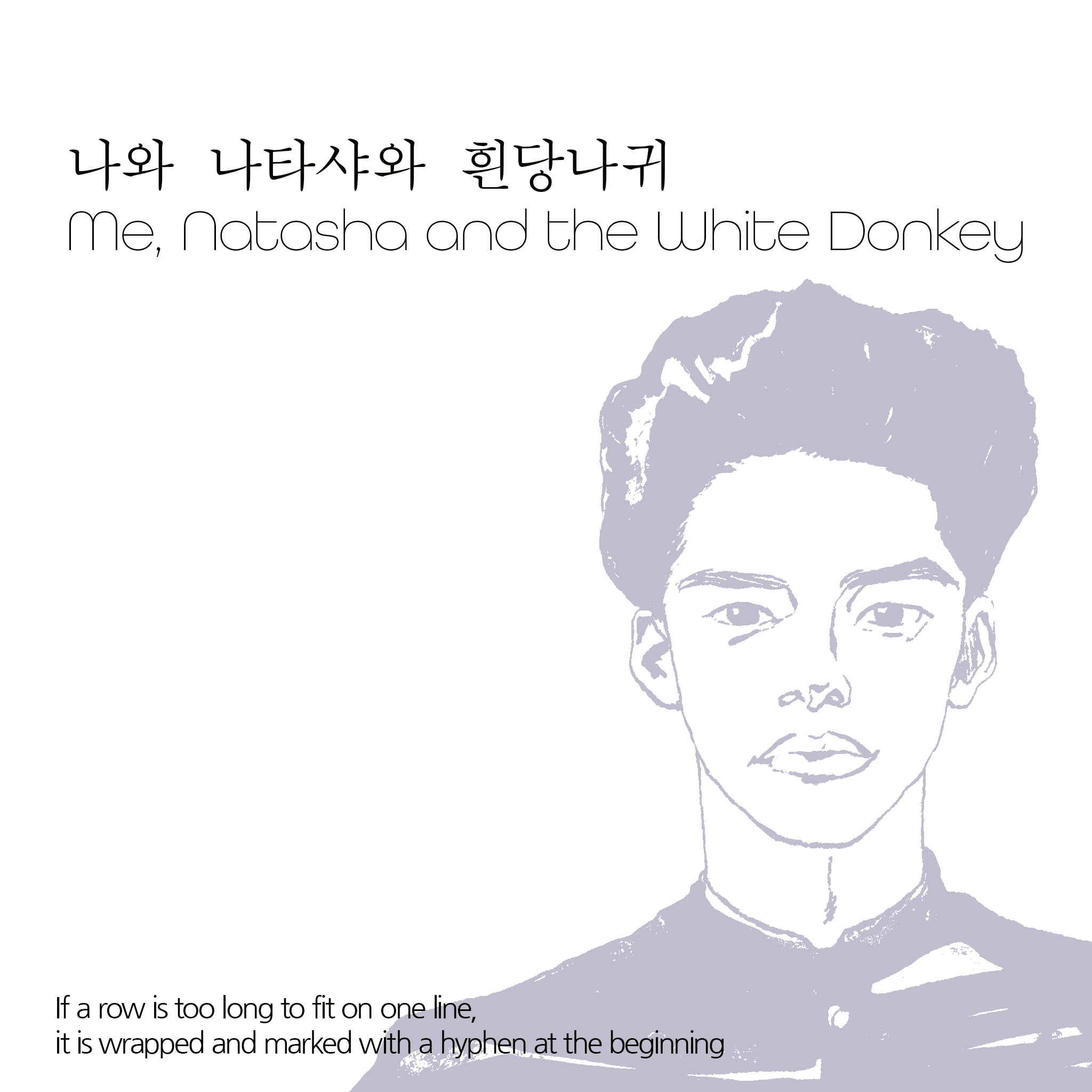

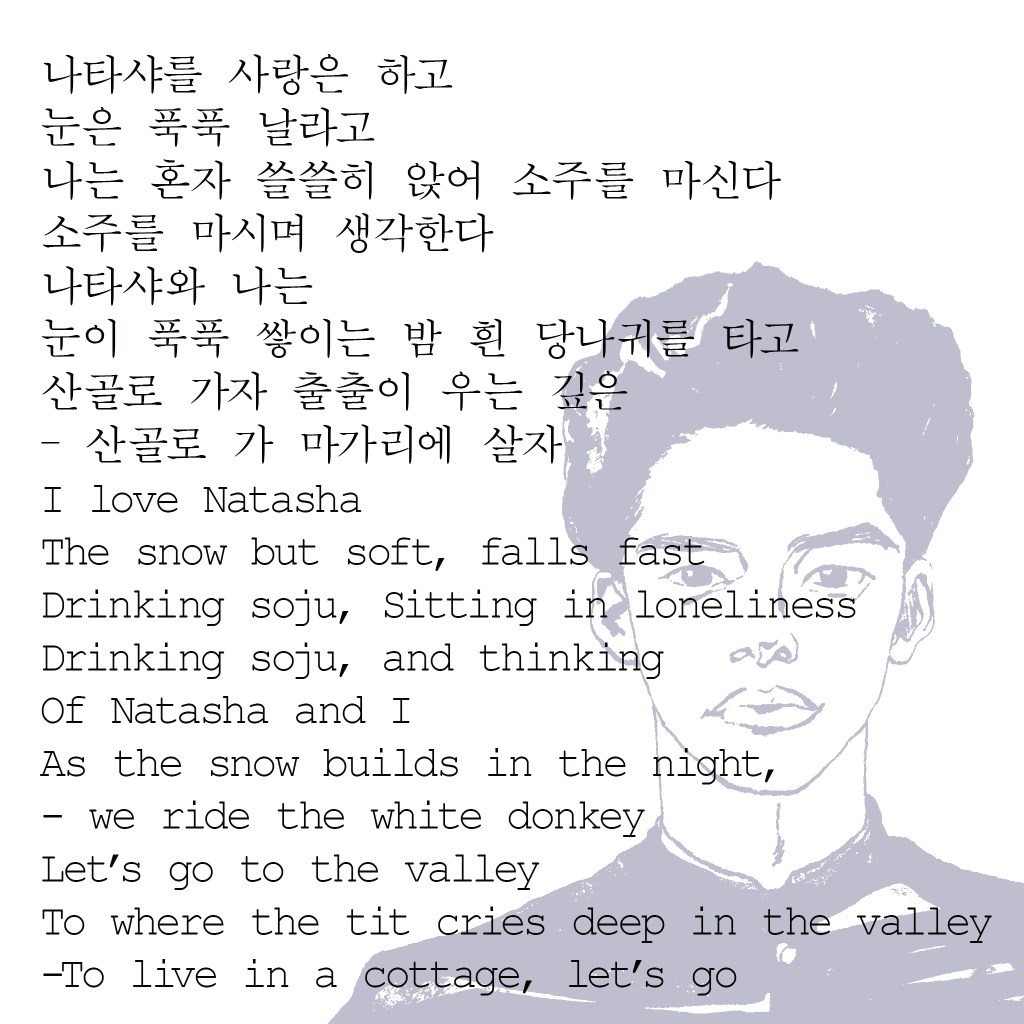
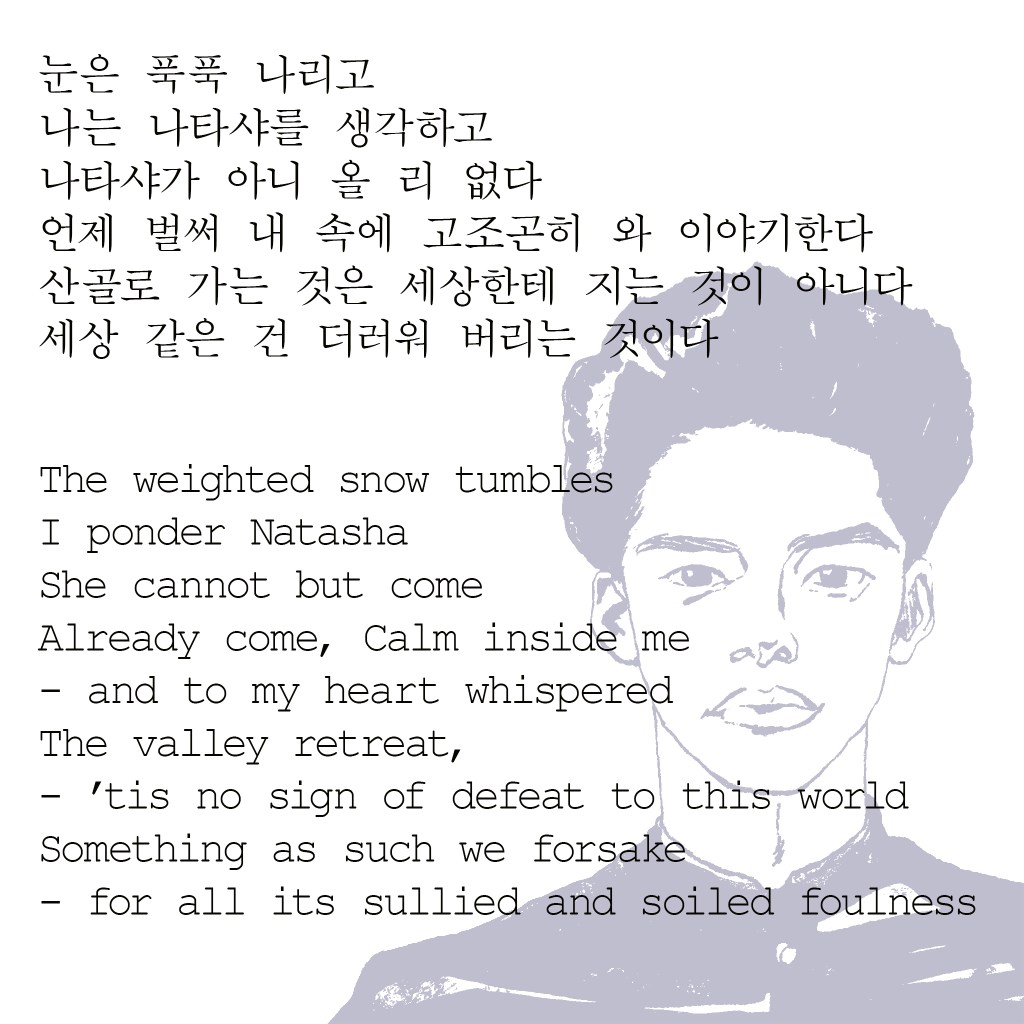
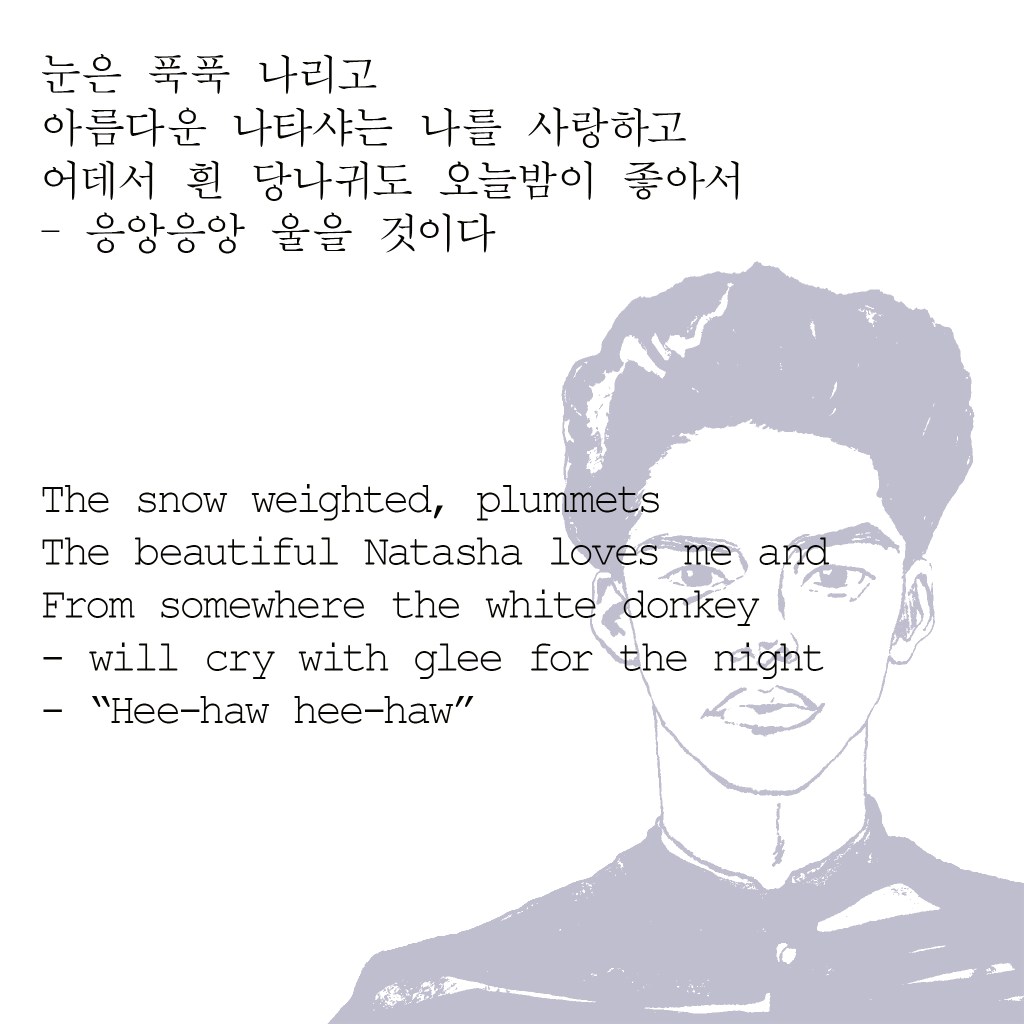
Translation of the poem “Me, Natasha, and White Donkey” quoted from the book “Poems of the North,” Translated by Peter N. Liptak. This book contains numerous poems by him, including an introduction and translation.
Seok baek, selected north Korea
It seemed that all the struggle was over after Joseon was liberated from Japanese occupation. However, another huge tragedy awaited Koreans soon. Due to the Korean peninsula’s location between China and Japan, Korea fell into the chaos of ideology.
Many elites chose communism, dreaming of a utopia, and moved to North Korea. Seok Baek was one of them. He specialized in English at the College of Education in Japan, known for his talent in languages. He was said to speak seven languages – English, Russian, French, German, Chinese, Japanese, and Korean. Surprisingly, his weakest language was Japanese, despite studying at university in Japan.
As we observe the languages he learned, it seems he was already interested in communism. He chose North Korea after the Korean War and never returned. The governments did not allow any exchange between them for long time. So South Korean children were unaware of him. In 1989, the South Korean government permitted the introduction of literature from the North.

His only poetry book influenced younger poets like Dongju Yoon, one of South Korea’s beloved poets. But he was not permitted to write literature by the government for almost his entire life in North Korea. Younghan Kim, the owner of Gilsang-sa (Buddhist temple), cherished his memory until her passing. For more information about Gilsang-sa, refer to the article “The Buddhist Temple Established on Literature, Gilsang-sa.”
EZsPEDIA © 2024 by YUNMI LEE is licensed under CC BY-NC-ND 4.0
 EZ K-PEDIA
Leave a comment