

Buddhist temple project: practice-04
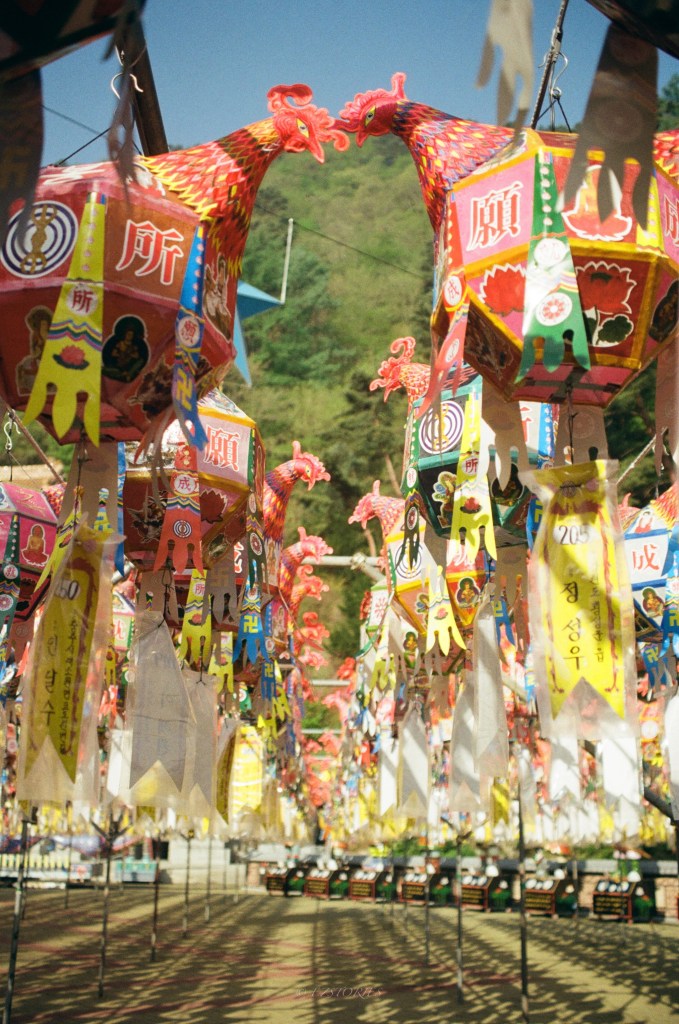

What do you expect from a Korean Buddhist temple? Typically nestled deep in the mountains, built in traditional style, and inhabited by monks who live according to tradition. While most temples are situated on flat land, Guin-Sa stands out for constructing its halls along the ridge.

CheonTae Order
While most renowned Buddhist temples are affiliated with the Jogye Order, Guin-Sa stands as the head temple of the CheonTae Order. For Koreans, this temple bears a resemblance to Chinese Buddhist temples, likely due to its founder, Sangwol Wongak Daejosa, who established it after traveling through China and Tibet. Initially consisting of thatched houses in 1945, it has since been rebuilt with modernized concrete buildings, becoming the largest Buddhist temple in South Korea.

Construction on mountain ridge
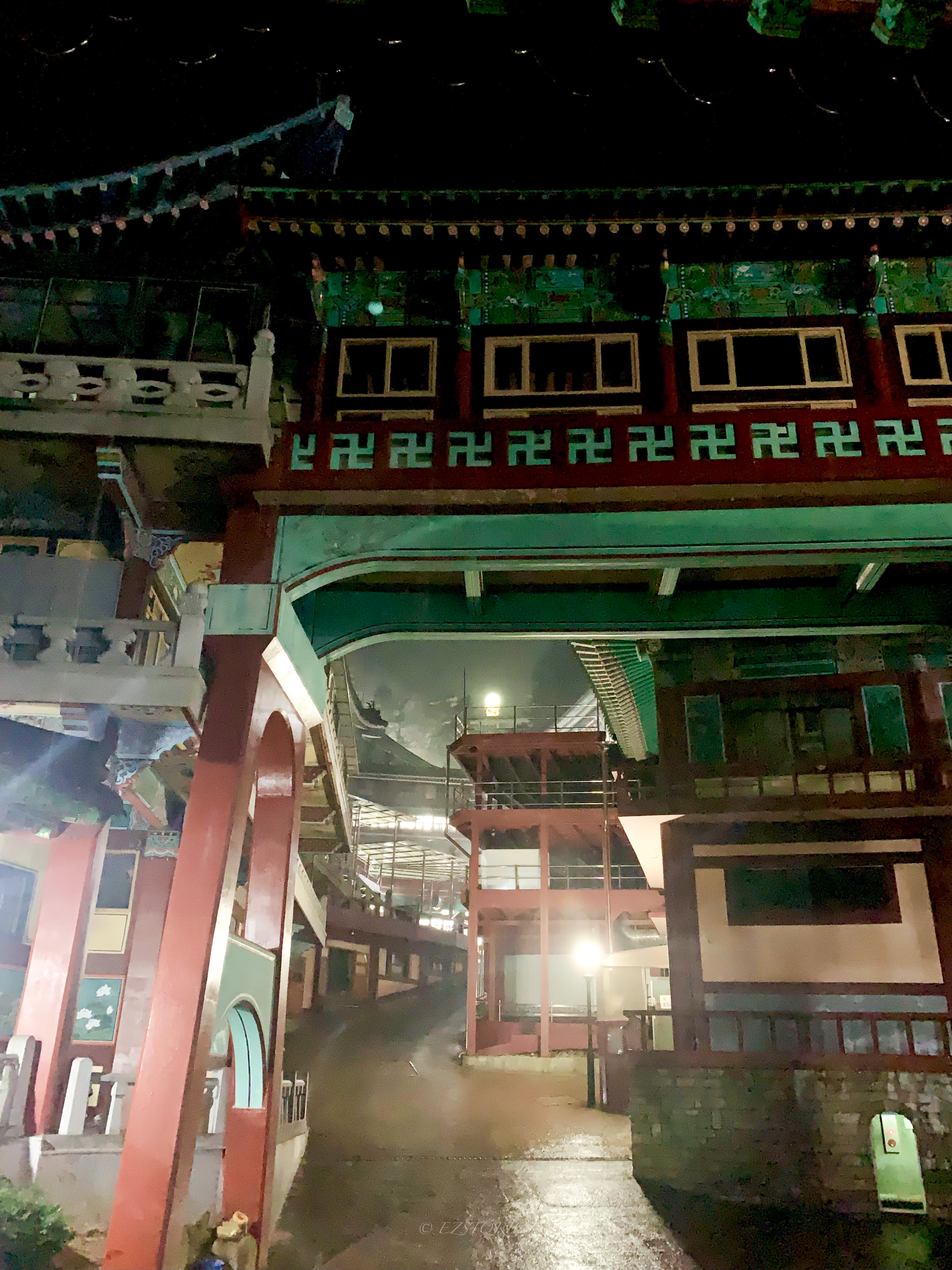
They’ve constructed their buildings on the ridge of the mountain, requiring tourists to climb steep slopes. Unlike typical Buddhist temples, there’s no valley, eliminating the need for a bridge at the entrance. However, a massive gate resembling Gwanghwamun, the main gate of Gyeongbok Royal Palace, stands as the Cheonwang-mun, the gate of the four heavenly kings. Once past the main gate, visitors encounter a village. Though embodying traditional architectural style, the structures are made of concrete and boast multiple stories, surprising visitors with their grandeur.


To the center
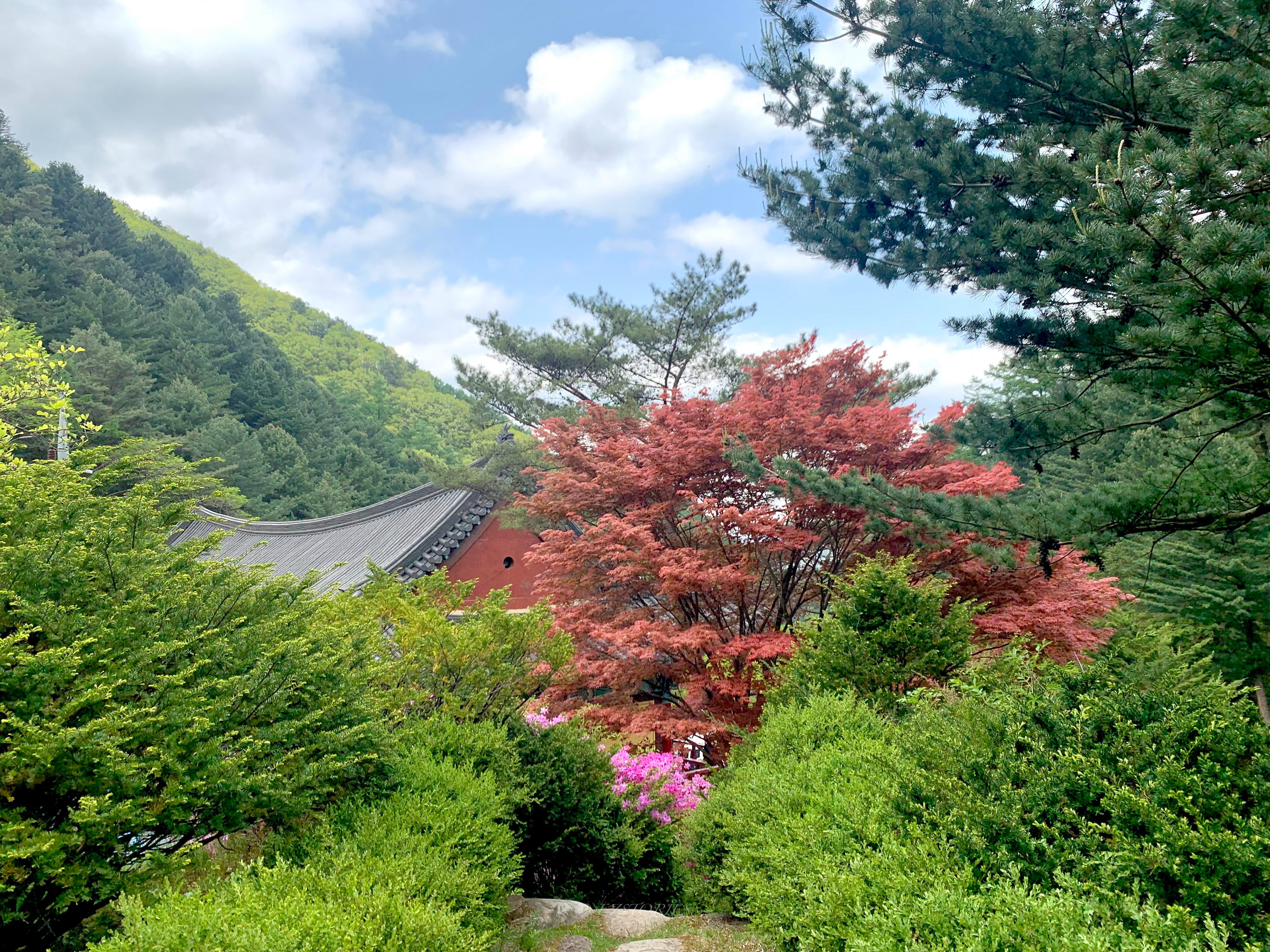
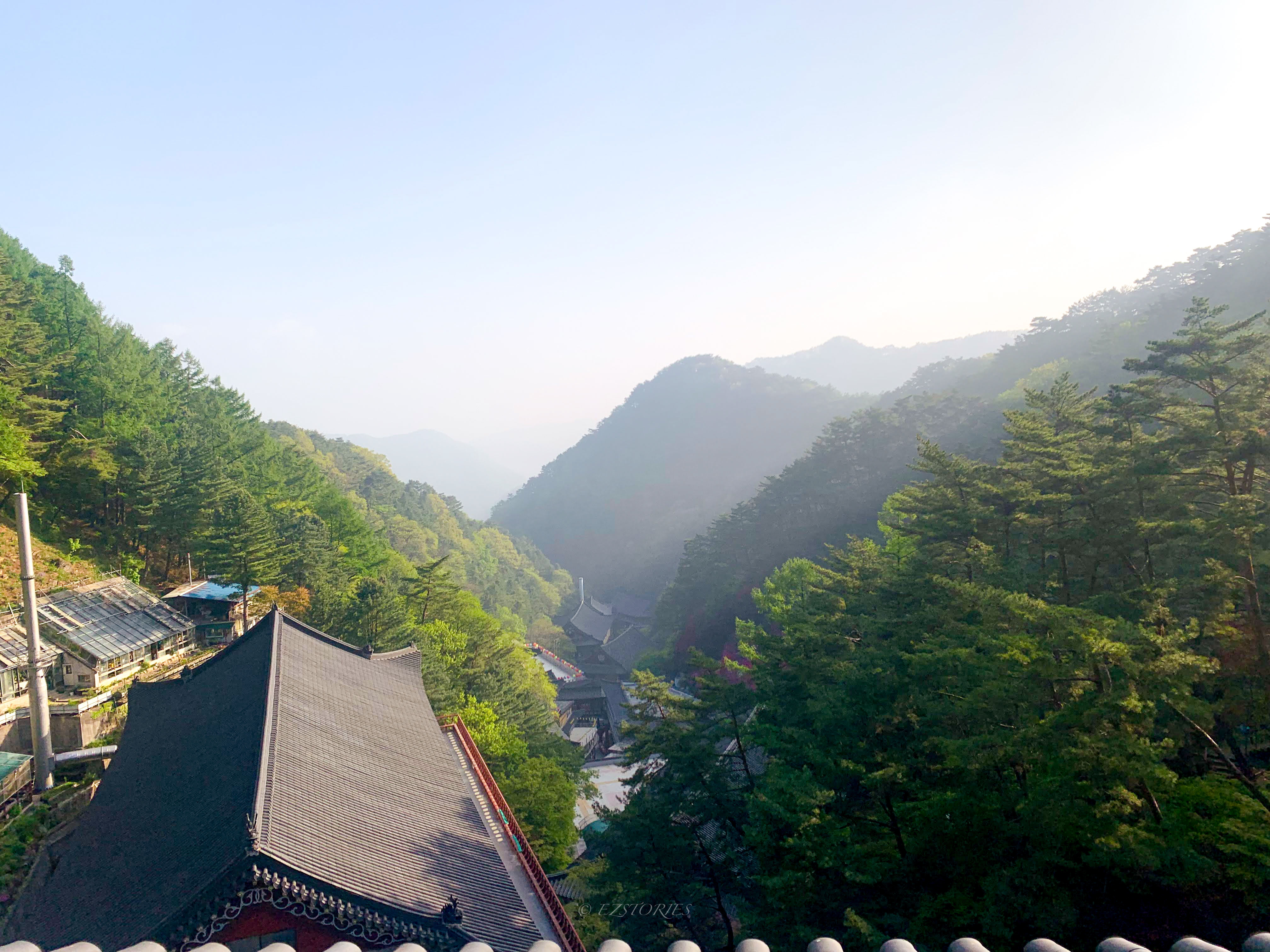
It takes about 20 minutes to reach Gongyang-Gan (cafeteria) from CheonWang-Mun, which is situated in the middle. There are some terraces from which you can overlook the buildings, offering a second point of surprise for visitors. Two relics that are hard to find in the secular world nowadays are present here: a coffee vending machine and a public payphone. I enjoy the moment of looking over the view while drinking a cup of milk from the vending machine. The public payphone is still available because cell phone signals are not picked up here.
The buildings for Bhikkhu (male monks) and Bhikkhuni (female monks) are separate. Their residential buildings are on the scarp slope ridge. I noticed corridors from GongYang-Gan to other buildings, allowing them to use steps or a gentle slope instead of walking down the steep slope. This corridor is a striking point that gave me a Steampunk ambiance. Although designed in a traditional way, the corridor has hanging electric lights. I thought, if Korea successfully combines traditional Korean architectural styles with modern science, our architecture could transition to this style.
Main Hall
Their main hall, named SeolBeopBoJeon, is unique compared to other Buddhist temples. While other temples name their main halls based on the Buddha statue they enshrine, SeolBeopBoJeon means “hall for preaching,” and its main Buddha is Sakyamuni. Alongside Sakyamuni, there are attendants such as DaeSeJiBoSal (Mahāsthāmaprāpta: the power of wisdom) and GwanSeEumBoSal (Avalokiteśvara: Goddess of Mercy). In the Jogye Order, this hall is labeled as DeaUngJeon (the hall of the hero). The floors are separated according to their purposes, with the main preaching and ceremonies held on the 5th floor, while the others are for prayer. This temple is renowned for its intense prayer sessions that last overnight.

On the top
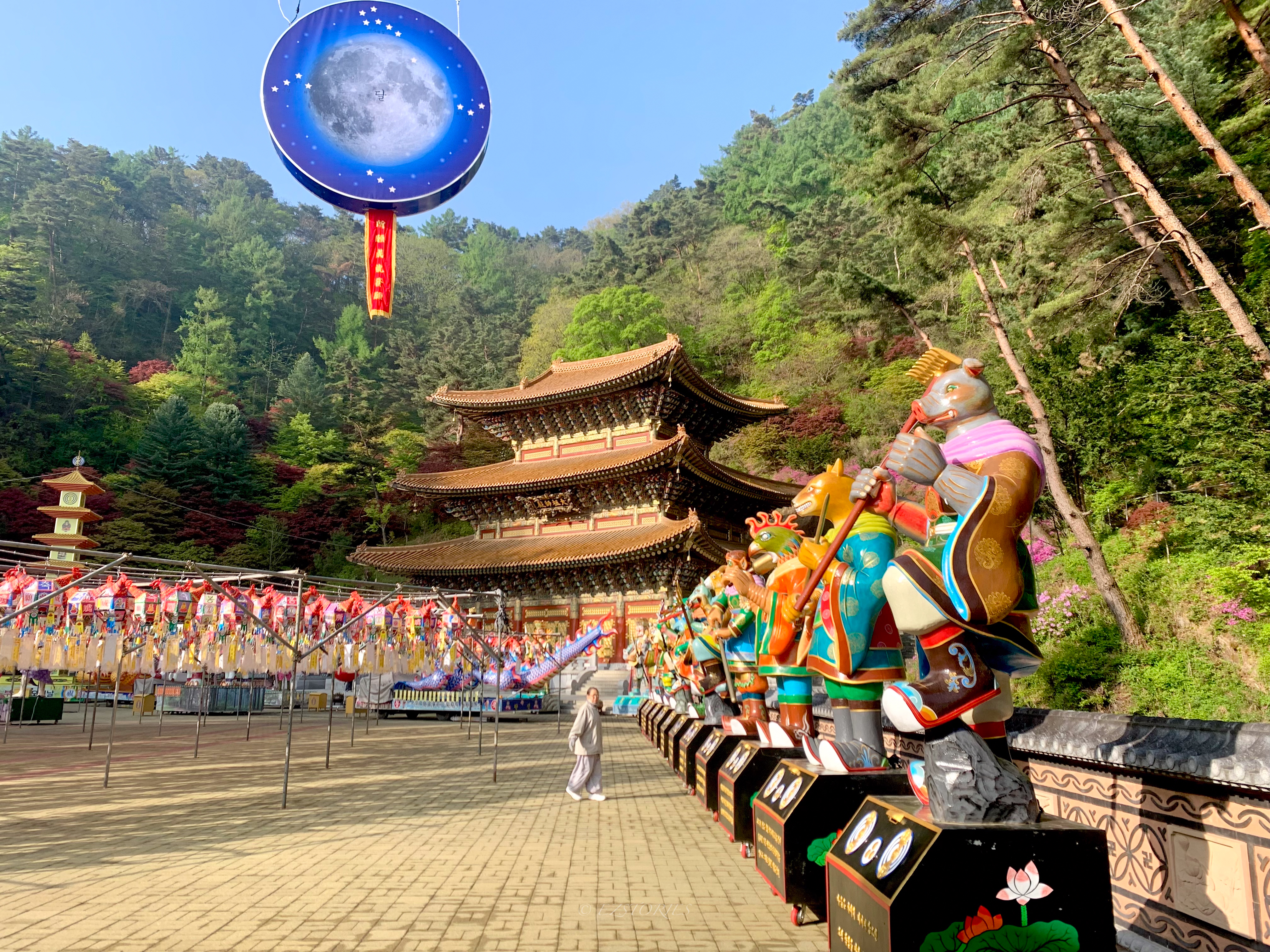
On top of the temple sits DaeJoSaJeon, dedicated to the patriarch of the CheonTae order. Unlike other buildings, this hall was built in an authentic traditional way in collaboration with DaeMokJang EungSu Shin, a traditional wooden architect involved in the restoration of cultural properties several times. Due to its location, there has been some controversy, with some questioning whether the CheonTae order treats their patriarch higher than Buddha. However, they explain that the Hall for Buddha is situated at the center of the Lotus flower, which is the highest perch. The view from this mountaintop is an Instagram-worthy spot.

Over the River
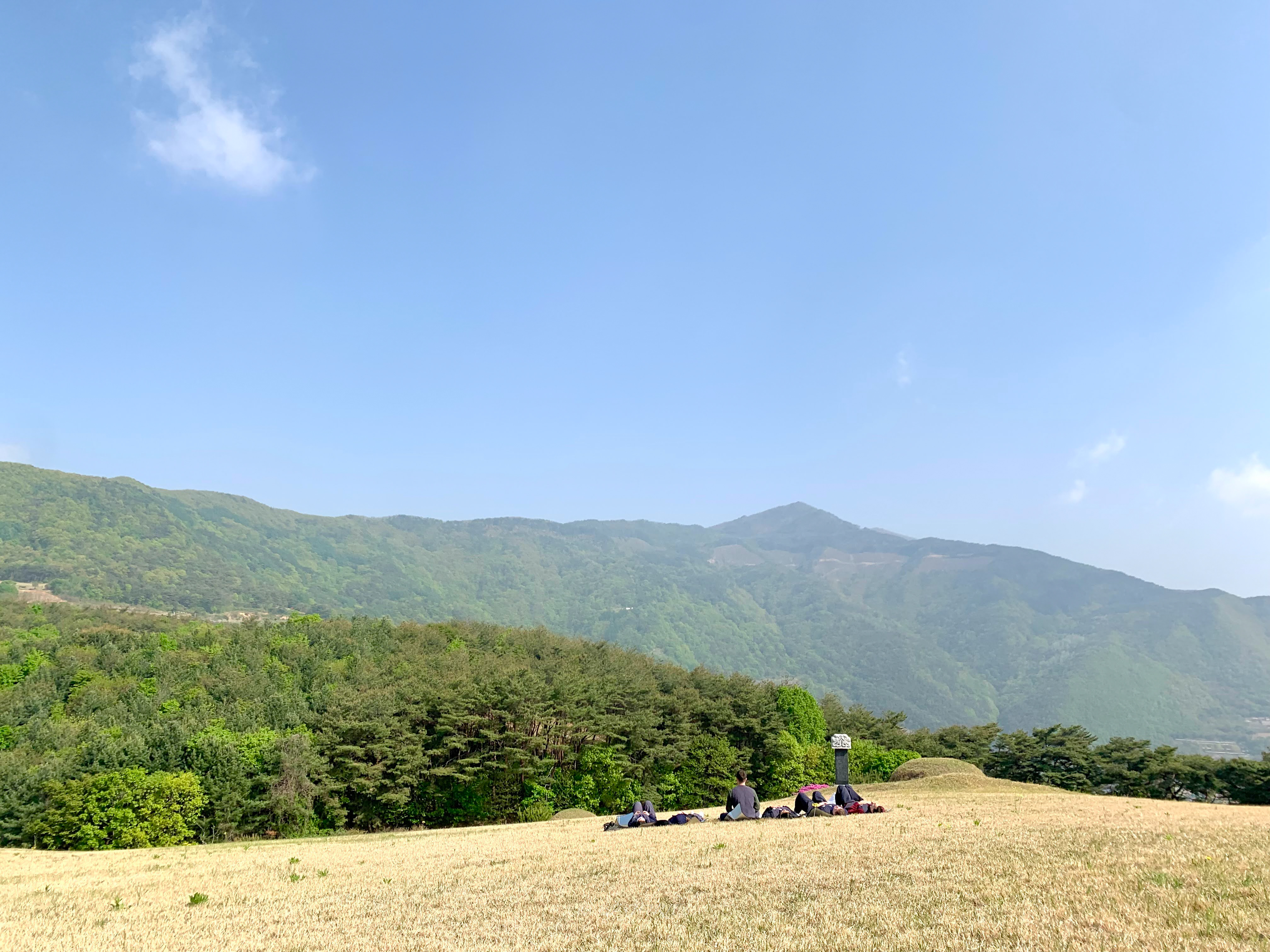
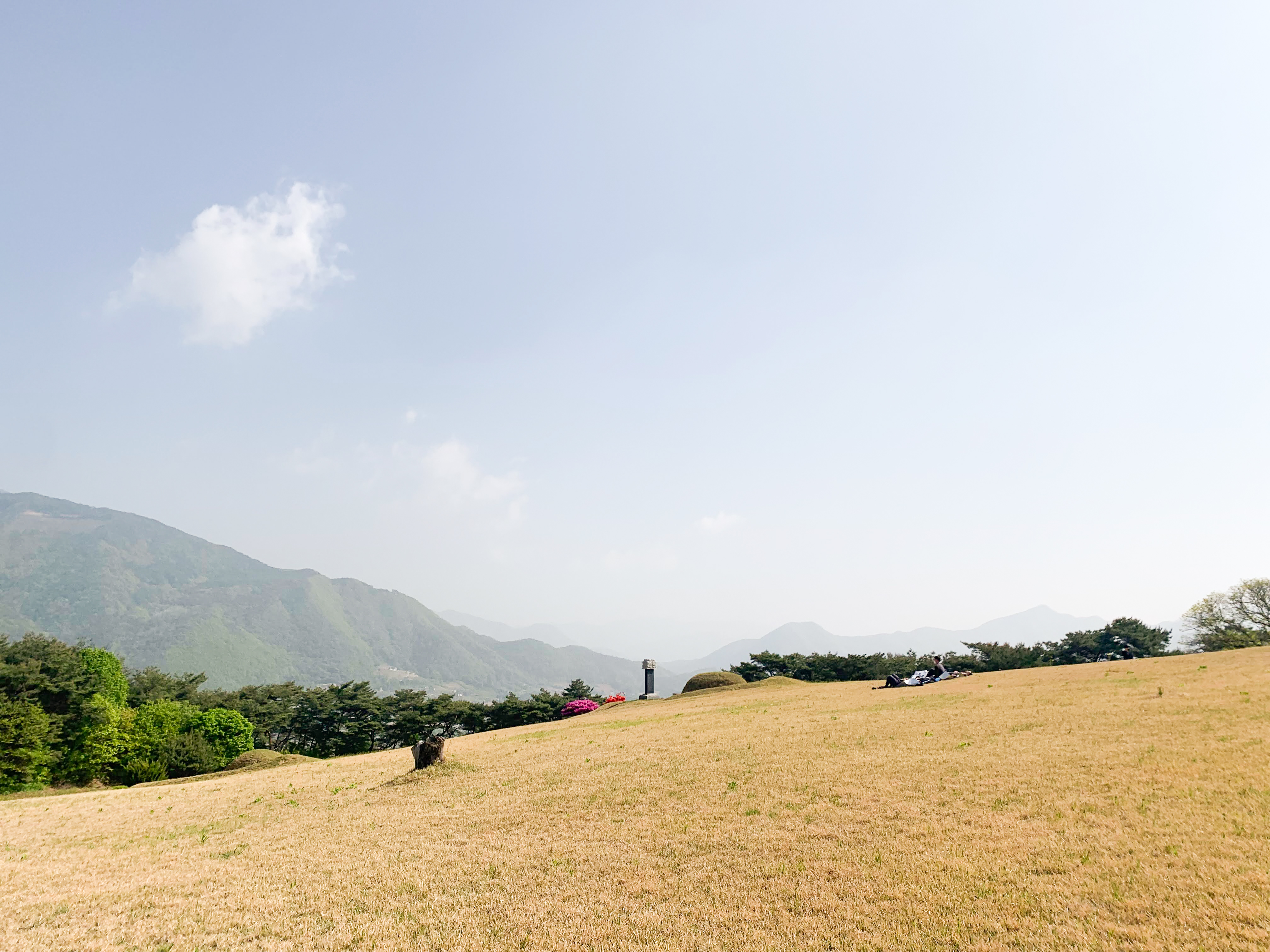
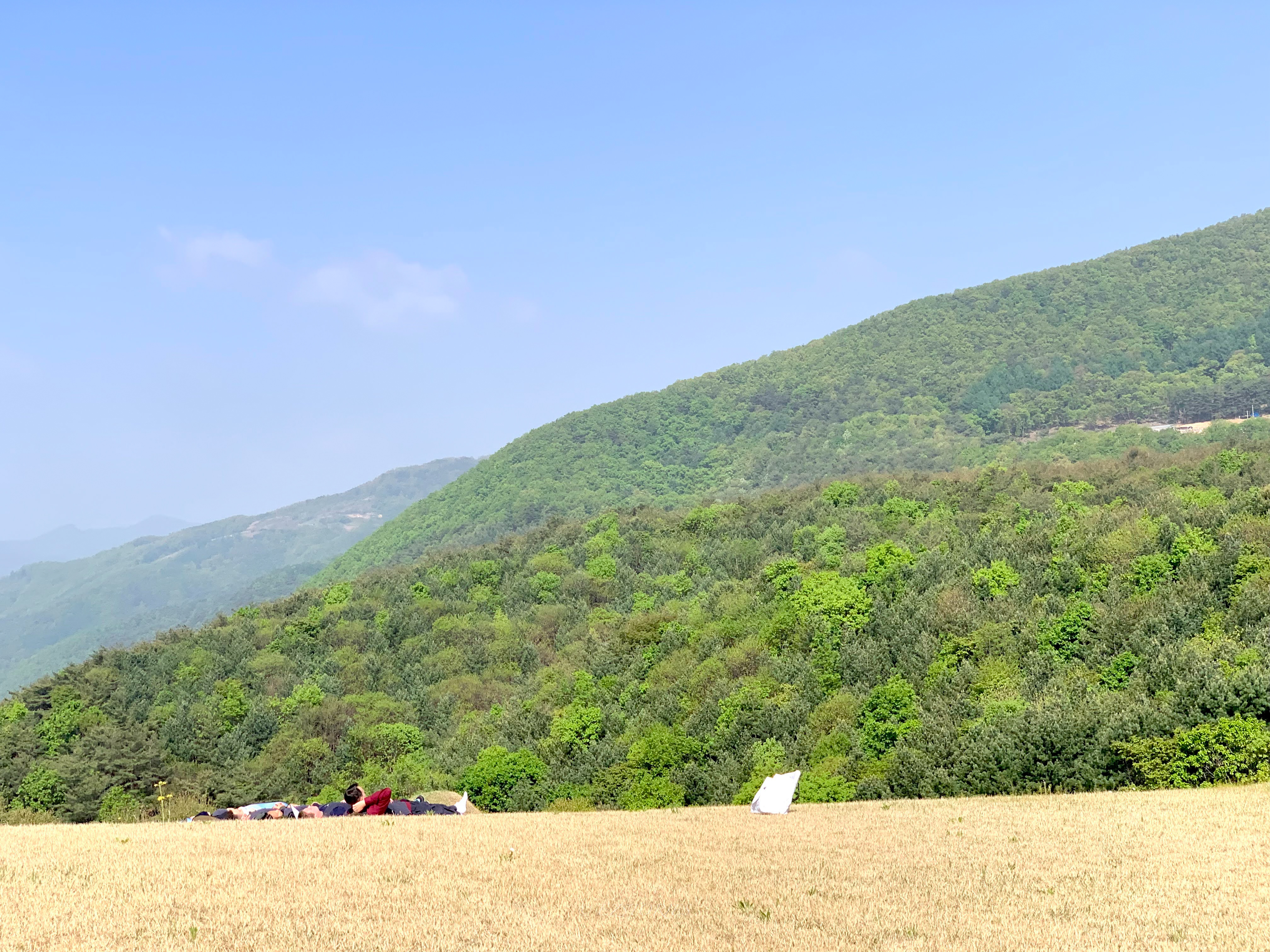
If you plan a temple stay here, they will guide you to “Over the River.” This private site is where their laypeople come for special ceremonies, such as rituals for the patriarch. They offer special meditation and walking programs in this area. Typically, Buddhist monks perform cremation funeral ceremonies as per tradition. However, here they bury their patriarch and have built a tomb. They call this place “Over the River,” in Sanskrit pāramitā, symbolizing the transition to the world of Buddha on the other hill. It’s a vast area with expansive green grass hills, making it feel like being in a window screen background. It’s an unforgettable scene.
Information
For temple stayer

There are multiple options to choose from. If you opt for the Balwoogongyang option, the taste will be superior. However, the regular Gongyang option is not highly recommended, so please prepare something to eat yourself.
Address
73, Guinsa-gil, Yeongchun-myeon, Danyang-gun, Chungcheongbuk-do
Public transportation
Direct intercity buses, approximately 3 hours in duration, run to Guin-Sa bus terminal. These buses depart from either the East Seoul Bus Terminal or the Express Bus Terminal (Gyeongbu route).
Restaurant
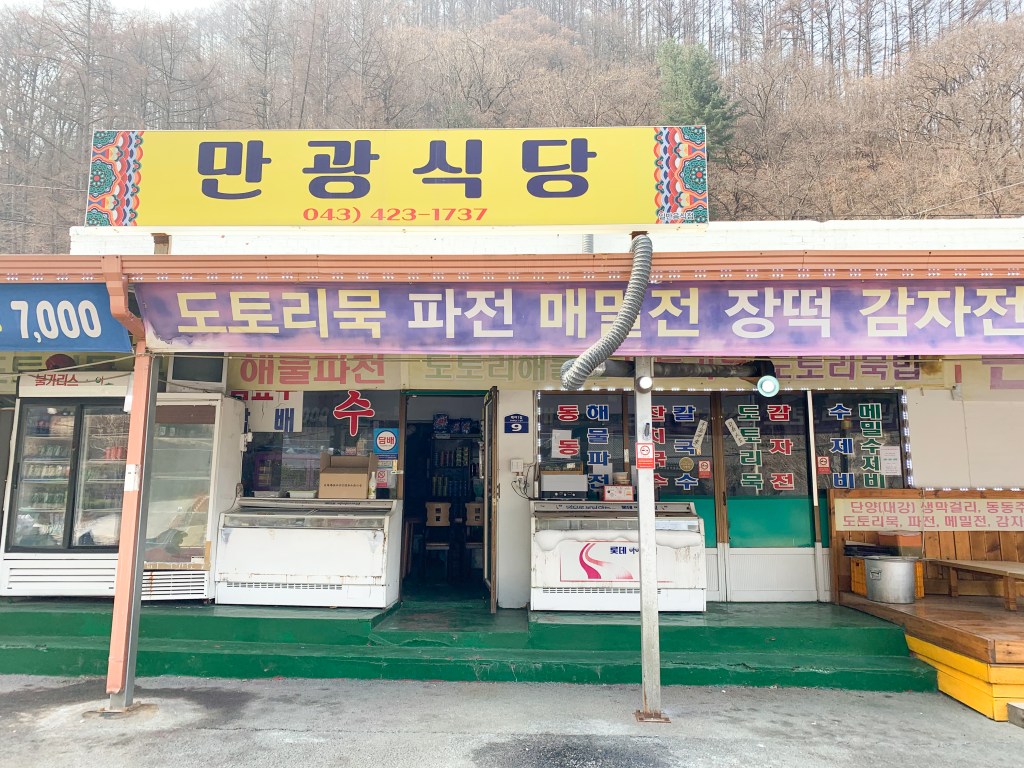
Mangwang Restaurant
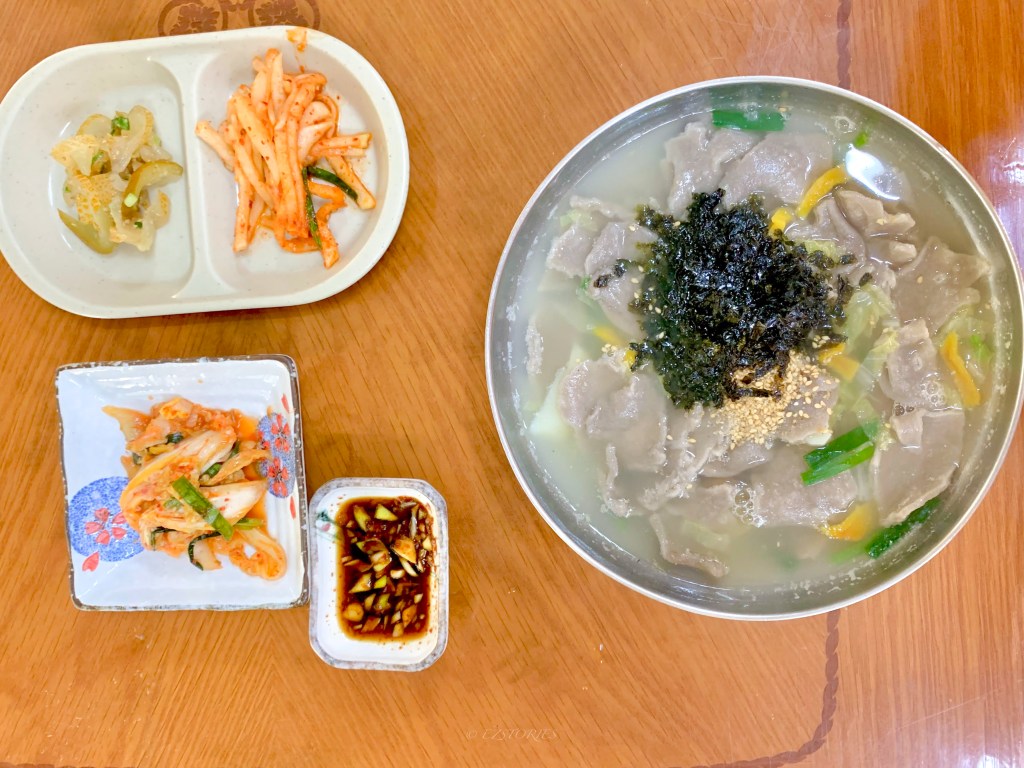
It is the smallest restaurant in the area, yet it offers reasonably priced and high-quality food. Locals frequently dine here, so don’t judge it by its outlook!
Menu
Knife cut noodle, Buckwheat noodle, Seafood pancake, Potato pancake, Etc.
Price range
5,000 ~ 10,000
EZsPEDIA © 2024 by YUNMI LEE is licensed under CC BY-NC-ND 4.0
 EZ K-PEDIA
Leave a comment