

Buddhist temple project: practice-05
Hanra Mountain, the symbol of Jeju
Jeju Island is the most famous tourist destination in the Korean peninsula, attracting both Korean and international visitors. As a renowned volcanic island, Hanra Mountain stands at its center as a symbol. It is also one of tallest mountain in South Korea, dividing Jeju into two cities. Traditionally, travelers frequented the shoreline rather than the mountain’s center where most tourist attractions are situated. Hanra Mountain is also home to endangered species and natural heritage sites, designated as a national park.

Location of GwanEum-Sa
GwanEum-Sa Buddhist temple is located at the entrance of Hanra National Park. As you drive along the mountain road, with one lane in each direction, a huge square and the temple gate suddenly appear. To the left of the gate, Buddha sits on a Lotus throne, his hands forming the Dharmacakra-Mudra(The hand posture of the wheel of the great Dharma). It feels welcoming to us.


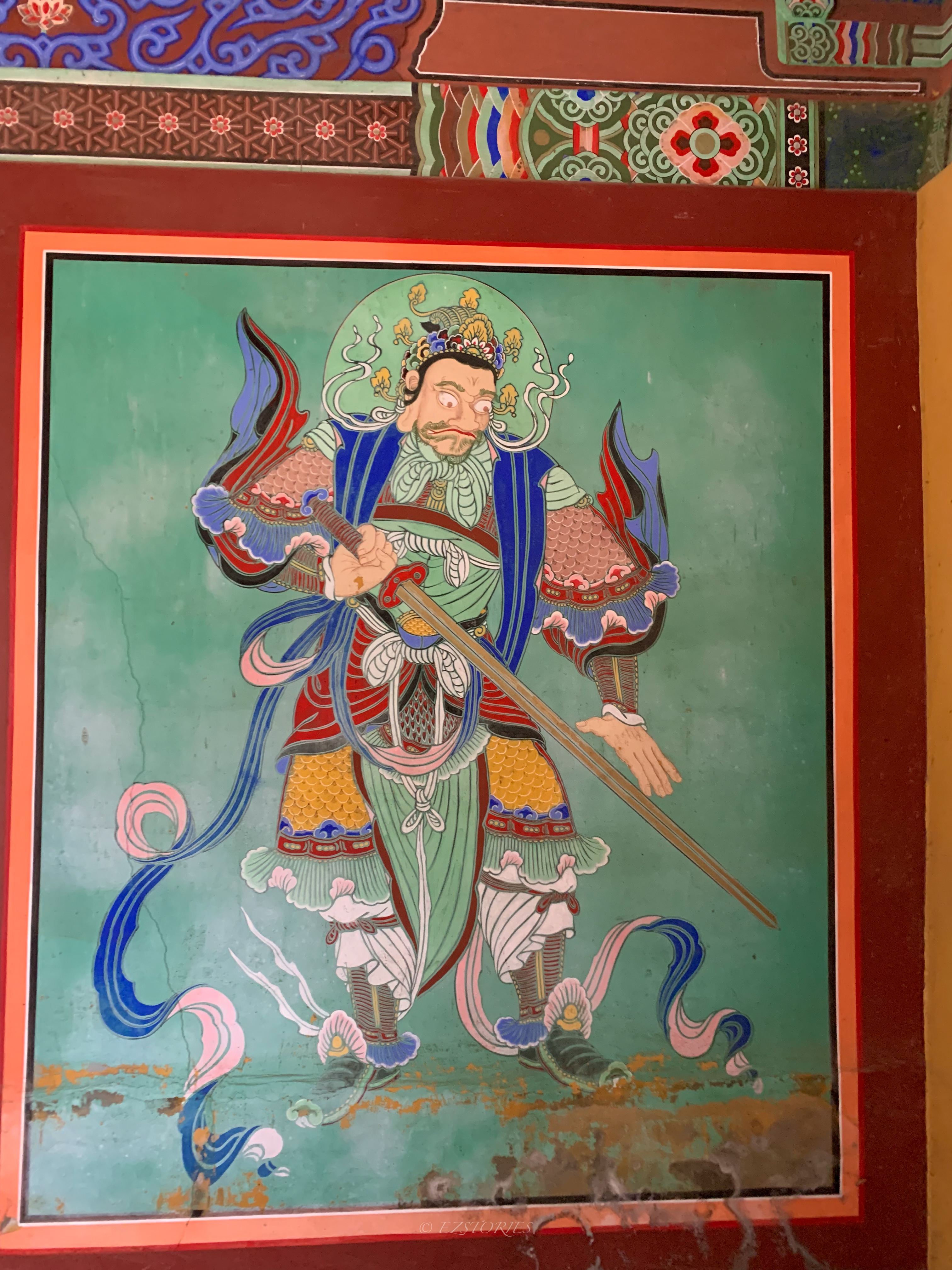
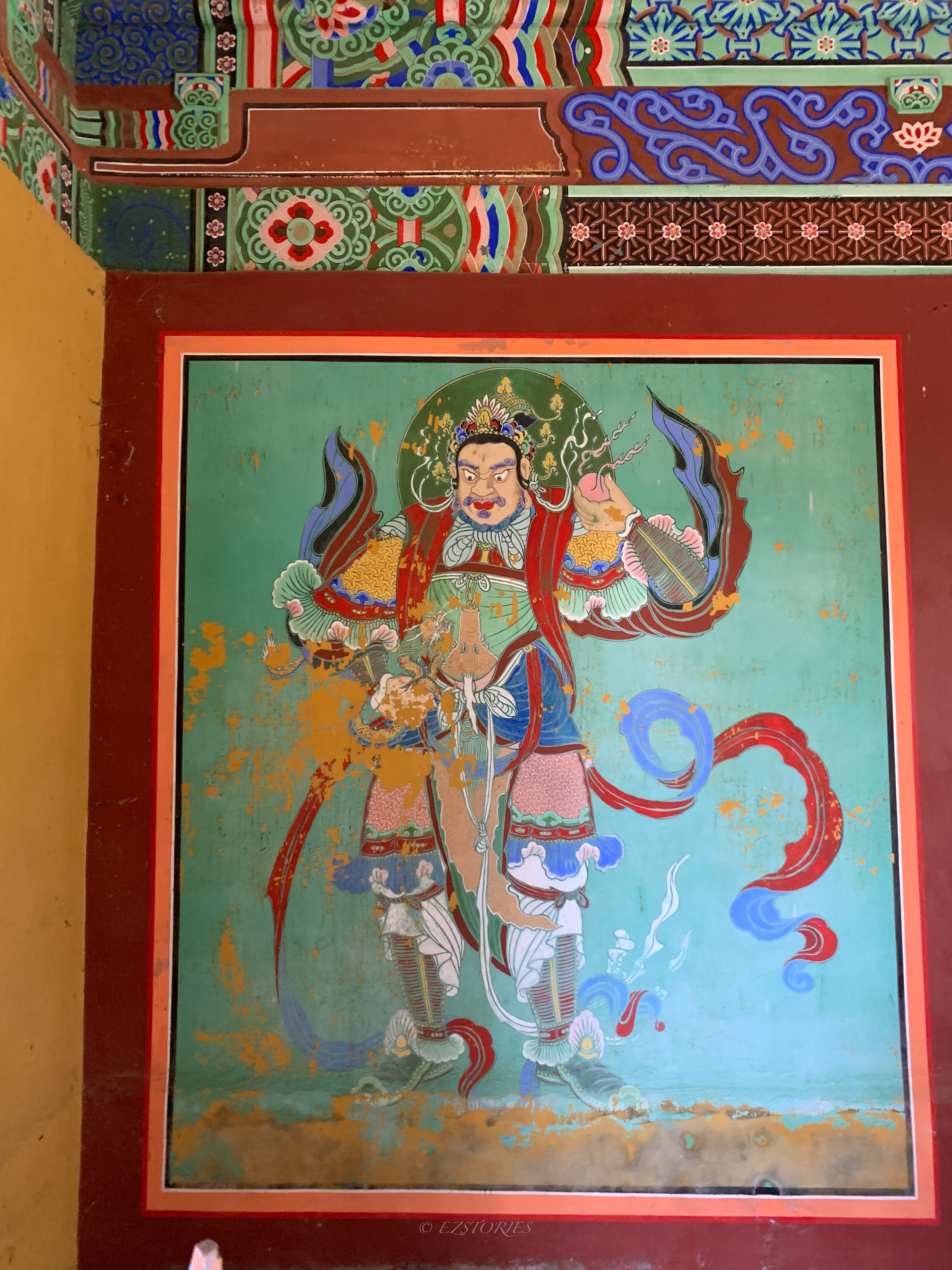
The path to reach the inner gate is a long way, taking about 5 minutes, guarded by stone Buddha statues wearing crowns. The inner gate, “Cheonwang-Mun” (The gate of four heavenly kings), is painted on the wall. It is not a typical feature for a temple on land. The reason for not having statues is unclear. But it’s said that the material had to be transported from the land. And shipping costs were expensive when the temple was founded. Instead, paintings of them remain on the door. However, a marvelous ginkgo tree captured my eyes, seemingly awaiting its believers, close to HaeWol-Gul (cave).
History

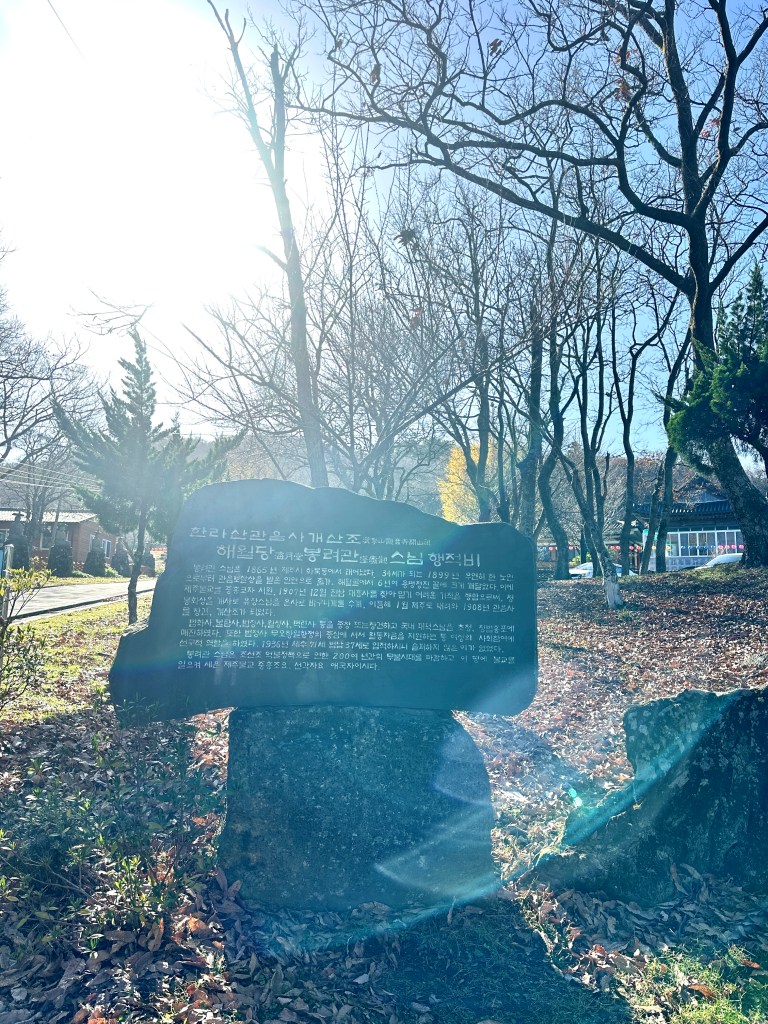

Although its buildings currently appear modern, GwanEum-Sa was founded in 1909, 115 years ago. Records indicate there were other temples on the same site previously. During the Joseon dynasty, the temple was destroyed by government officials to promote Neo-Confucianism. In 1909, a woman named BongRyeoGwan rebuilt the Buddhist temple after praying for three years in the HeaWol-Gul (cave).
As a mother of five and a wife, her decision was difficult. Her journey began when a monk gave her a small statue of Avalokitesvara (Goddess of Mercy) for her prayers. While sailing to the island, her ship was almost overturned by a large wave. She continued to pray to Avalokitesvara and miraculously arrived safely on land without getting wet. Deeply committed to Buddhism, she decided to become a monk. Since Avalokitesvara is often called GwanEum in Korea, the temple was named after her.
BongRyeoGwan became a Buddhist monk at Haenam DaeHeung-Sa Buddhist temple and vowed to establish a Buddhist temple on Jeju Island. However, she was rejected by the villagers and fled to Hanra mountain. After accidentally falling from a cliff, she miraculously regained consciousness and found herself surrounded by crows in a circle, which had carried her to safety. Two passing woodcutters informed her that a master monk had been waiting for someone, possibly her. She hurried to SancheonDan and met the master monk, who passed her the Kasaya (Buddhist monk’s robe).

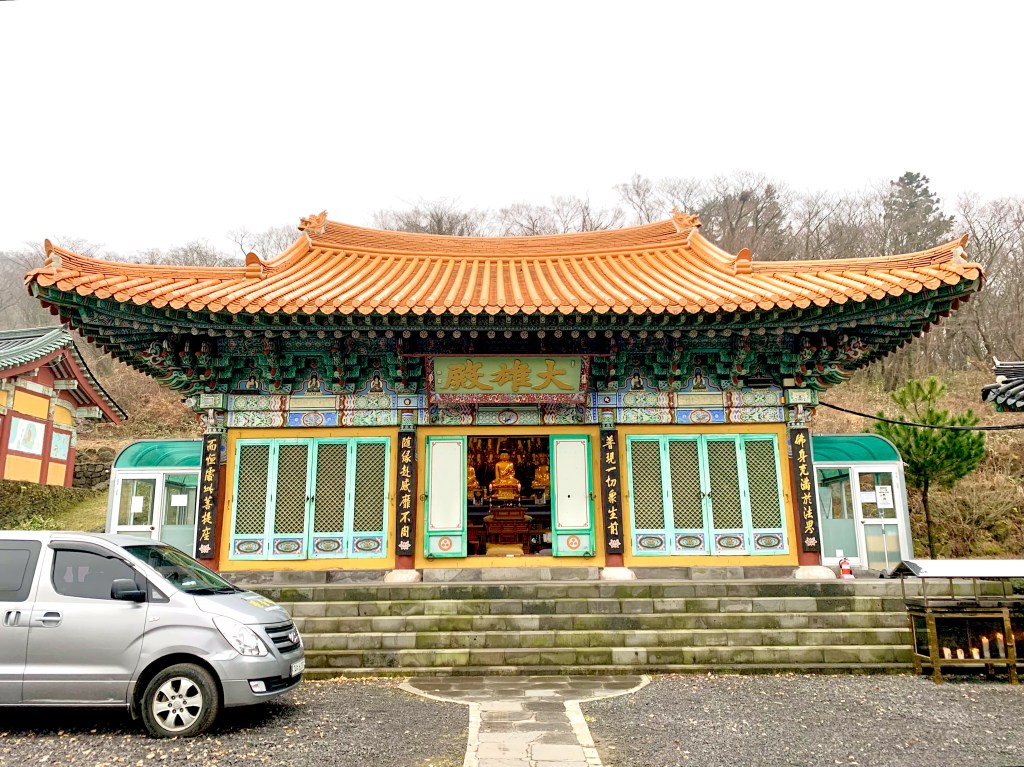
Finally, she was able to establish GwanEum-Sa and expand Buddhism by building a Buddhist center. BongRyeoGwan revived Buddhism on Jeju Island. But the Daewong-Jeon (Hall of Heroes) was burned down in 1939, and soon after, the entire island struggled during the 3rd April Incident. GwanEun-Sa could not escape this situation and became a strategic point due to its location. The site was turned into ashes to build a military camp. However, the temple site was rebuilt starting in 1968 and stands today. It set a sign of tragic history to remember 3rd April on site.
Character of temple
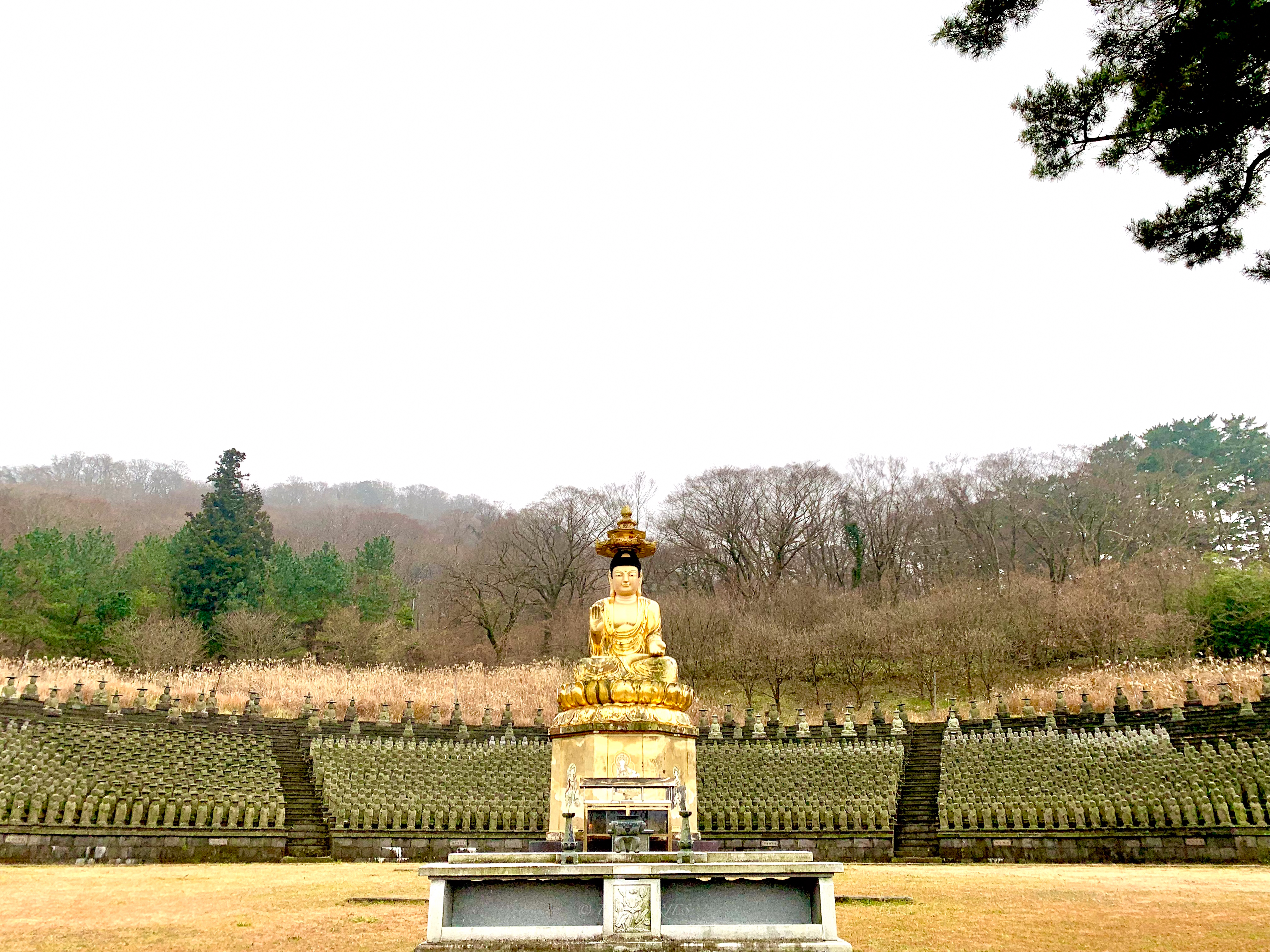
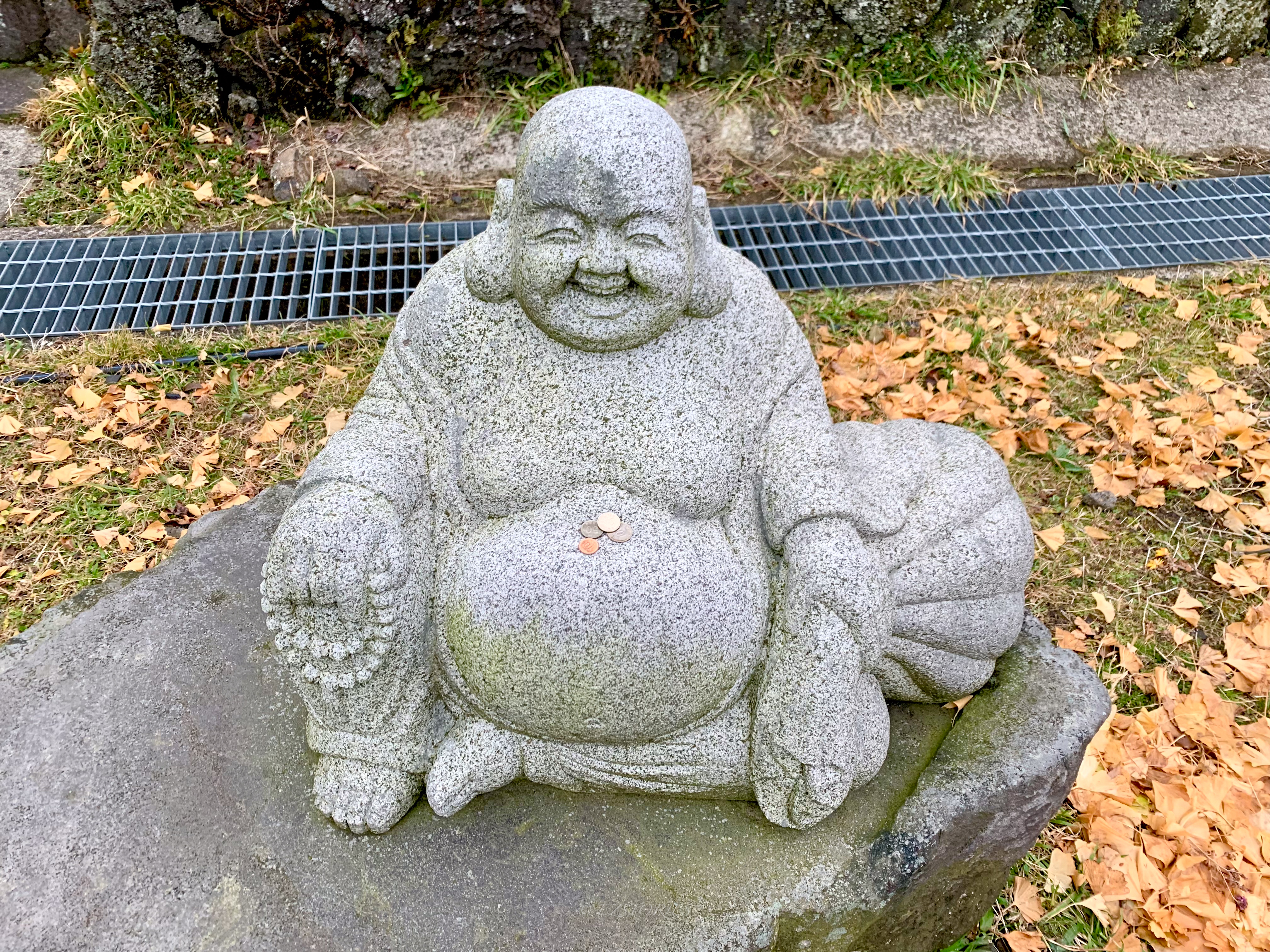
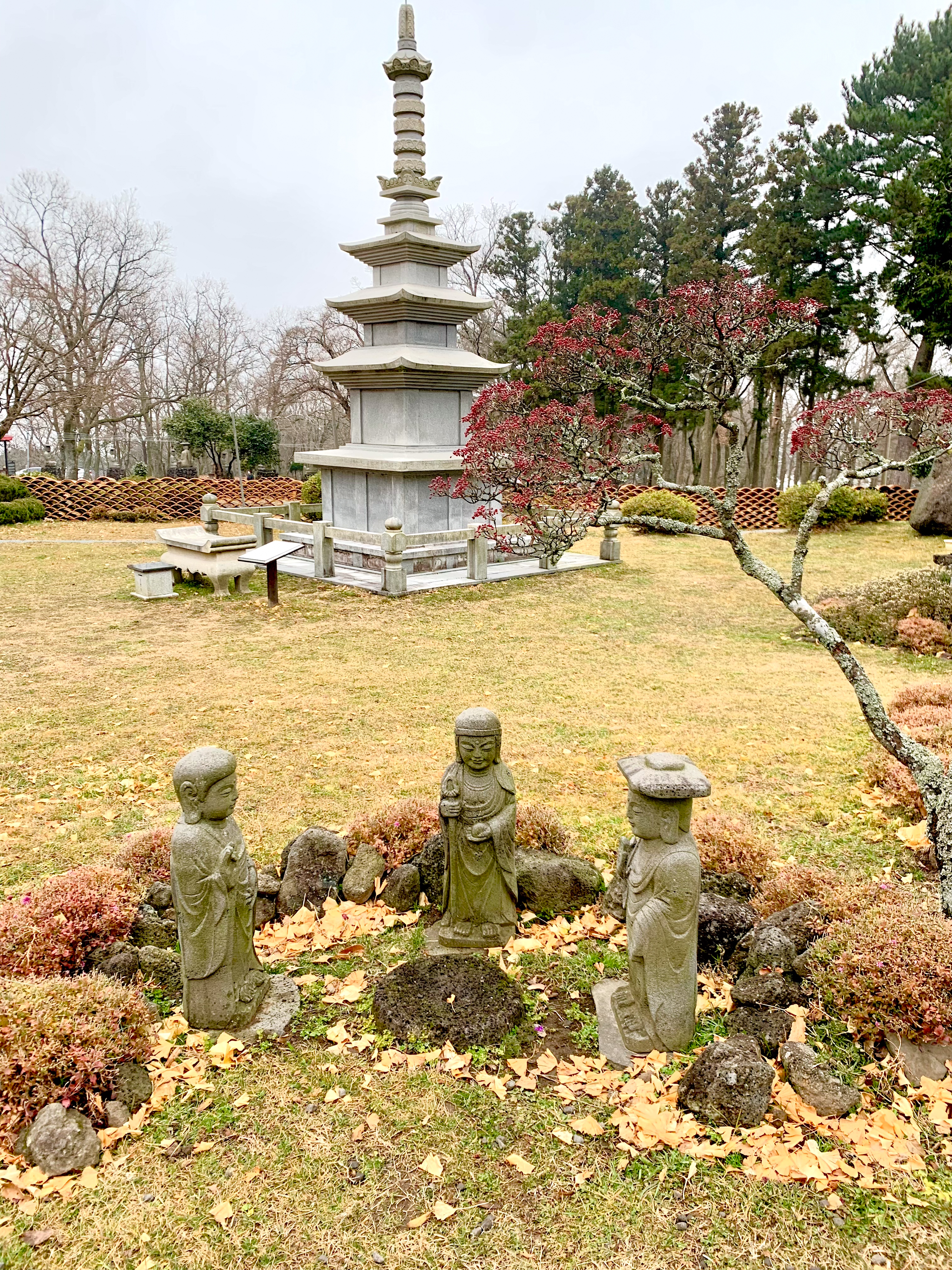
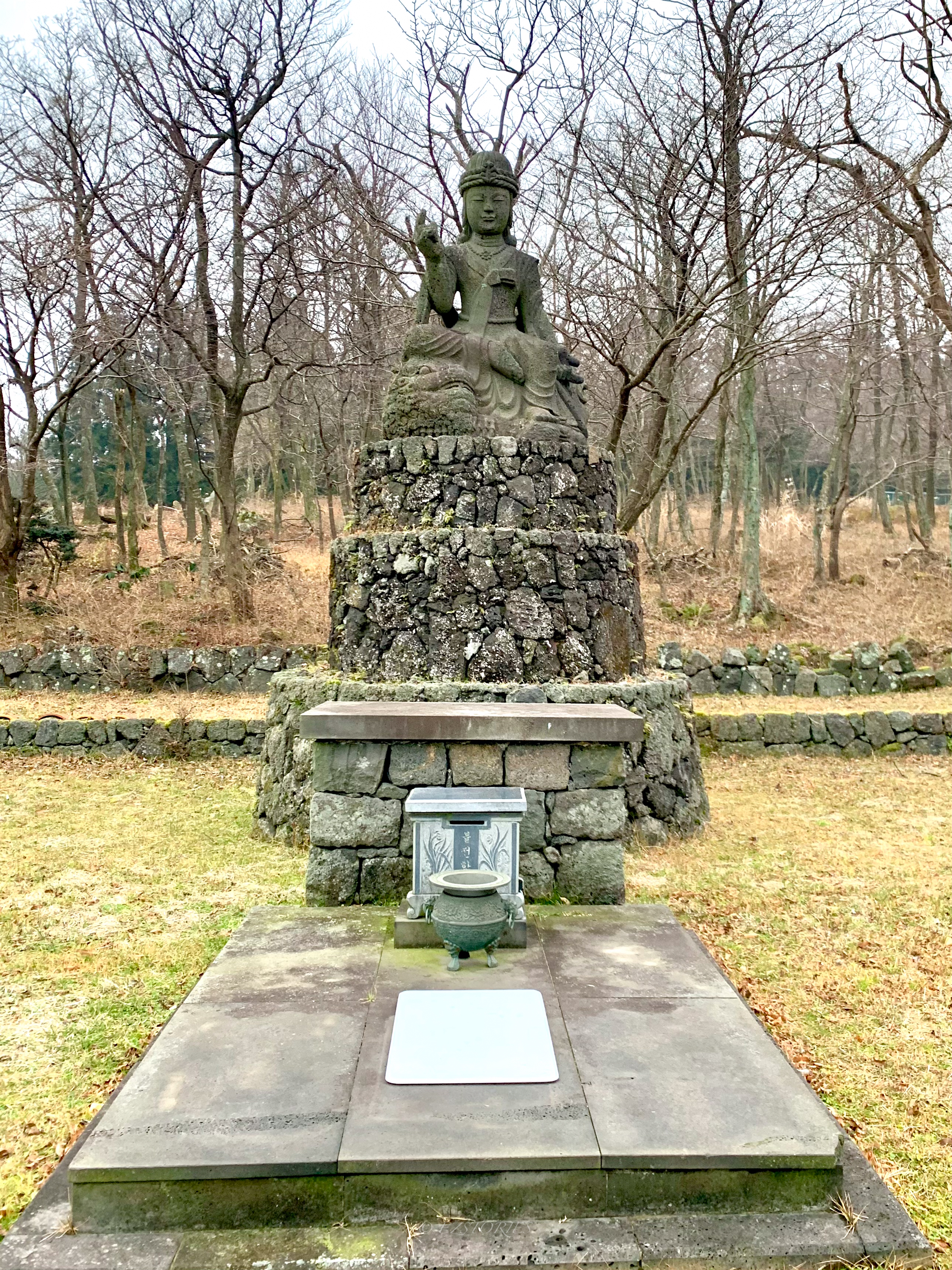

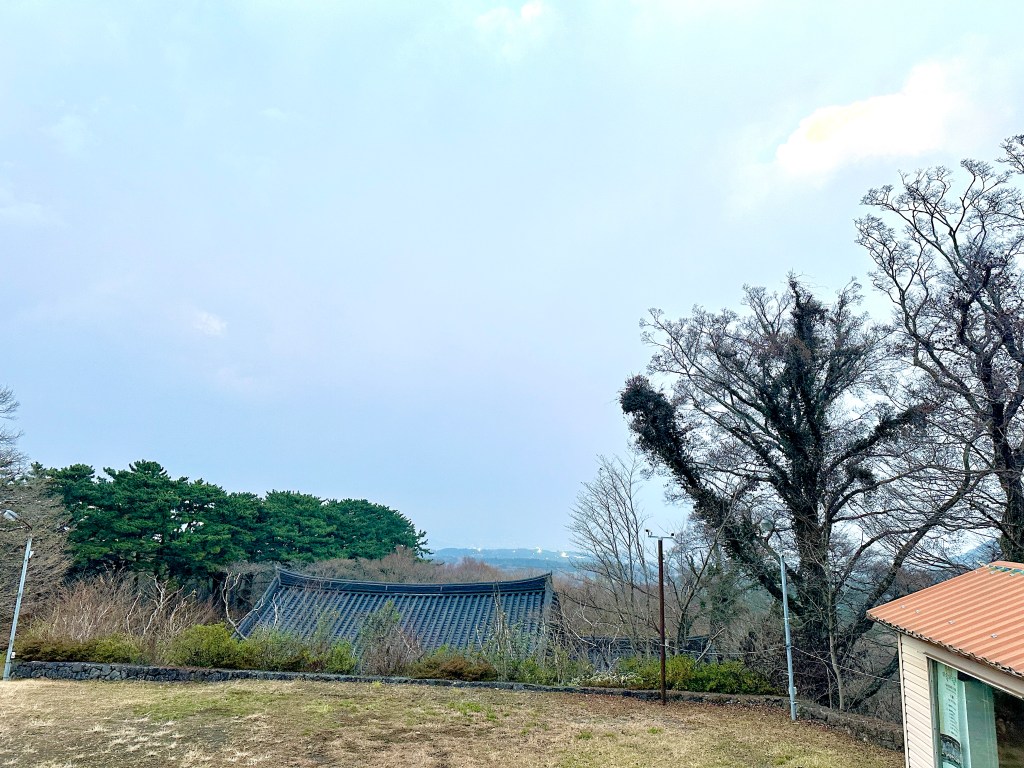
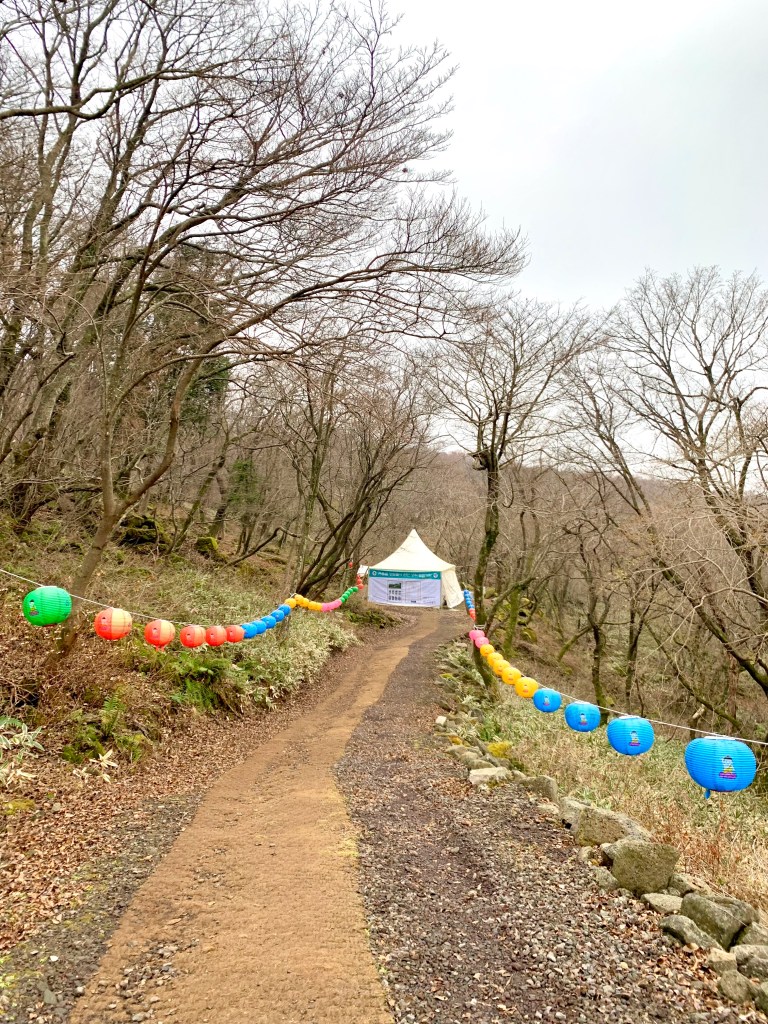
All the buildings are of just the right size, but the statues outside are irregular. The specialty of Jeju Island is stone, and most things are made primarily from stone. The Golden Maitreya Buddha (Future Buddha) sits in the middle of the mountain, overlooking the people. It is surrounded by almost a thousand stone Arhats donated by believers. A footpath behind Golden Maitrey Buddha, leads you to Nahan-Jeon (Hall of Arhat) located at the top of the mountain, offering an ocean view. Because it was established through prayers in the cave, another cave was constructed to provide a comfortable sitting area for Avalokitesvara (GwanEum). Sincere laypeople still visit the HaeWol-Gul (cave) to pray, believing in its miracles.
little tip for traveller
I sometimes stay at this temple to escape the secular world, and it’s also a resting station for my body after hiking Hanra Mountain or before heading back to Seoul. It provides a tranquil moment for those seeking respite in the national park.
Inforation
Official Website
http://www.jejugwaneumsa.or.kr/page/sub0208.php#
Templestay website(Kor.)
https://www.templestay.com/temple_info.asp?t_id=gwaneumsa
* This temple doesn’t offer temple stays for non-Koreans, but reservations are available for those who can read and write Korean.
Address
660, Sallokbuk-ro, Jeju-si, Jeju-do
* There’s no light on the road, so it’s recommended to visit here before sunset.
Public transportation
- Take a bus heading to SanCheonDan, HanKook Politech University bus stop (No. 405000139 from Jeju city, No. 405000140 from Seogwipo city)
- Transfer to Green bus Number 475 from SanCheonDan, HanKook Politech university bus stop(No. 405000139)
* Bus intervals are long, so please check the timetable. It’s safe to wait for this bus at least 10 minutes before the scheduled time. - Get off at GwanEum-Sa bus stop(No. 405001892)
* To confirm, ask the bus driver your destination, and they will alert you when to get off.
 EZ K-PEDIA
Leave a comment