
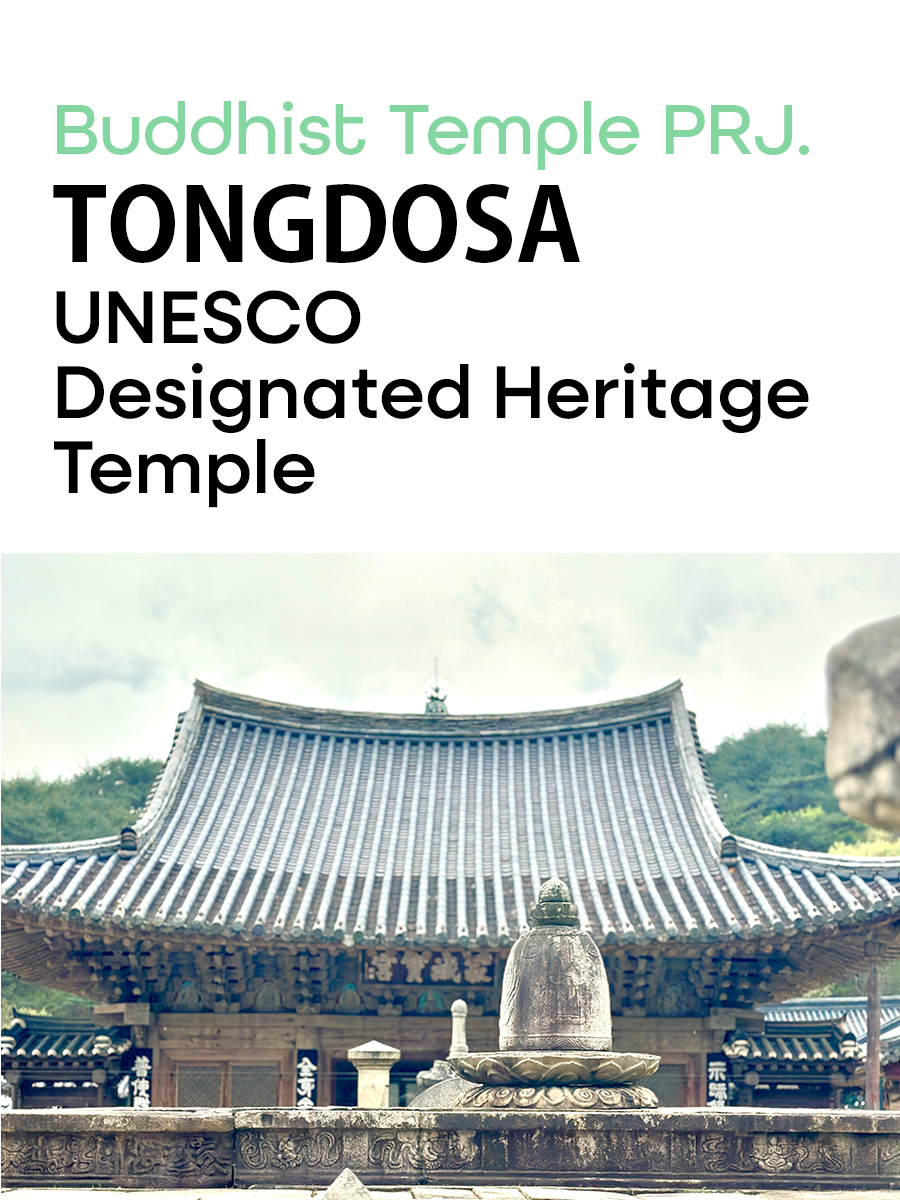
Buddhist temple Project: Practice 09
3 valuable treasure
In Buddhism, there are three invaluable treasures: Bulbo (the Buddha), Beopbo (the Buddha’s teachings), and Seungbo (the Buddhist monks). Earlier, I introduced Songgwangsa Buddhist Temple, renowned as a Seungbo temple. Tongdosa stands as one of the three treasures, symbolizing Bulbo (the Buddha). What distinguishes Tongdosa as a Bulbo Buddhist temple is its enshrinement of the Buddha’s sarira.

JaJangYulSa Erects TongDo-Sa: A Legendary Tale
This legendary story is associated with JaJangYulSa, a prominent Buddhist monk during the Silla kingdom era. Once, he embarked on a journey to the Tang dynasty for studies. While in prayer atop Mount Wutai, the sacred abode of Manjushri, the bodhisattva of wisdom, he encountered a divine experience. Manjushri bestowed upon him invaluable relics: a Kasaya (robe), 100 pieces of Sarira, the Buddha’s skull, a finger bone, beads, and a scripture of Buddha. Manjushri entrusted these artifacts to JaJangYulSa, declaring, “These are authentic remains of the Buddha. I bestow them upon you, for you are a virtuous monk who shall uphold the precepts until the end of time. In your homeland, there lies a sacred pond at ChukSeo mountain. Within it dwell nine venomous dragons, wreaking havoc with rainstorms, spoiling crops, and afflicting the people. Thus, I instruct you to construct the GeumGangGyeDan (Ordination platform) by the pond and enshrine these Sarira and Kasaya. This act will avert the Three Disasters—water, wind, and fire—and ensure the perpetual preservation of the Buddha’s teachings under the guardianship of the Sky Dragon.”

Upon his return to Silla, JaJangYulSa commenced preaching to the nine dragons residing in the pond. Through his teachings, all the dragons attained enlightenment, and eight of them departed to other realms. However, one dragon expressed a desire to remain, a request that JaJangYulSa granted. He proceeded to fill the pond and construct the GeumGangGyeDan (Ordination platform) to house the sacred relics of the Buddha. Yet, a corner of the area was left untouched, forming a small pond for the remaining dragon. This pond still exists adjacent to the GeumGangGyeDan and miraculously remains filled, defying even the harshest droughts.
The Rite of Passage to Monkhood at TongDo-Sa
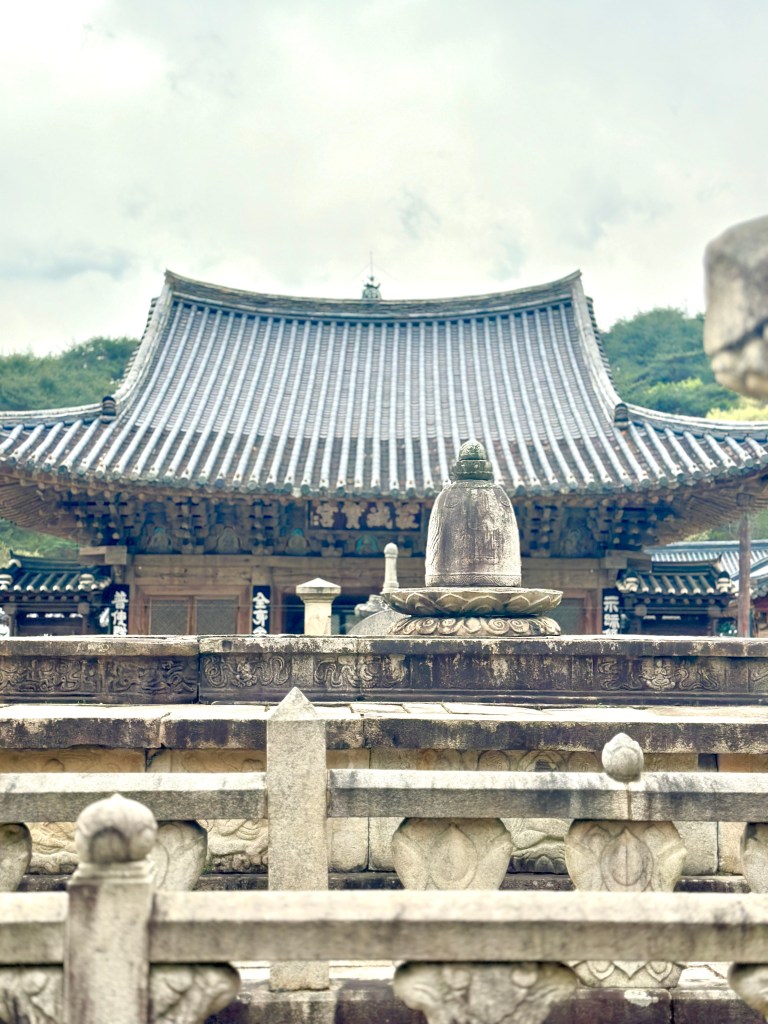
TongDo-Sa, translating to ‘Redeem all people’s thoughts to truth’, held pivotal importance during the Silla period. Prospective Buddhist monks were required to undergo a crucial rite of passage: receiving precepts and traversing the GeumGangGyeDan (Ordination platform) at TongDo-Sa. With its enshrinement of Buddha’s relics, this ceremony carried profound significance, akin to receiving precepts directly from the Buddha himself. This tradition remains pertinent even in contemporary times.
The Structural Layout of TongDo-Sa
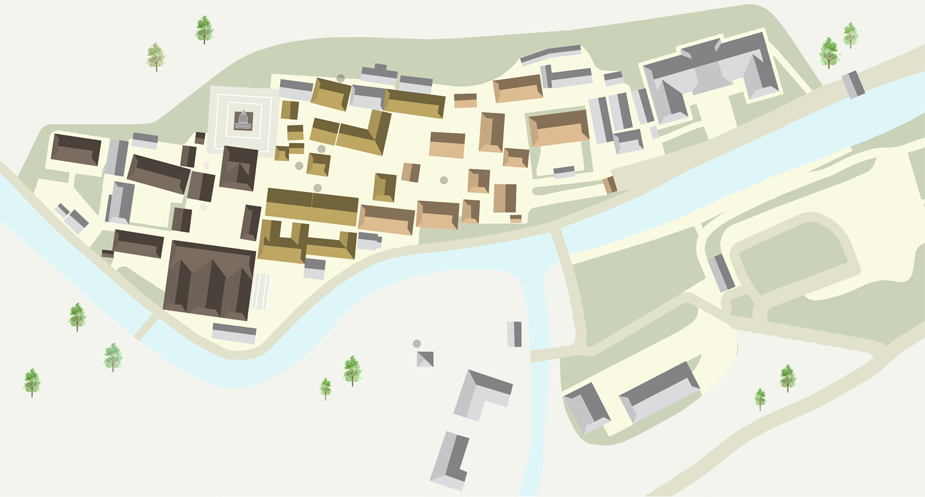
TongDo-Sa is structured into three distinct areas known as Sangro-Jeon, Jungro-Jeon, and Haro-Jeon. Despite adhering to the traditional south-facing orientation, the buildings are dispersed widely from west to east. Each Jeon boasts its own stage and main hall, effectively rendering each one a self-contained temple within TongDo-Sa. This architectural ensemble comprises numerous halls, among which I shall highlight the most precious and significant.
HaRo-Jeon
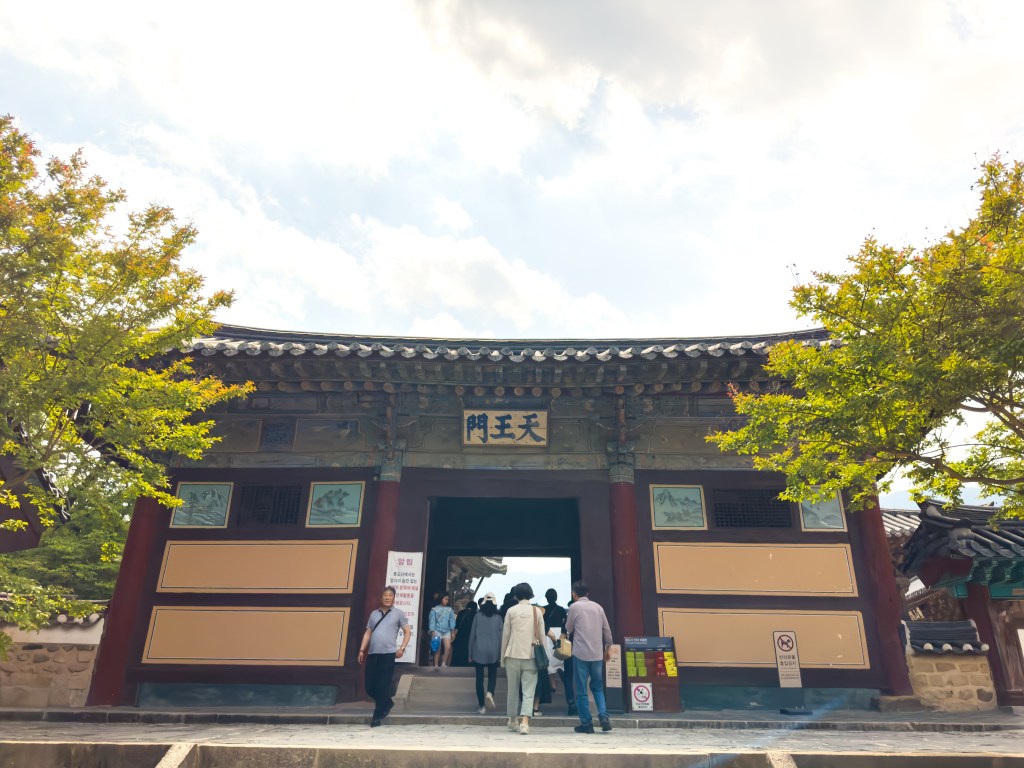
Once you pass through CheonWang-Mun, the gate of the Four Heavenly Kings, HaRo-Jeon unfolds before you. Adjacent to GeonWang-Mun stands a modest structure named Garam-Gak, paying homage to the Garam-god, one of the legendary dragons safeguarding TongDo-Sa, as told in the tale of JaJangYulSa.
What captivates visitors is the notable absence of statues in most of the main halls, replaced instead by Taeng (paintings of Buddha). Within HaRo-Jeon lie three prominent halls, each venerating a different Buddha.
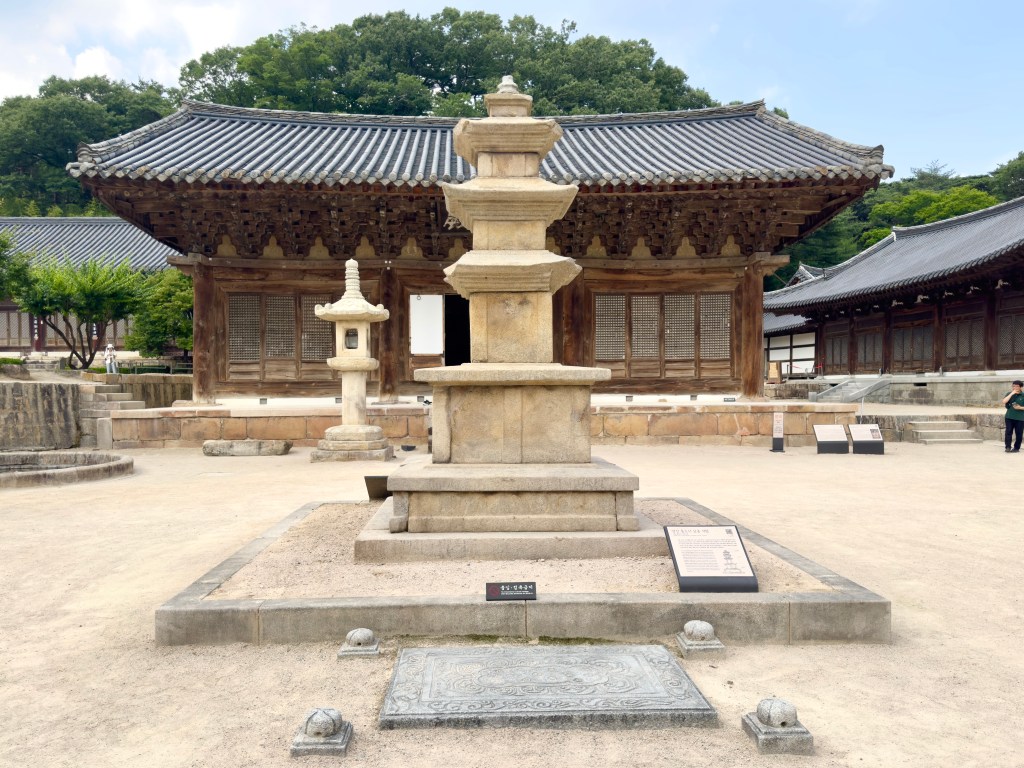
YoungSan-Jeon is home to PalSangTaeng, an exquisite collection of eight paintings depicting the life of Buddha. It is renowned for its 8 mural paintings illustrating the journey of Gautama Buddha and his disciples. However, the revered paintings of YoungSang-Do and YoungSanHoiSang-Do, depicting Buddha preaching to his disciples on Youngchuk Mountain, have been relocated to a museum.
Flanking YoungSan-Jeon are GeukRakBo-Jeon and YakSa-Jeon, standing opposite each other in serene reverence. GeukRakBo-Jeon proudly displays a painting of Amitabha, the lord of the Western Heaven (GeukRak), while YakSa-Jeon is dedicated to YakSaYeRae (Bhaisajyaguru, the Medicine Buddha).
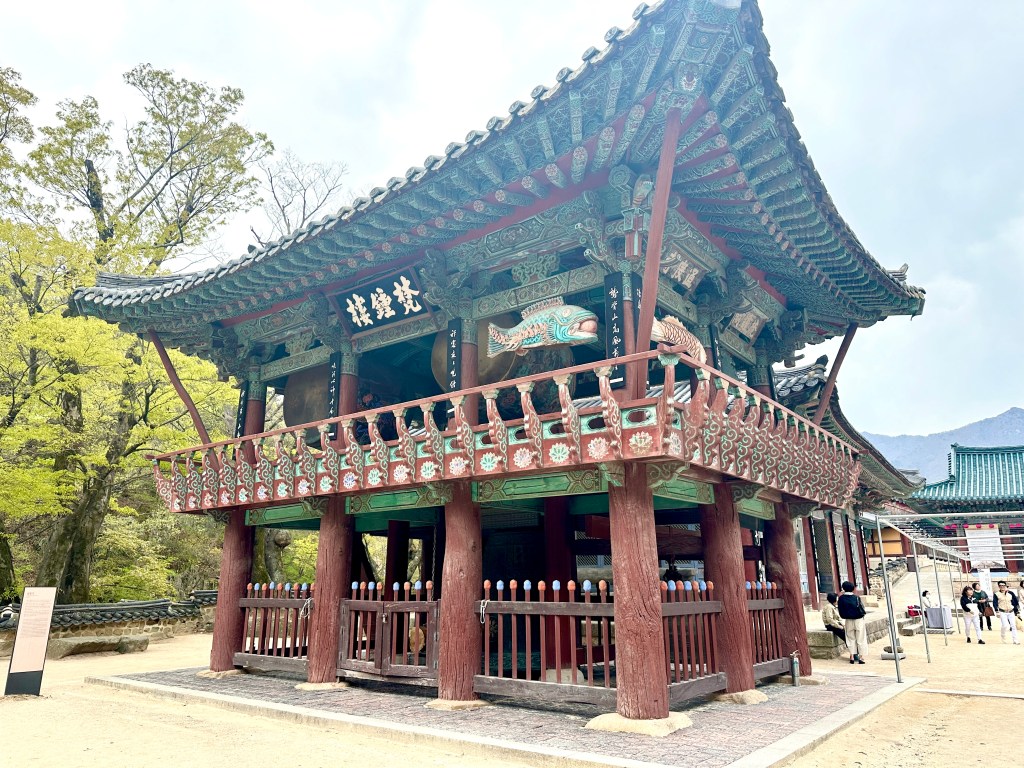
TongDo-Sa doesn’t just stop at its temple grounds; it also houses its own museum, welcoming visitors with free admission. Esteemed as a cornerstone of Korean Buddhism, it’s a destination not to be missed. Spanning a rich historical tapestry, the museum proudly displays approximately 40,000 artifacts of Buddhist heritage and treasures. Its specialty lies in Buddhist paintings, making it a unique institution globally, boasting a comprehensive collection meticulously organized by era and type.
JoongRo-Jeon
At the heart of TongDo-Sa lies JoongRo-Jeon, where the illustrious DaeGwangMyeong-Jeon, or the Hall of the Great Light Festival, reigns supreme as the main hall. Named after its primary deity, the Vairocana Buddha, this hall enshrines the sacred painting of Trikaya, representing the Buddhas of the three bodies: Vairocana (Dharmakaya body, embodying the wisdom of the Universal law), Nosana (Sambhogakaya, the embodiment of enjoyment or pure light), and Sakyamuni Gautama Buddha (Nirmanakaya body, the physical manifestation).
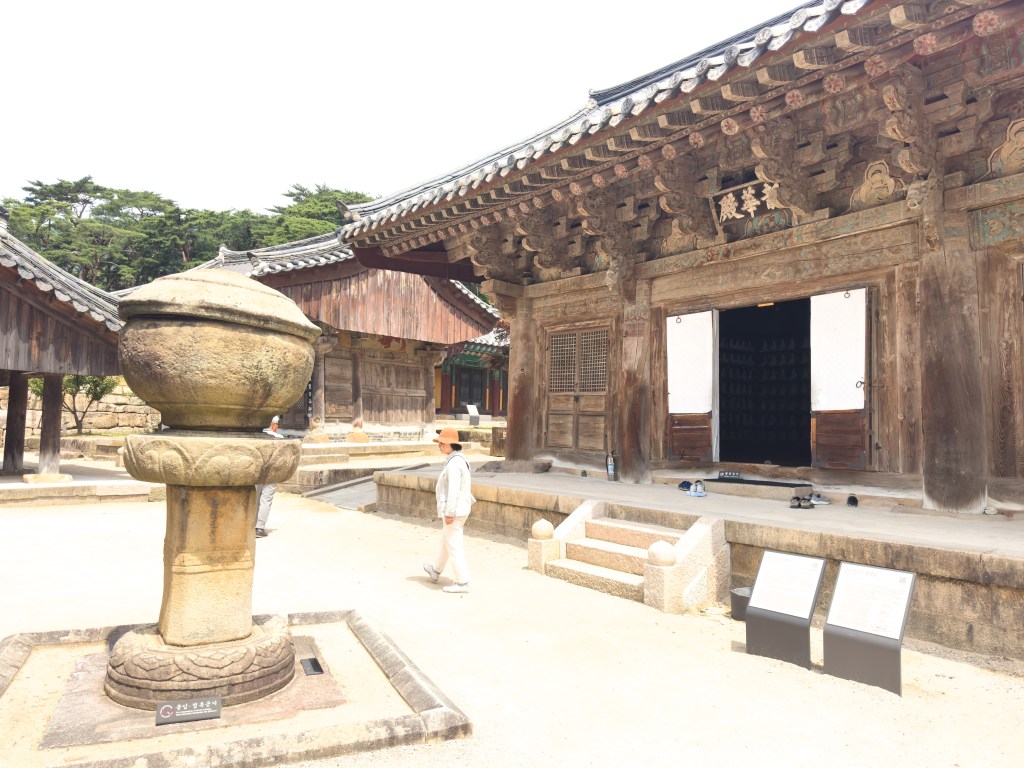
Adjacent to DaeGwangMyeong-Jeon stands Yonghwa-Jeon, dedicated to Maitreya, the future Buddha destined to attain Nirvana beneath the Yonghwa (Dragon flower) tree. This hall features a captivating painting of Maitreya. Nestled between these two structures lies the BongBal-Tap (Alms Bowl Pagoda), an enigmatic edifice resembling a colossal rice bowl with a lid. While its exact function remains elusive, it is speculated to have served as a repository for the clothes and rice bowl of the Buddha, destined to be handed to Maitreya.
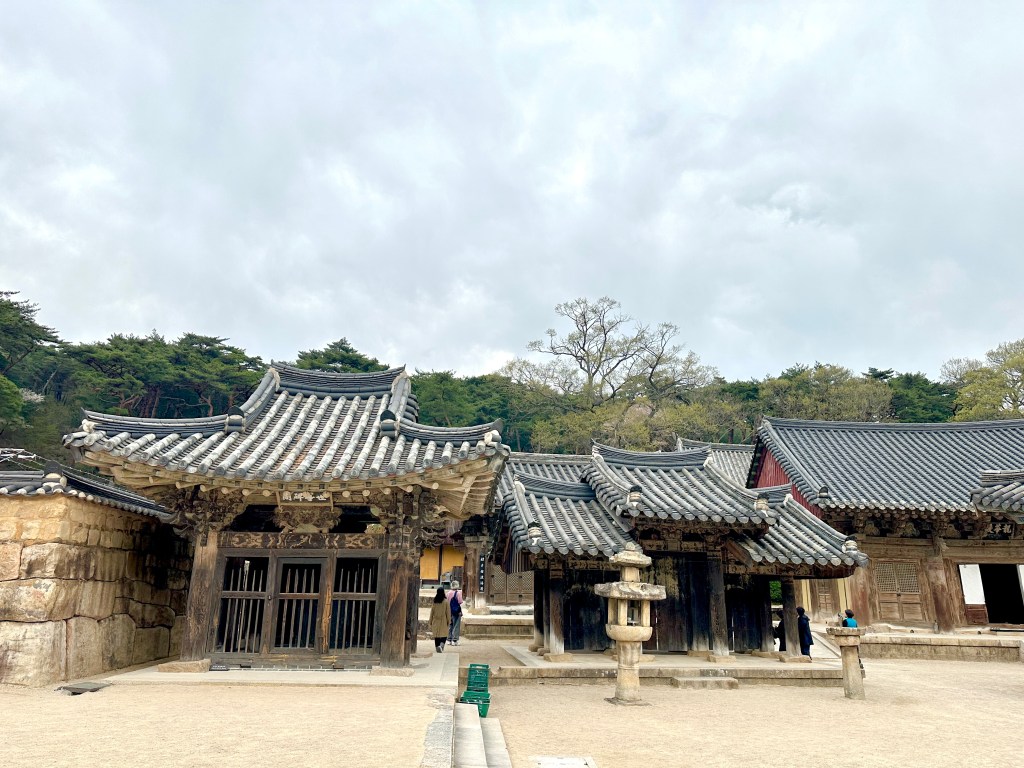
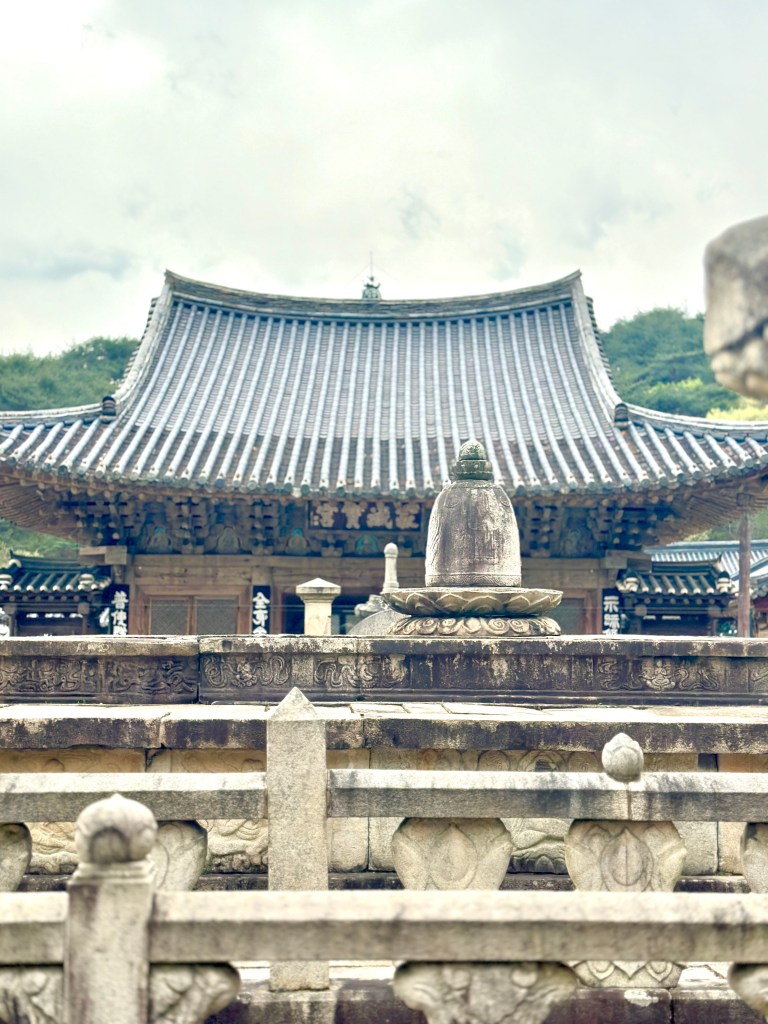
On the western side of YongHwa-Jeon, Neo-Confucian shrine-style constructions grace the landscape. Although lacking walls, these structures exhibit traditional figures with three doors, the central one towering above the others. Known as GeaSanJoDang (Shrine for Open Mountain), this gate shelters the HaeJangBoGung (Precious Palace of Tripitaka in the Sea) within its confines. Originally commissioned by Queen MyeongSeongHwangHoo of the Joseon dynasty in 1901 to enshrine a portion of the Tripitaka Koreana, these buildings now safeguard the portrait of JaJangYulSa, the revered Buddhist monk credited with the establishment of TongDo-Sa, while the Tripitaka finds its abode in the museum.

SangRo-Jeon
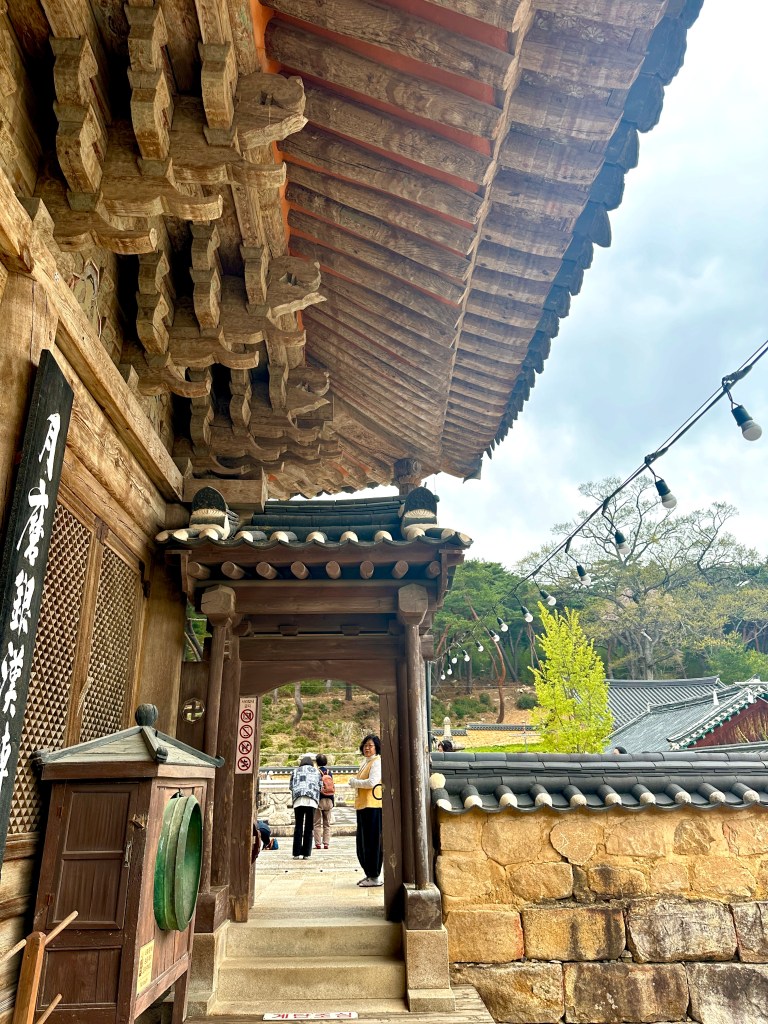
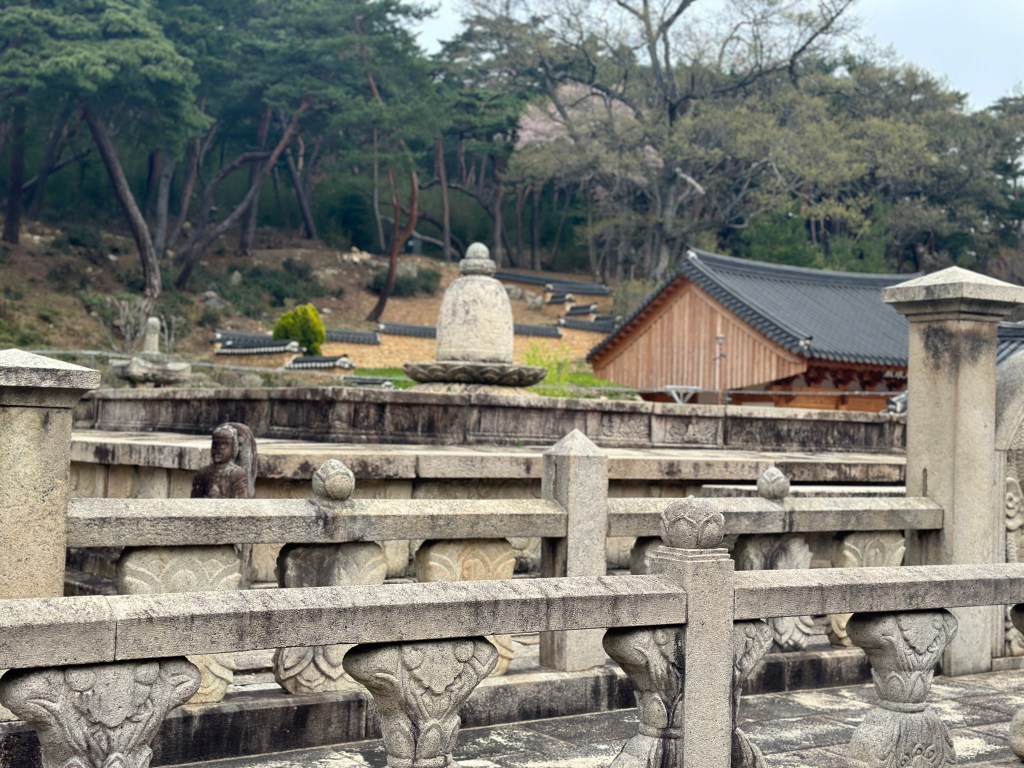
At the heart of SangRo-Jeon lies its most revered edifice, the GeumGangGyeDan (Ordination platform). This sacred platform is adorned with a Pagoda housing the Sarira of Gautama Sakyamuni Buddha. Open on specific days according to the lunar calendar, visitors are required to remove their shoes and stow them in provided pouches before entering. Once inside, one witnesses a profound sight as believers engage in circumambulation around the Pagoda, a traditional Buddhist practice involving three rotations while offering prayers.
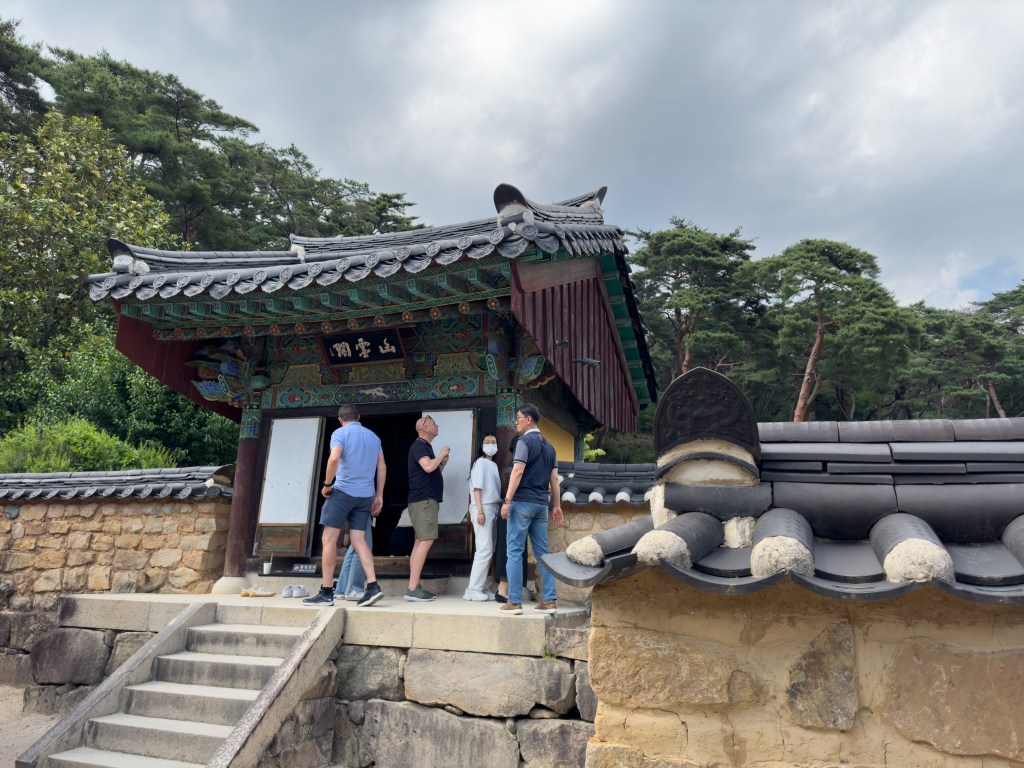
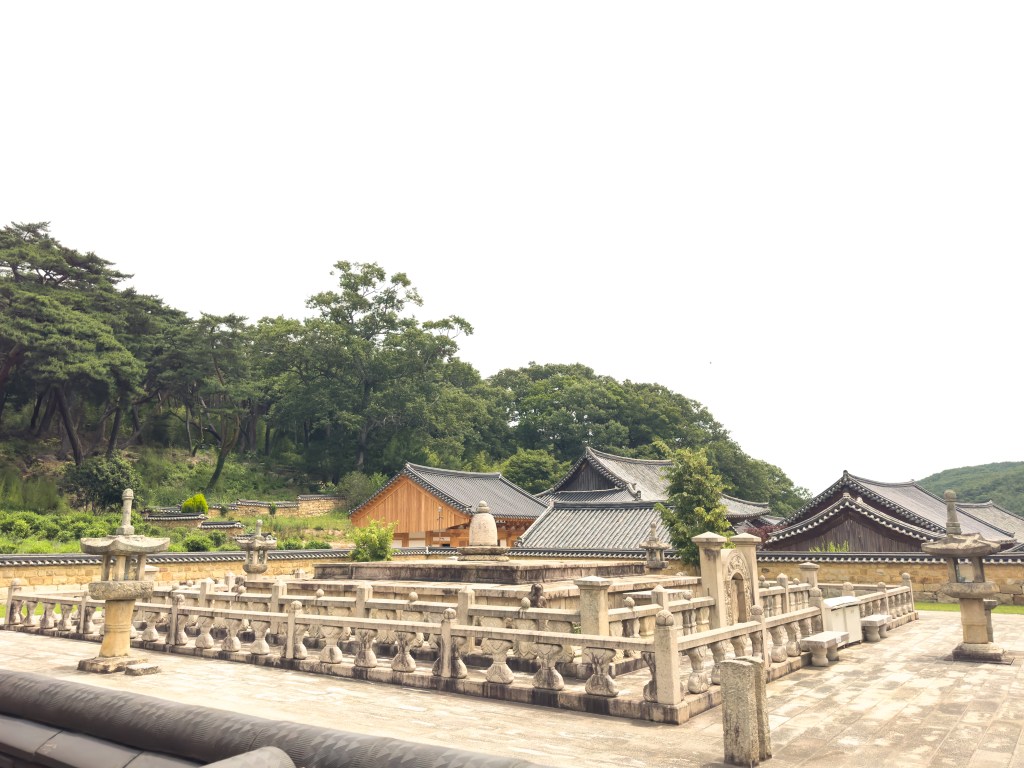
Positioned at the right flank of the wall enclosing the GeumGangGyeDan, Sallyeonng-Gak serves a dual purpose. Originally dedicated to the mountain god, it now functions as a stepping stone for visitors seeking glimpses of the GeumGangGyeDan when it is closed.


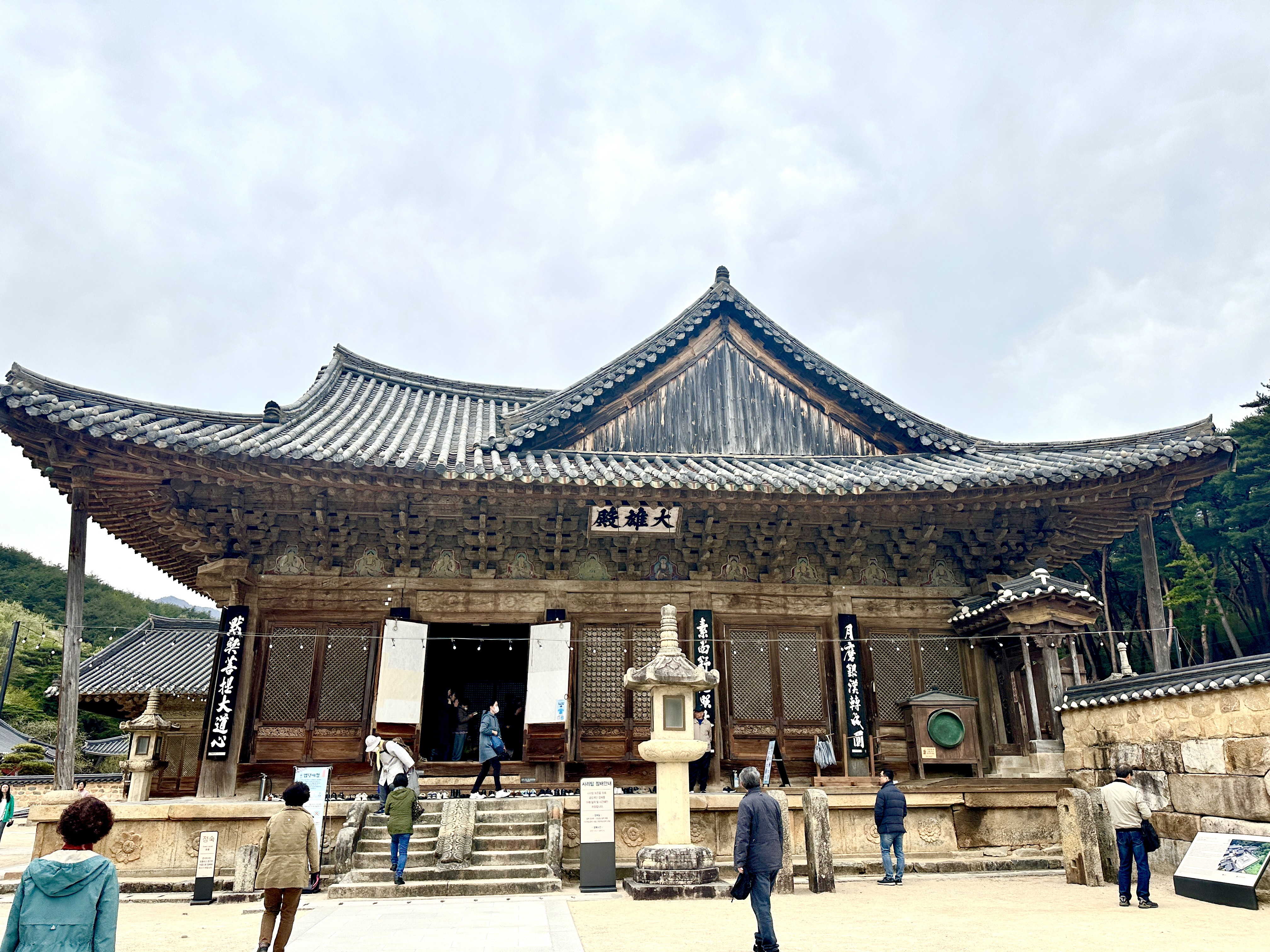
Facing the Pagoda stands the main hall, distinguished by three tablets positioned on each side—an arrangement typical of Buddhist temples. However, owing to the enshrinement of the authentic Sarira of Gautama Sakyamuni Buddha, this main hall is named JeokMyeolBoGung (Precious Palace of Nirvana), DaeWoong-Jeon (Hall of Heroes), and GeumGangGyeDan (Ordination platform). Notably, instead of housing statues of the Buddha, the main hall features large windows oriented towards the Pagoda, creating a surreal ambiance as devotees bow deeply towards the Pagoda through these openings.
Adjacent to the main hall lies the pond inhabited by the dragon, further enhancing the spiritual aura of this sacred space.
Additional Facilities and Amenities at TongDo-Sa.

In addition to the structures previously mentioned, TongDo-Sa encompasses various other buildings and amenities essential for its functioning. These include accommodation for monks, administrative offices for Buddhist affairs, a cafeteria for nourishment, and a souvenir shop for visitors to procure mementos of their visit. While these facilities may not be open to the public, they contribute to the holistic functioning of TongDo-Sa.
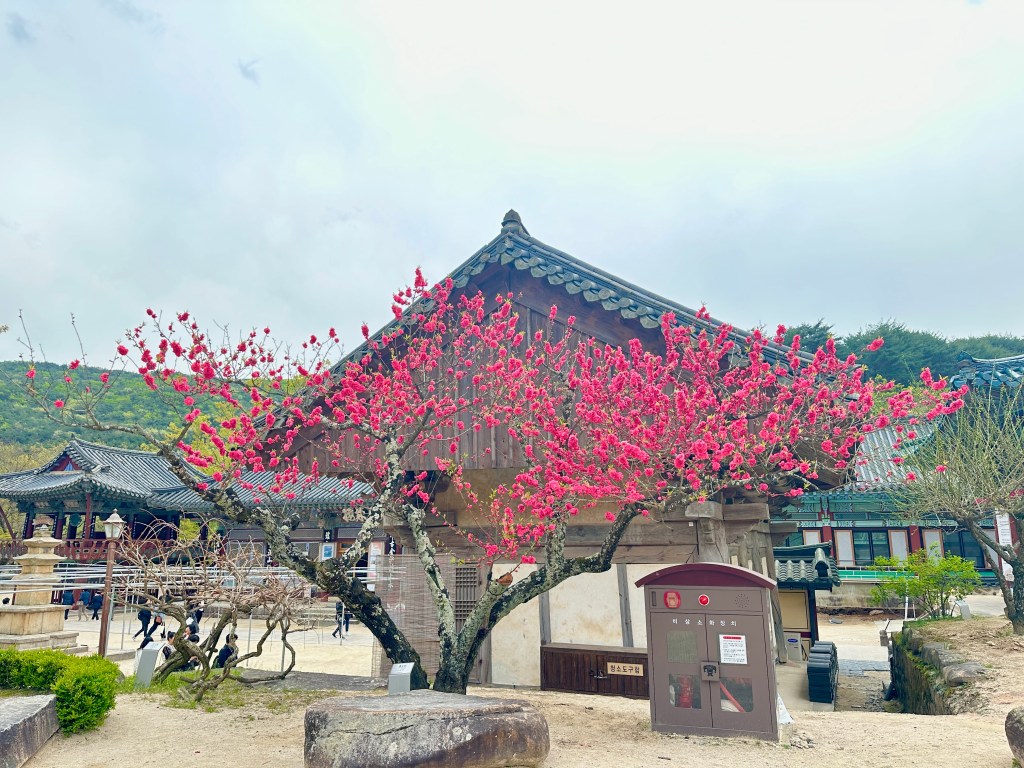
It’s important to note that TongDo-Sa boasts a more extensive infrastructure compared to typical temples, with each Ro-Jeon encompassing a wealth of buildings and halls. Whether exploring the sacred grounds or seeking guidance, encountering a knowledgeable guide can enhance your experience by providing accurate and insightful information about the site.
Tip
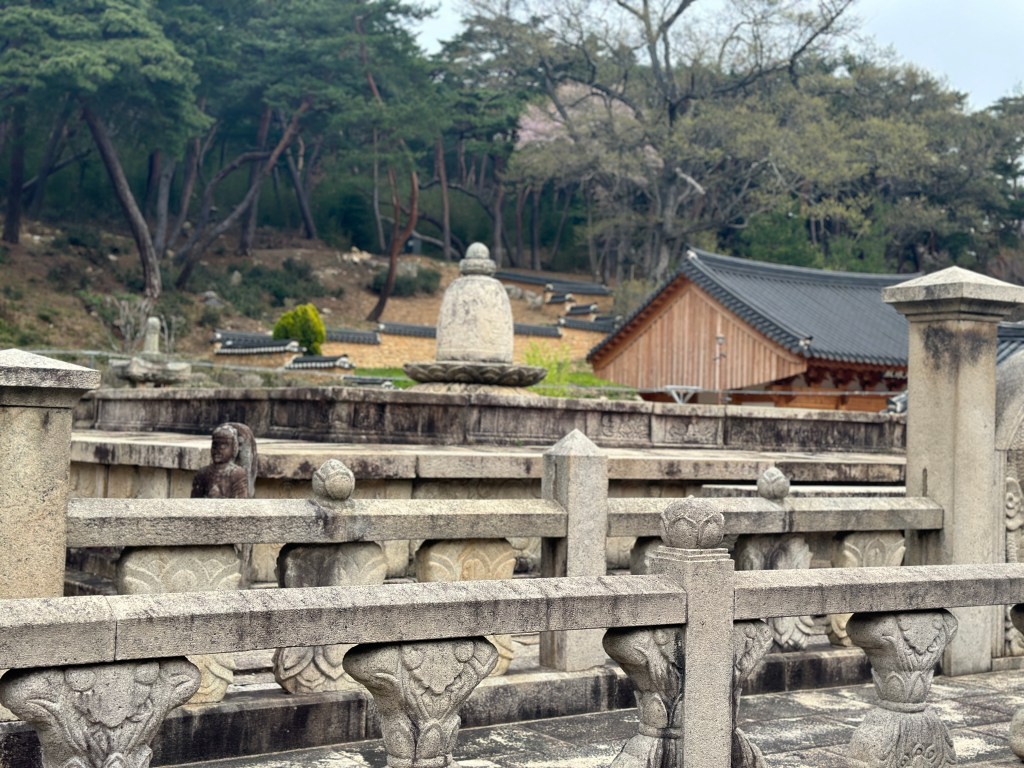
GeumGangGyeDan (Ordination Platform) Opening Days.
The GeumGangGyeDan at TongDo-Sa is open on specific days according to the lunar calendar, including the 1st to 3rd, 15th, 18th, and 24th days, as well as Buddha’s birthday. Visitors can access the platform from 11 AM to 2 PM on these designated days
Restaurant
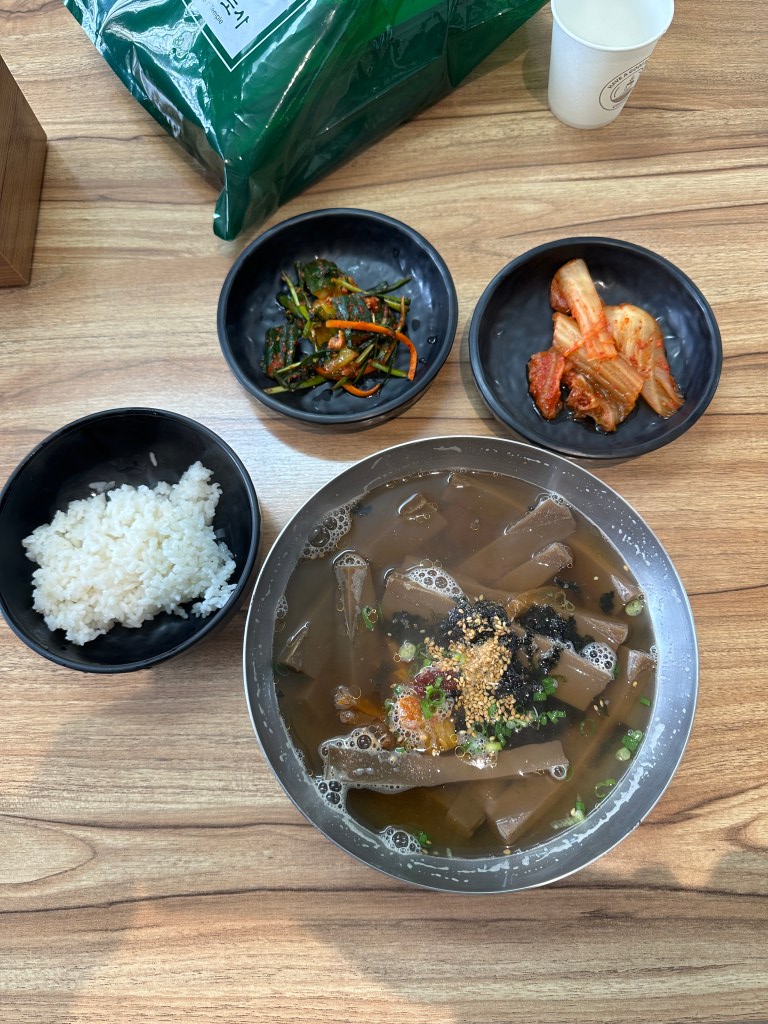
HanSongJeong
While the HanSongJeong cafeteria within TongDo-Sa is exclusively open to its devout followers, visitors have the option to explore alternative dining venues. Although located near the entrance of TongDo-Sa, I highly recommend HanSongJeong for a simple yet satisfying meal experience.
HanSongJeong’s menu is rooted in the Vegan lifestyle practiced by Korean Buddhist monks. From traditional favorites like Bibimbap (vegetable mixed rice) and BuChimGae (vegetable pancake) to refreshing offerings like Mulmuchim (Acorn jelly salad) and tofu-based dishes, their selection caters to a variety of tastes. Additionally, they offer a selection of noodles to complete your meal.
With prices ranging from 5,000 won to 10,000 won, HanSongJeong provides an affordable and wholesome dining experience amidst the tranquil surroundings of TongDo-Sa.
Public transportation (From Seoul)
While TongDo-Sa has its own KTX station, many travelers opt for the convenience of intercity buses.
You can make your way to the Busan terminal, located at Nopo-Dong subway station. There, transfer to an intercity bus bound for Sinpyeong (TongDo-Sa) bus station. Buses operate from 06:30 to 20:40 at intervals of every 20 minutes.
Upon reaching Sinpyeong (TongDo-Sa) bus station, disembark and take a short taxi ride of approximately 5 minutes to reach TongDo-Sa. This convenient and efficient transportation route allows visitors to easily access the tranquil sanctuary from the bustling city of Seoul.
Drivers information
Admission to TongDo-Sa is free for all visitors. However, please note that there is a parking fee ranging from 2,000 to 9,000 won, depending on the duration of your stay. We appreciate your understanding and cooperation
Website
Official
Temple stay(only offer Korean)
https://www.templestay.com/temple_info.asp?t_id=temple089
Address
583 Jisan-ri Habuk-myeon Yangsan-si Gyeongsangnam-do
Relevant touristic places
Cafe
Tong°C
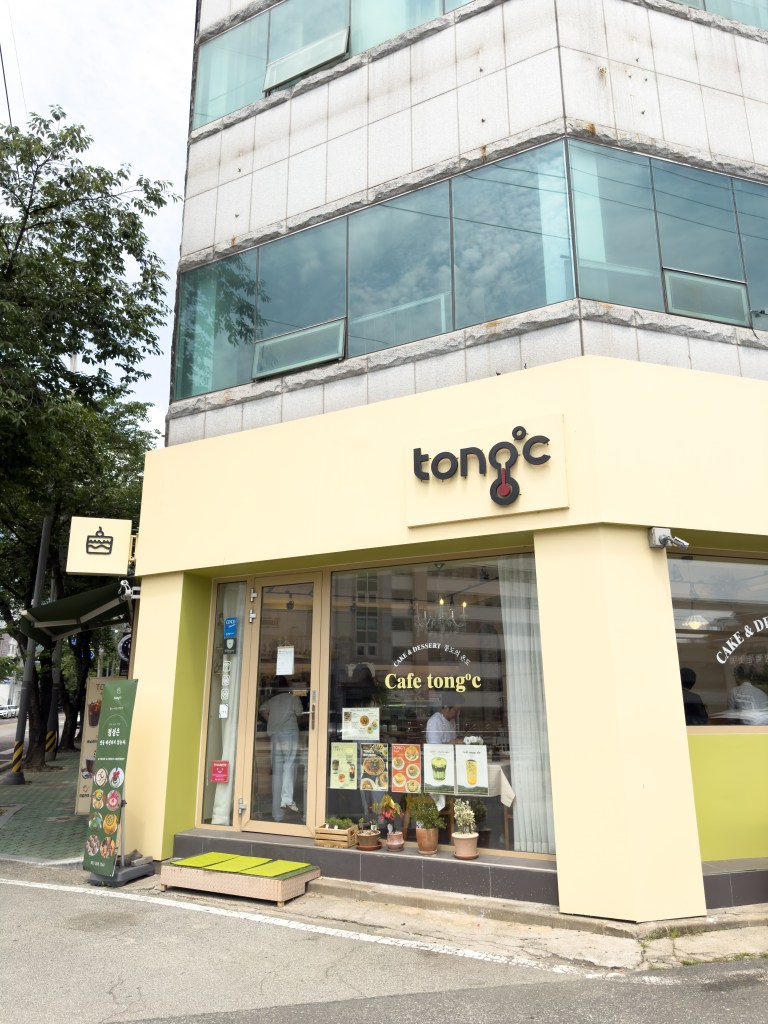
Nestled nearby is Cafe Tong°C, a charming bakery cafe boasting a cozy atmosphere with seating for about 12 guests across four tables. Its delightful appearance immediately captivates visitors. Offering more than just freshly baked goods and bread, the cafe also features specialties like Egg in Hell (Shakshuka).
Despite its petite size, I embarked on a lunchtime adventure by bravely ordering the Egg in Hell solo. While the snug setting prompted a swift departure, I wholeheartedly recommend this cafe to anyone seeking a quick bite before embarking on a temple stay.
Price range
Coffee and tea
3,000 ~ 8,000 won
Bread
3,000~
Egg in hell
15,000
Opening hours
10:00 ~ 19:30 (Tuesday ~ Sunday, Closed on Monday)
*May closed earlier than usual if all desserts are sold out.
Adress
38, Tongdosa-ro, Habuk-myeon, Yangsan-si, Gyeongsangnam-do

Petroglyphs of Bangudae Terrace in Daegok-ri, Ulju.
If you’ve explored the National Museum of Korea, you may have noticed the wall adorned with large whale paintings in the first exhibition hall. These paintings are replicas of the Petroglyphs of Bangudae Terrace in Daegok-ri, Ulju. While not originals, they offer insight into the Paleolithic period, as the Bangudae terraces are believed to be among Korea’s oldest petroglyph relics.
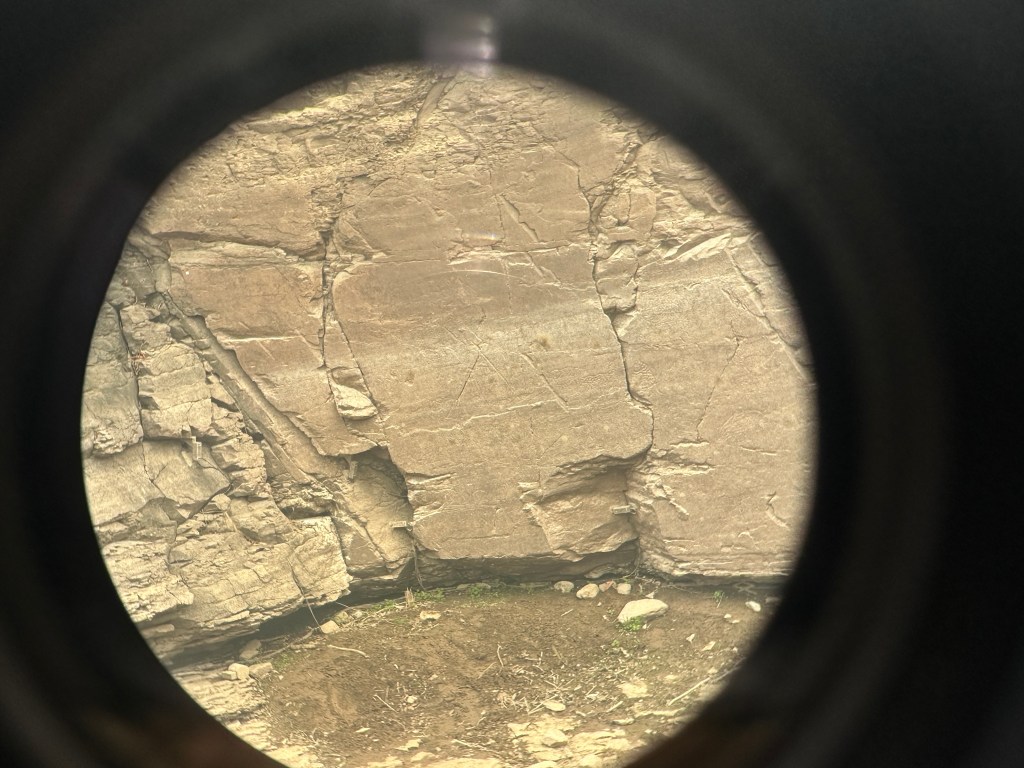
To reach the site, transportation is required to the Ulsan Petroglyph Museum, followed by a scenic 20-minute walk along the trail to the Petroglyphs of Bangudae Terrace. While the terraces may not be as expansive as anticipated, visitors can observe intricate details for free through binoculars. For those unfamiliar with binocular use, automatic binoculars with large interactive monitors are available.
Initially planning for a 40-minute visit, I found myself spending closer to 1 hour and 20 minutes, including time spent exploring the museum. The experience, both along the trail and at the terrace, was truly captivating.
Public transportation
For public transportation, it’s recommended to take a taxi due to the infrequent bus schedules.
Drive
From Ulsan KTX station, it’s only a 20-minute drive
It’s a 30-minute drive from Tongdo-Temple
Address
991, Daegok-ri, Eonyang-eup, Ulju-gun, Ulsan
Museum
254, Bangudaean-gil, Dudong-myeon, Ulju-gun, Ulsan
 EZ K-PEDIA
Leave a comment