

Buddhist temple Project: Practice 10

The last of 3 valuable treasures
In May this year, I introduced two invaluable treasures among the three most significant Buddhist temples in Korean Buddhism. Tongdosa represents the Buddha himself, while Songgwangsa stands for Buddhist monks. The last temple, which represents Beopbo—the Buddha’s teachings, also known as Dharma—is Haeinsa Buddhist Temple. The reason it symbolizes the Buddha’s teachings is simple: this temple houses the special depositories known as Janggyeong Panjeon, which store the Tripitaka Koreana, a collection of 81,258 wooden printing blocks carved with Buddhist scriptures.
Containers throughout Korean history

Because the Tripitaka Koreana plays such a significant role in this temple, people often assume that Haeinsa’s history is closely tied to this UNESCO heritage alone. However, Haeinsa has a much longer history than its iconic relics. According to official records, Haeinsa was founded in 802 during the Three Kingdoms era of Korean history, within the Silla Kingdom, with support from the king and queen. Despite suffering damage and undergoing several rebuilds over its 1,700-year history, the temple has never been abandoned, thanks to its enduring spiritual significance. This resilience is one of the reasons the Tripitaka Koreana was stored here during the Joseon dynasty.
A calm mind, like the sea, where all truths can be imprinted on its surface
‘Haein’ literally means “sea” and “stamp,” and is a shortened form of Haein Sammae (sāgara-mudurā-samādhi). This name comes from the Hwaeom-gyeong (Buddhāvataṃsaka Sūtra), which is considered a fundamental scripture of Mahayana Buddhism. I won’t delve into the details of the sutra, as it’s quite complex. The term ‘Hae’ represents the truth that exists in the nature of people. However, this truth is often obscured and distorted by the agonies of life, much like waves and wind on the sea. By focusing our consciousness until it becomes as calm as the surface of the sea, the truth can appear clearly. In other words, Haein is a path toward achieving Nirvana.
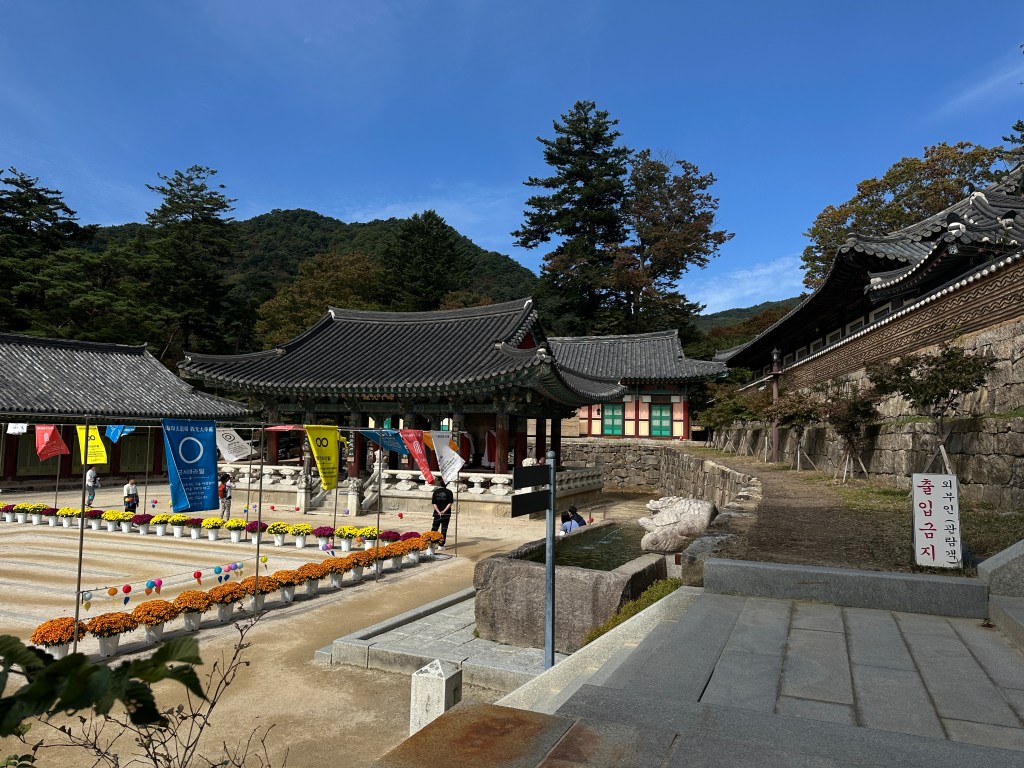
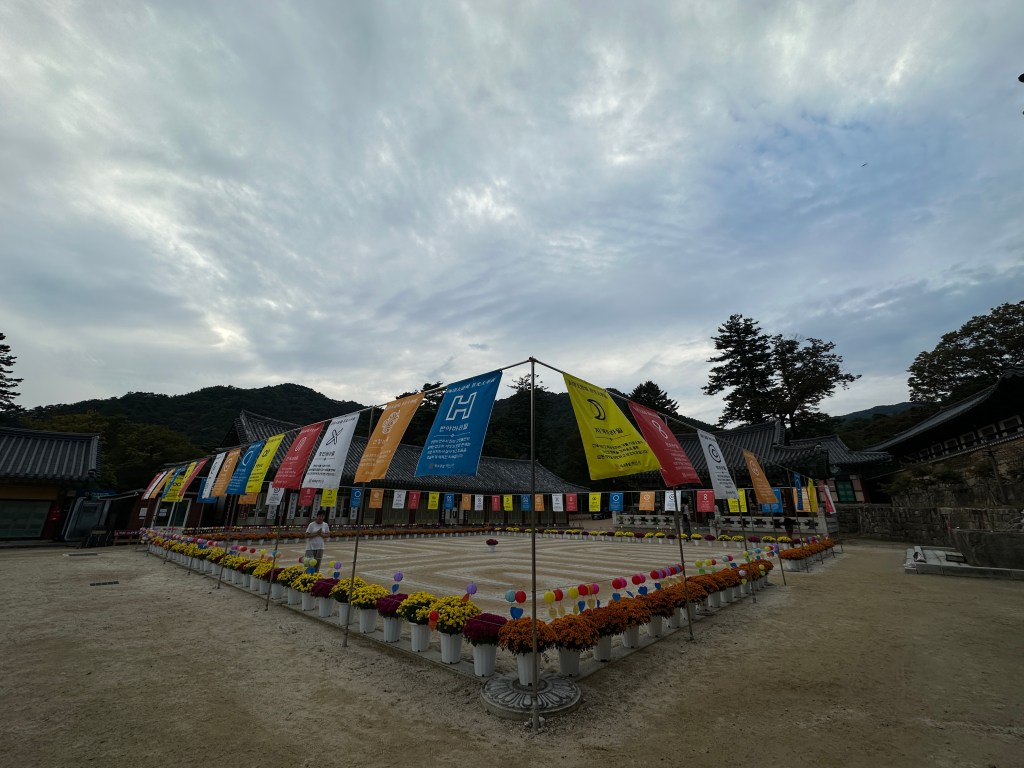
This temple uniquely reflects this concept with its walking meditation area, located in front of the book cafe. Believers walk along a special diagram installed in the square. This diagram, intricately redesigned in the shape of a swastika (卍) by the eminent Buddhist monk UiSang, represents Beopseongge (Song of Dharma Nature), a poem summarizing the core ideas of the Hwaeom-gyeong. The original Haein-do consisted of 210 characters arranged in 30 lines, with 7 characters per line.
Meanwhile, the walking meditation area has been physically interpreted as a labyrinth made of stones. Believers walk this labyrinth as slowly as possible, repeating the journey three multiple times while chanting dharma or their personal wishes. I highly recommend this walking meditation, which is a unique experience available only at this Buddhist temple
DaeJeokGwang-Jeon, main hall of HaeIn-Sa
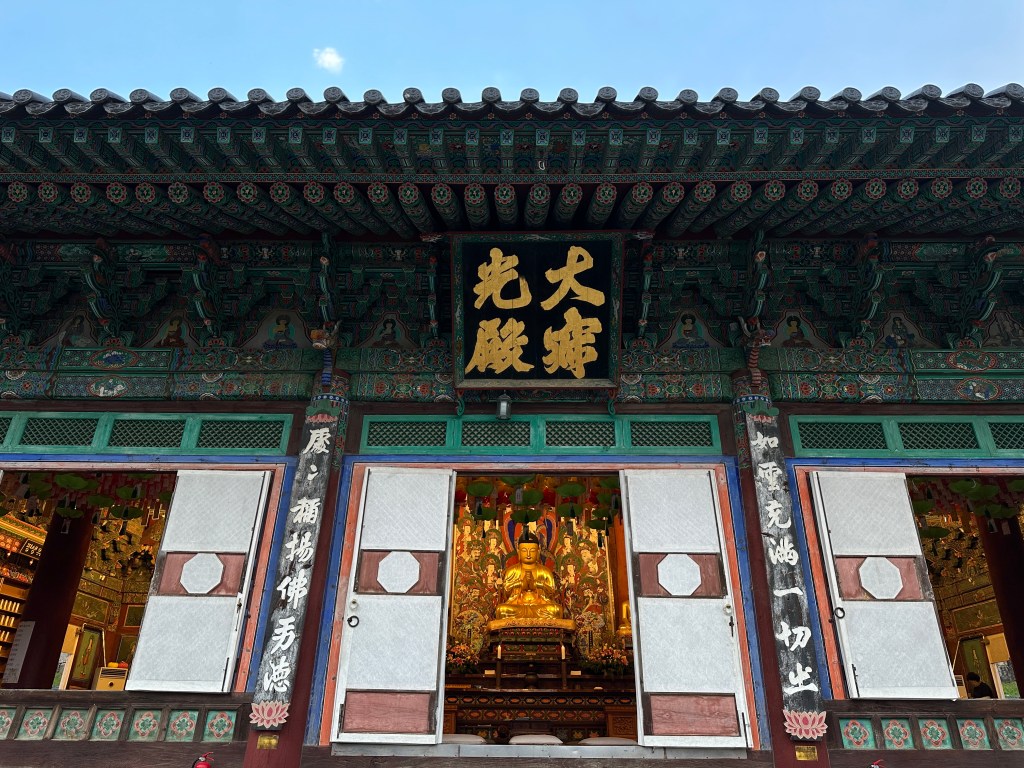
As this Buddhist temple embodies the Hwaeom-gyeong (Buddhāvataṃsaka Sūtra), Haein-sa primarily enshrines the Virocana Buddha, who represents the Buddha of the Hwaeom-gyeong. In line with this, the oldest wooden Virocana statue can be found in Viro-jeon, a hall located next to the main hall.
JangGyeongPan-Jeon & PalManDaeJangGyeong
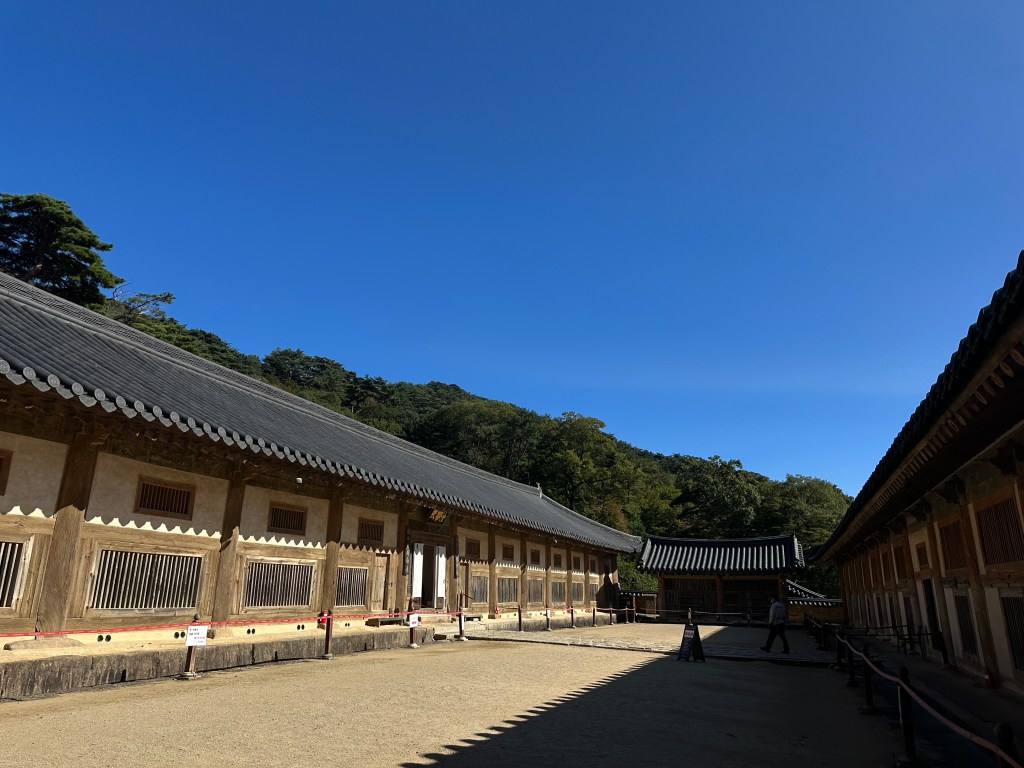
Janggyeongpan-jeon is the oldest and most famous building in Haein-sa. Its sole purpose is to store the Palman Daejanggyeong (Tripitaka Koreana). The Tripitaka Koreana was created in the 13th century during the Goryeo dynasty, when Korea was under attack by Mongolian invaders. The people of Goryeo sought to repel the Mongols through the power of Buddhism, which was the national religion. These wooden printing blocks were manufactured twice because the first set was destroyed by fire. The second set was initially stored on Ganghwa Island, the temporary capital of Goryeo.
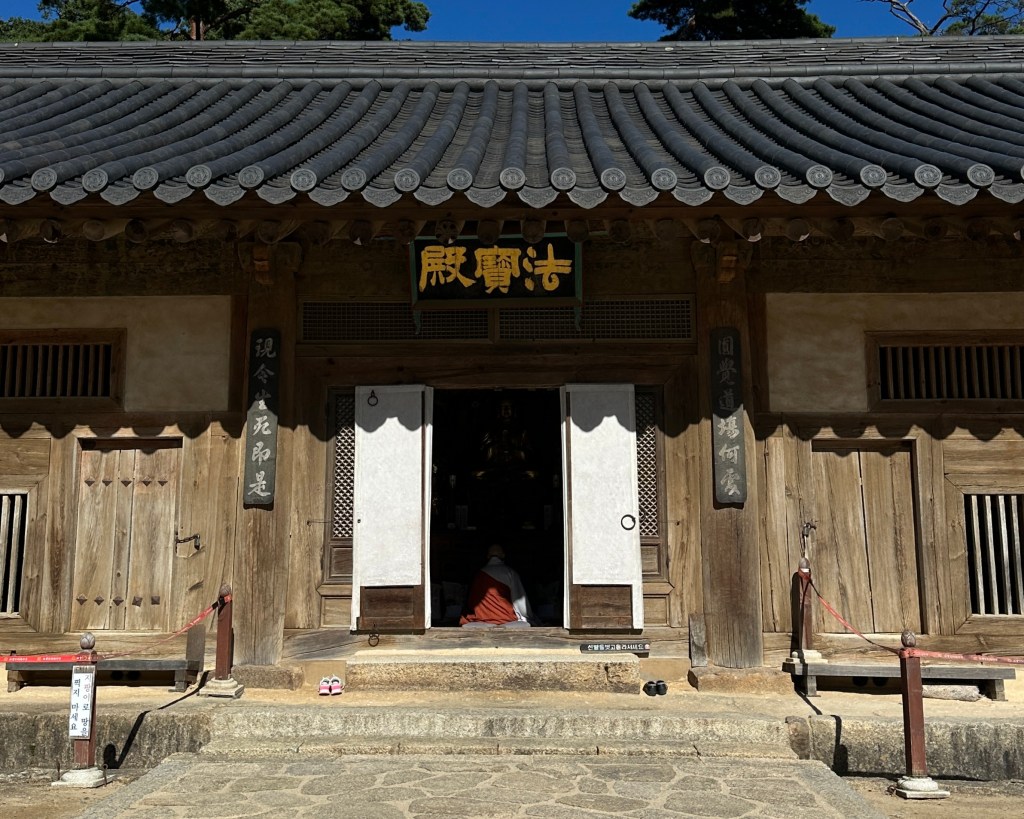
In the 14th century, during the Joseon dynasty, the entire Tripitaka Koreana was moved to Haein-sa to protect it from Japanese invasions. This building, known as ‘Boan-dang’ in historical records for long, has undergone several repairs over the centuries. Fortunately, it has never suffered damage from war or invasion since being situated here.
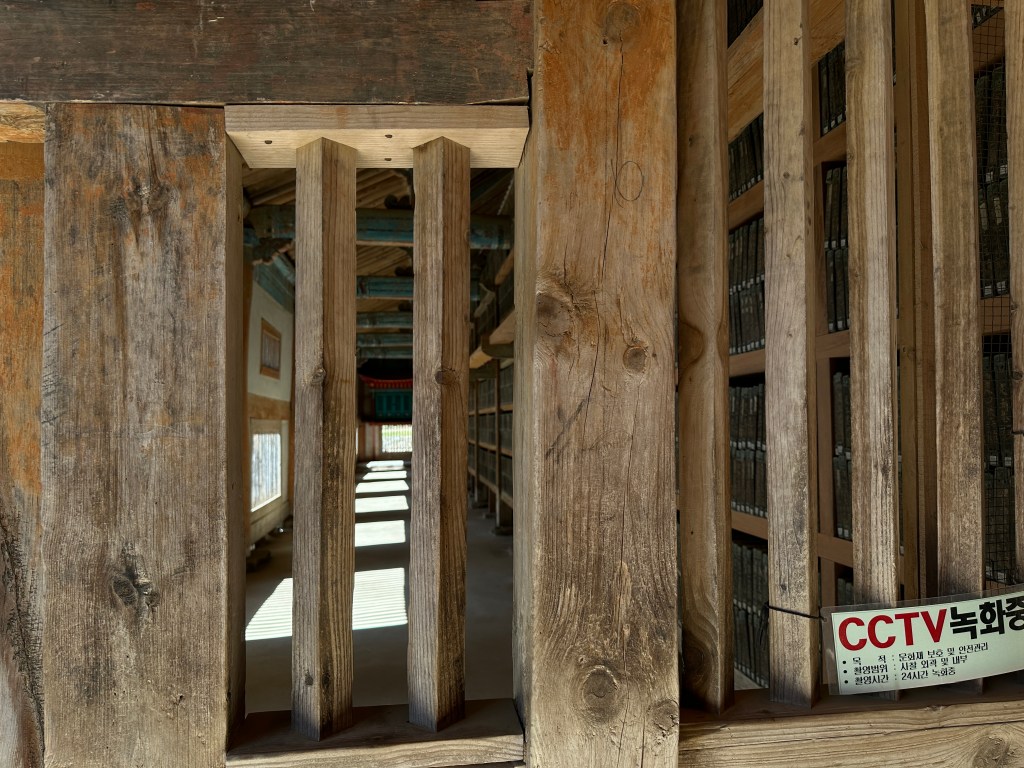
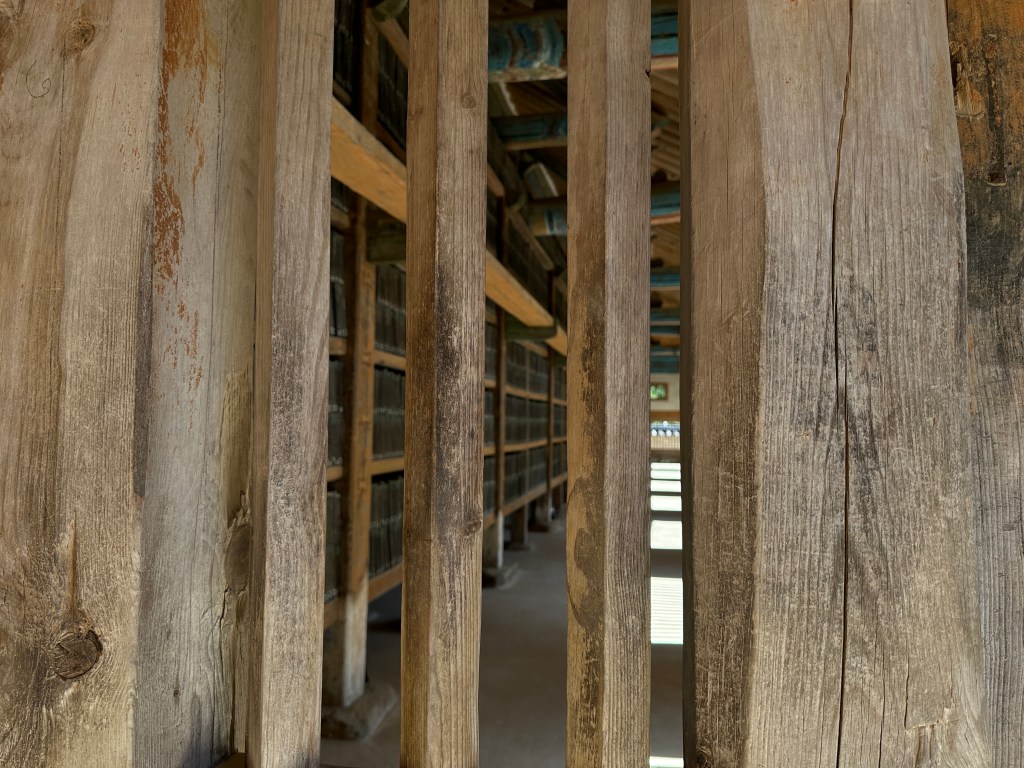
The Palman Daejanggyeong has remained intact for nearly 1,000 years, despite being made of wood, thanks to the functional architectural design of Janggyeongpan-jeon. The building is located at a windy point where three valleys meet, ensuring proper ventilation. It has windows of different sizes on the north and south sides, allowing the wind to circulate up and down. The wooden blocks are stored on thick wooden frames, creating enough space between them. The floor is layered with charcoal, ash powder, salt, and sand, which helps maintain a consistent humidity level and prevents insect damage. Due to the diligent efforts of our ancestors to preserve these treasures, both Janggyeongpan-jeon and the Palman Daejanggyeong have been designated as separate UNESCO World Heritage sites.
Heaven of AmJa(Hermitage)

Haein-sa is surrounded by at least nine Amja (hermitages) that were home to eminent monks, creating distinct pilgrimage routes for believers. The most famous of these is Beakryeon-am, which served as the hermitage for the renowned Seongcheol Monk.


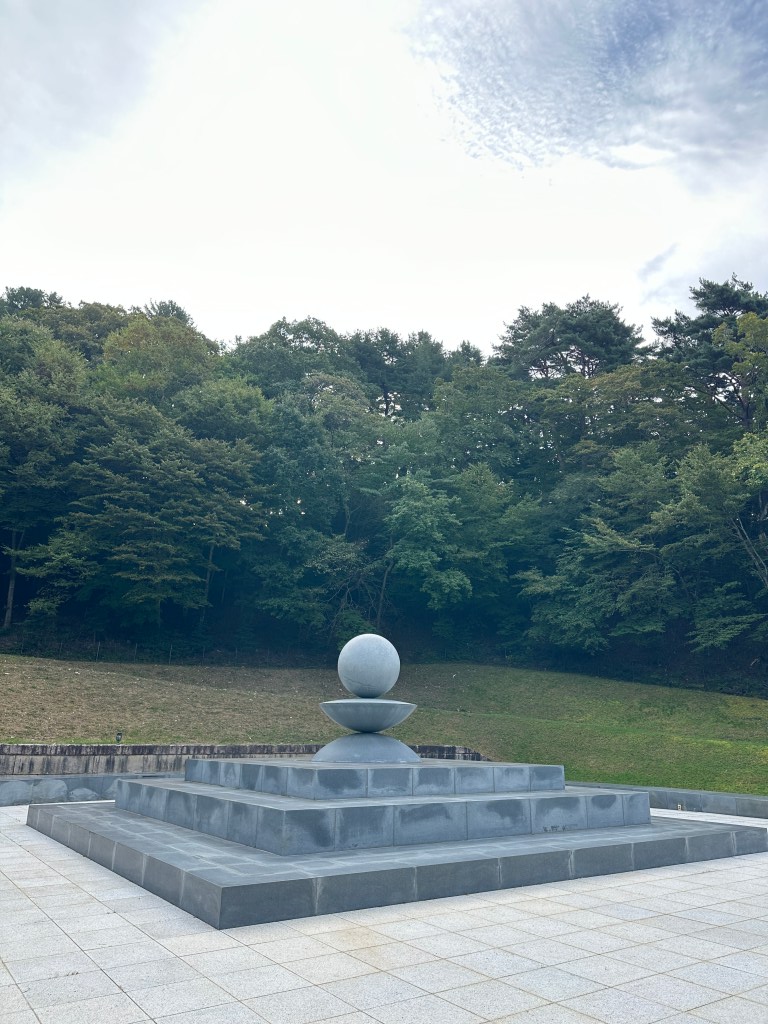
Known for his unusual practices, such as requiring people, regardless of their status—whether president or child—to perform 3,000 big bows before meeting him, Seongcheol Monk attracted many followers through his distinctive approach. Beakryeon-am is dedicated to him, featuring a life-size statue of the monk in the main hall. His pagoda, located in Dapjeon (the field of prominent monks’ pagodas), stands out due to its impressive size.
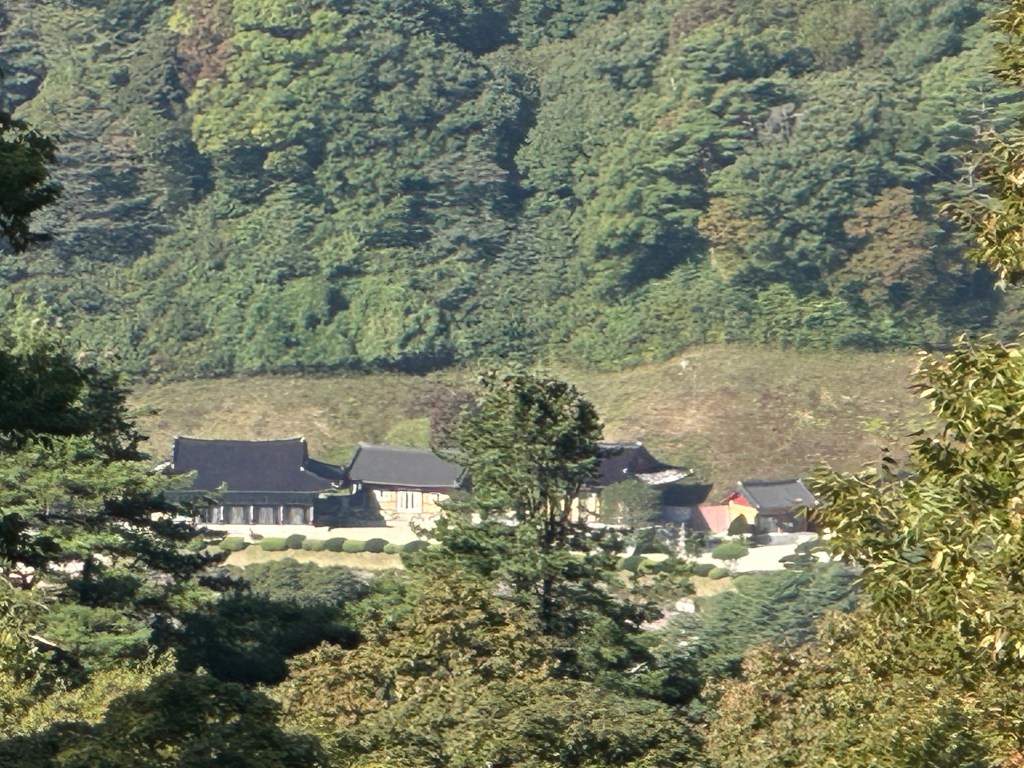
While Beakryeon-am is well-known, each Amja has its own unique story and scenic beauty. Koreans who participate in temple stays at Haein-sa often embark on pilgrimages around these hermitages. Most are situated in the mountains, so I recommend wearing trekking shoes and hiking in the early morning to fully appreciate the experience.
Tip
JangGyeongPan-Jeon Opening Days.
10AM every Sundays.
The exterior of Janggyeongpan-jeon is open to visitors daily. However, if you wish to explore the interior, advance reservations are required. Reservations must be made online. Previously, tours were offered twice every Sunday, but currently, there is only one tour available at 10 AM on Sundays for up to 20 people, due to a government digitalization program.
Cafe’
GooGwang-Ru Book Cafe
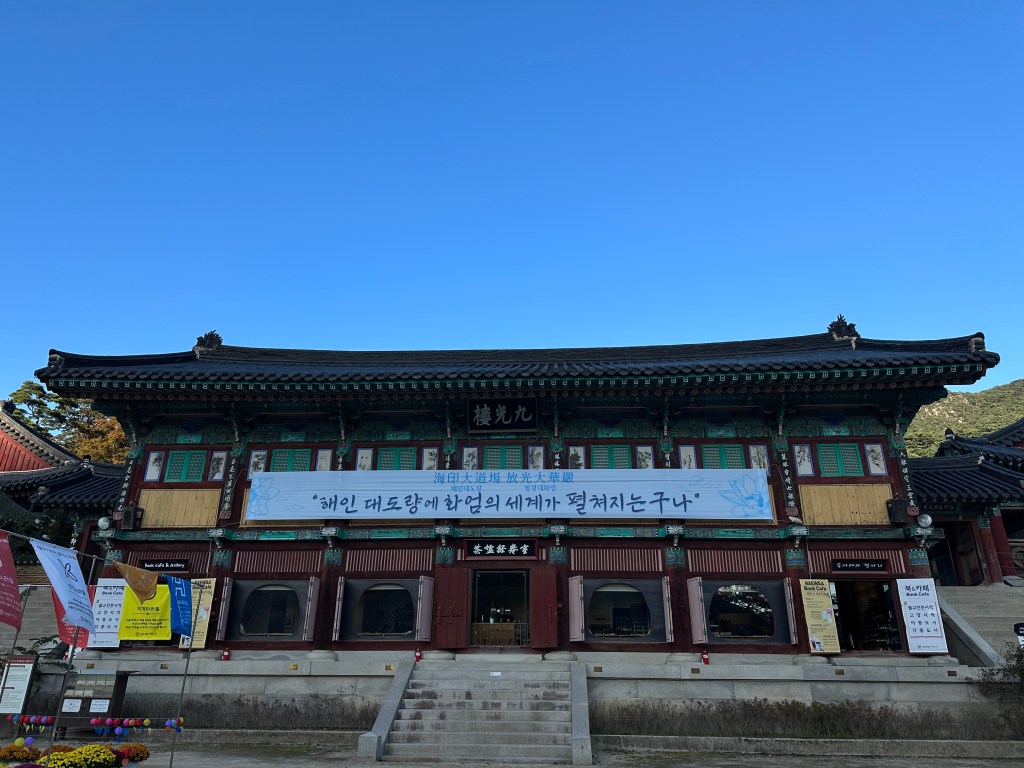
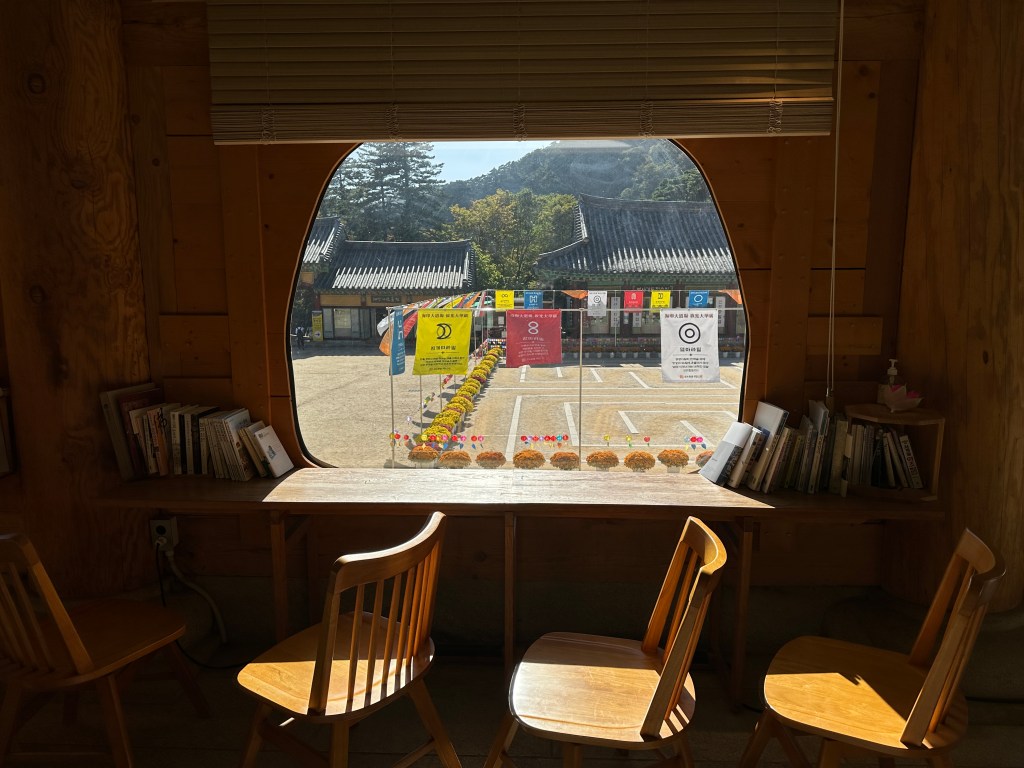
Located in Haein-sa, GooGwang-Ru Book Cafe features a distinctive circle-shaped window. This cafe offers a selection of books, coffee, and tea, providing a unique contrast between patrons enjoying their tea and the sight of believers engaging in walking meditation.
SeonJae Cafe
SeonJae Cafe is situated near the entrance of Haein-sa. The owner, a Buddhist monk with a passion for incense and tea, has created his own unique blends of both. His signature incense, Agarwood, infuses the tea with a distinctive aroma that reflects his personal touch.
Buddha’s world in South Korea
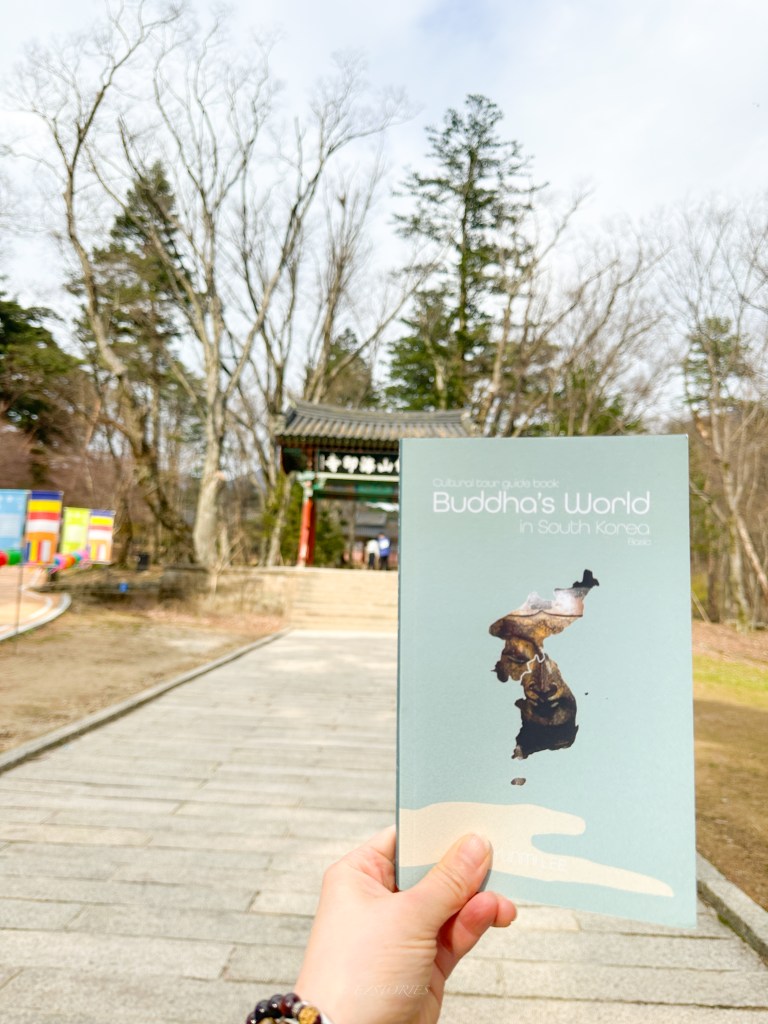
As Haein-sa is one of my favorite temples, I donated two copies of my book, Buddha’s World in South Korea, to the temple stay site. You can read the book in the open cafe at the temple stay site. 🙂
Public transportation (From Seoul)
From Seoul
- Take the KTX from Seoul to Dongdaegu Station
- From Dongdaegu Station, transfer to the metro and get off at Seobu Jeongnyun (Western Intercity Bus Terminal Station)
- From there, take a bus to Haein-sa Temple (approximately 1.5 hours). Buses run at 40-minute intervals.
- Walk for about 30 minutes to reach the main gates of the temple
Website
Official(only offer Korean)
https://kb2.templestay.com/index.asp?t_id=haeinsa
Temple stay
https://eng.templestay.com/temple_info.asp?t_id=haeinsa
Address
Hapcheon-gun Gyeongsangnam-do132-39, Haeinsa-gil, Chiin-ri, Gaya-myeon
Relevant touristic places
DaeJangGyeong Park(Theme Park of The Tripitaka Koreana)
Opened in 2011 to celebrate the millennium anniversary of the completion of the Tripitaka Koreana, DaeJangGyeong Park is both a museum dedicated to Korean printing and an educational playground for children. Visitors can experience the entire process of making wooden printing blocks.
Admission Ticket (KRW)
Adult: 5,000
Children: 3,000
Soldier & Senior (over 65 years) : 2, 000
Operating Hours
10:00 ~ 19:30 (Tuesday ~ Sunday, Closed on Monday)
Adress
Gyeongsangnam-do, Hapcheon-gun, Gaya-myeon, Yacheon-ri, 996
Website(only Korean)
Sori-Gil(Sori trail)

Sori-gil, also known as the Sori Trail, is a beautiful hiking path that stretches from DaeJangGyeong Park (Theme Park of The Tripitaka Koreana) to Haein-sa. The trail follows a scenic route through the Hongryu-dong Valley, which has been renovated into the Sori-gil. The name “Sori-gil” translates to “Trail of Sound,” reflecting the natural sounds one can hear while hiking, such as birdsong, the flow of the valley’s water, and the rustling of the wind through the pine trees. Additionally, the name is interpreted in two ways: as a trail for realizing benefits, according to Chinese characters, and as a path to Heaven, according to Buddhist terms.
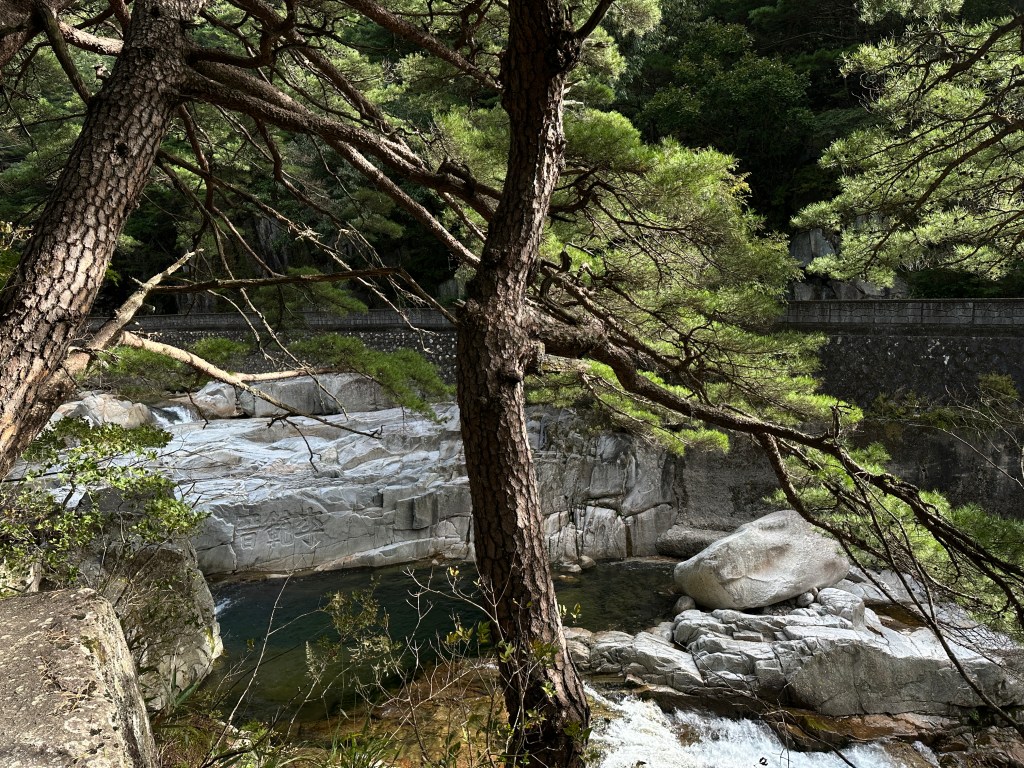
The trail is renowned for its stunning autumn foliage, where the vibrant red leaves reflect in the valley water, creating a striking red appearance. Originally named Hong-ryu, meaning “Red Flow,” the trail is approximately 7 km long and takes about 2 hours to hike. While Bus No. 808 can take you to each end of the trail in about 20 minutes, I recommend allowing enough time to fully enjoy the beauty of this trail.
Creative commons link
EZsPEDIA © 2024 by YUNMI LEE is licensed under CC BY-NC-ND
 EZ K-PEDIA
Leave a comment