
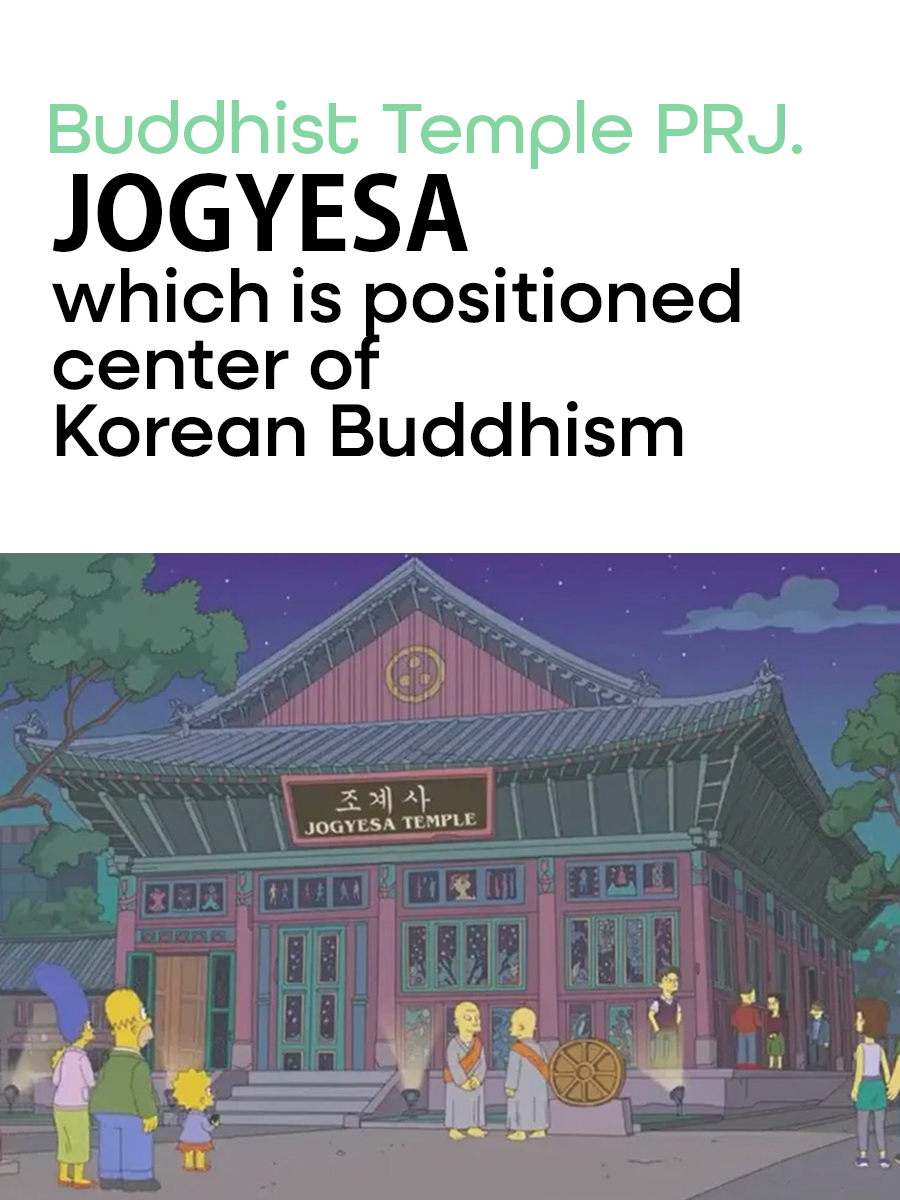
Buddhist temple Project: Practice 07

JoGye-Sa Buddhist Temple is a must-visit tourist destination in Seoul. Its fame reached new heights when it was featured on The Simpsons during the family’s visit to Seoul. Located in the center of Seoul, near the main royal palace, JoGye-Sa stands out as the only Buddhist temple situated in the old capital.
Only Tempel in Hanyang

The old capital, Hanyang, was delineated by the fortress wall encircling the northern parts of Seoul. Only within the fortress walls could be considered Hanyang. Due to the Neo-Confucian beliefs of the Joseon era, all Buddhist monks were expelled from Hanyang, and Buddhist temples followed suit. Over time, Buddhism seemed to fade away. However, Buddhist monks and temples retreated into the depths of the mountains, preserving their monastic practices.
History
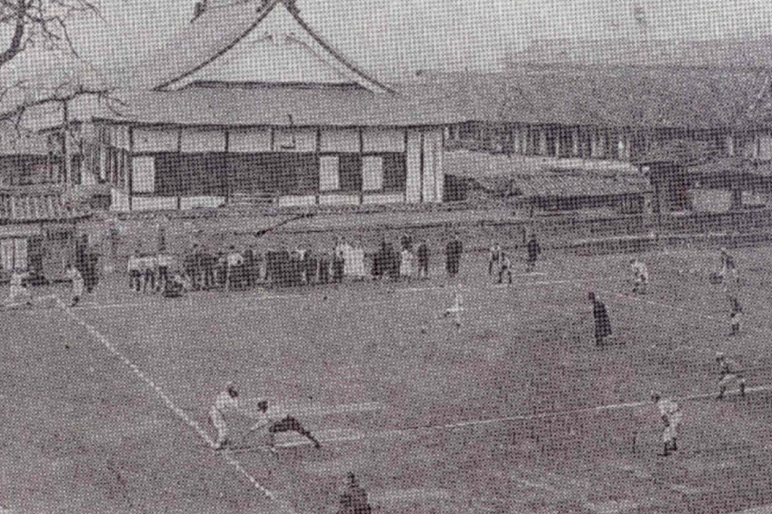
JoGye-Sa was established during the Japanese colonial period. Despite the efforts of Buddhist monks to defend the public during invasions, their status did not rise. Their dedication became evident at the end of the Joseon dynasty. When the country transitioned to the Daehan Empire under the same royal families, they permitted the construction of GakHwan-Sa in Hanyang, the current site of JoGye-Sa. However, soon after, much of their power was transferred to the Japanese emperor, leading to chaos in Korean Buddhism once again.
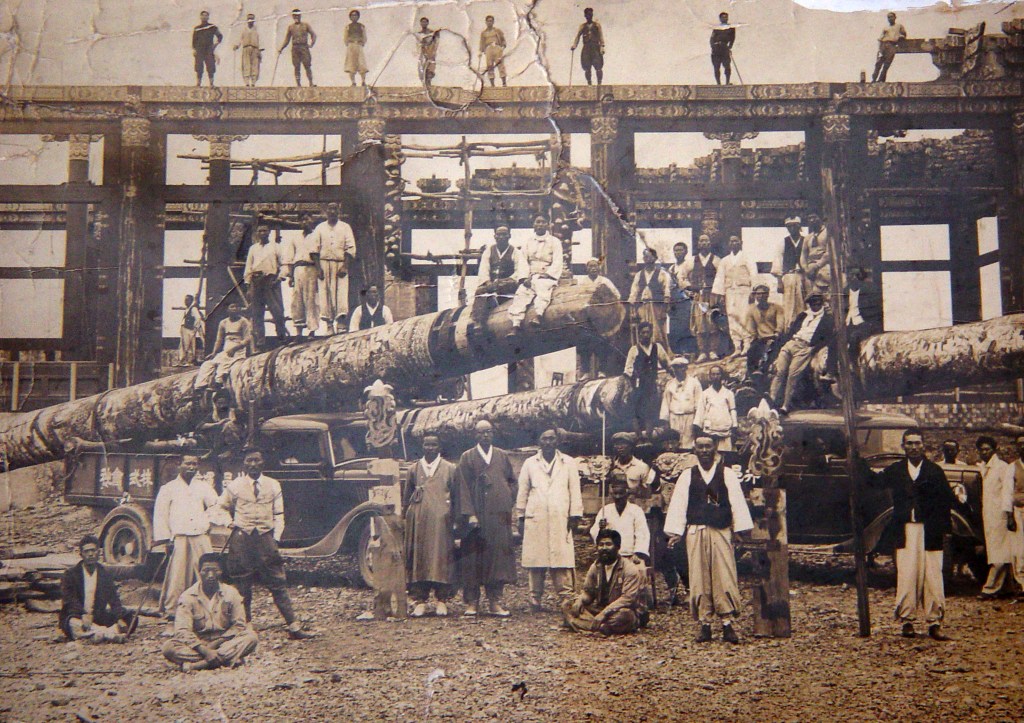
The Japanese emperor tempted Buddhist monks by suggesting the return of their prestige. They built BakMun-Sa Buddhist temple at the current site of the Silla Hotel, and many Buddhist monks opted for this suggestion. The strongest anti-Japanese Buddhist monk built TaeGo-Sa next to GakHwang-Sa to preserve traditional Korean Buddhism. GakHwang-Sa was sold to private ownership to raise funds for construction. Korean Buddhists then consolidated all of their orders and monks into the JoGye-Jong order.
After liberation from Japanese rule, it seemed to settle down in peace. However, only married monks could become abbot monks, following Japanese Buddhist tradition, causing discontent among monks. This practice contradicted Buddha’s teachings, prompting protests from unmarried monks, known as Bhikkus, to reclaim their authority. This division led to the formation of two orders: the JoGye order, which remains the largest order in Korea and is led by unmarried Buddhist monks, and the TaeGo-Jong order, founded by married monks in 1970.
Structure design
Due to its small site in the center of Seoul, JoGye-Sa couldn’t have typical construction. Despite lacking valleys and doors, it embodies the Buddhist world. Initially, it only had the Ilju-mun (Gate of One Pillar) as an entrance, and lacked the traditional Four Heavenly Kings until 2013. To enhance its appearance, the Abbot monk ordered the installation of steal panel statues, now serving as fancy guards unique to JoGye-Sa.
Main hall
The largest building in JoGye-Sa is the DaeWoong-Jeon (Hall of Heroes), slightly smaller than the GeunJeong-Jeon (Hall of Diligent Rule). Named after DaeWoong-Jeon, it primarily enshrines Sakyamuni Buddha. Adjacent Buddhas include YakSaYeoRae (Bhaisajyaguru: Buddha of Healing) and AMiTaYeoRae (Amitabha: Buddha of Western Heaven). While mostly open to the public, visitors are asked to refrain from prayer during designated times: 10 AM to 11 AM and 2 PM to 3 PM.
A 500-year-old pine tree stands tall beside DaeWong-Jeon, even surpassing the main hall in height, creating an auspicious ambiance. Recognized for its rarity in age and color, it was designated as natural heritage. CheonJin-Bul (Baby Buddha) sits smiling in front of the pine tree, providing a serene spot for rest, shielded from the sunlight.
Pagoda
Opposite Daewoong-Jeon, a towering scholar tree, approximately 450 years old, stands. Behind it, a 10-story Tap (Pagoda) is situated, featuring an octagonal roof instead of the typical tetragonal style. The octagonal shape symbolizes the noble eightfold path, while the 10 stories represent ten wholesome actions. Devotees often light incense and perform Tapdoli rituals for prayer. This pagoda houses a special treasure: the real Sari (Sarira), bestowed by Sri Lankan Buddhist monk AnagÄrika DharmapÄla, a Buddhist revivalist and writer, in 1913. Originally enshrined in a seven-story pagoda at Gakhwang-Sa, the Sari was relocated to a newly designed structure in 2009 due to its Japanese style. Believers engage in Tadori after lighting incense, circumambulating the pagoda three times clockwise while praying, in accordance with Buddhist tradition.
Information
Opening hours
04:20~22:00
Website
https://www.jogyesa.kr/eng/index.php
Address
55, Ujeongguk-ro, Jongno-gu, Seoul
Public transportation
5 minutes from Anguk Metro station exit No. 6 or Jonggak Metro station exit No.2
Admission fee
Free
Relevant tourist attraction
Almost all significant tourist spots, such as the Royal Palace, food streets, and open markets, are within a 30-minute walk. I’ll introduce a few places just a 5-minute walk away.
Templestay Information Center
The Templestay Information Center is located right across from Jogye-Sa Buddhist Temple. Its first floor serves as the Temple Stay Information Center, a Buddhist souvenir shop, and a workshop space. The second floor houses the Korean Temple Food Center, which offers education on Buddhist cuisine. The third floor is home to the Buddhist vegan restaurant “BalWooGongYang,” and the first basement floor is a bookstore.
Admission fee
1st floor: free
2nd floor: different from education program (quote website blow)
3rd floor: different upon cuisine (quote website blow)
* 2nd and 3rd floor will be need to reserve first.
Website
1st floor:
https://eng.templestay.com/page-templestay-prcenter.asp
2nd floor:
https://edu.koreatemplefood.com/eng
3rd floor:
http://eng.balwoo.or.kr/
Address
56 Ujeongguk-ro, Jongno-gu, Seoul
Opening hours
09:00~19:00 (Monday ~ Friday)
09:00~18:00 (Saturday, Sunday, Legal holiday)
Closed on New years day, Sellal(Lunars new year), Chuseok(Korean thanksgiving Day)
InSa-Dong Traditional antique street
Another major tourist attraction is located right behind the Templestay Information Center. Here, traditional items such as teapots, paper, brushes, costumes, teas, snacks, and foods are available for purchase.
Address
62, Insadong-gil, Jongno-gu, Seoul
BukChon traditional village
Walking to North about 5 minutes and cross the road. You will meet the entrance of BukChon Traditional Village.
Address
33, Yulgok-ro, Jongno-gu, Seoul
EZsPEDIA © 2024 by YUNMI LEE is licensed under CC BY-NC-ND 4.0
 EZ K-PEDIA
Leave a comment