

Do you know a genius who has become a taxidermied specimen?
I’m pleasant. It will be pleasant only up to the romantic relationship moment.

This is the opening line of The Wings, Lee Sang’s short story. This verse is considered one of the most striking and widely recognized lines in Korean literature. The Wings is often interpreted as an autobiographical story of the author. It is particularly notable because, in Korean culture, humility is a valued virtue, and it is rare for a writer to refer to themselves as a genius. This demonstrates that Lee Sang was an extraordinary individual.
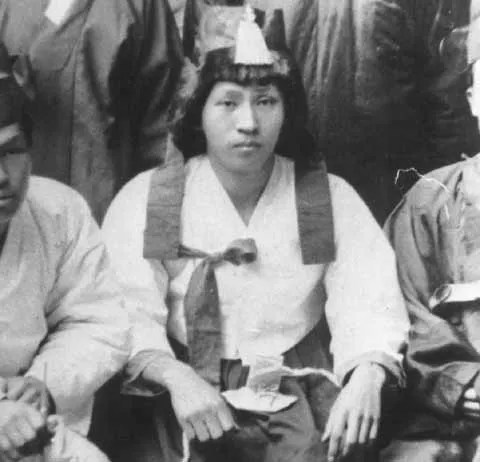
As his life story shows, Lee Sang led a truly unique existence. He was born during the Japanese colonial period, one of the most chaotic eras in Korean history. At the age of three, he was adopted by an uncle who had no sons of his own. Recognizing Lee Sang’s exceptional intelligence, the uncle supported him, not as a child but as a means to rebuild their family’s status. Consequently, Lee Sang lacked close familial relationships. Although Lee Sang aspired to be an artist, he was pressured by his uncle to become an architectural engineer. Fortunately, he was intelligent enough to succeed in this profession, working for the Japanese Government-General of Korea.

Lee Sang’ childhood
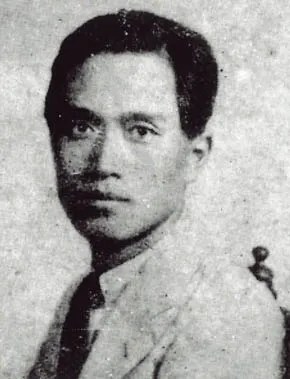
However, Lee Sang’s artistic spirit drove him to create poetry and prose. In 1930, during his first year as an engineer, he began publishing serialized novels in Joseon, a magazine issued by the Japanese Government-General. His life at this point seemed promising.
Eager to be an Artist

In 1933, however, he was forced to quit his job due to worsening symptoms of pulmonary tuberculosis, which he had been battling since 1931. Seeking treatment, he traveled to a hot spring but returned to Seoul with Geumhong, a gisaeng (geisha), and they lived together. The couple ran a tearoom called “Gebi” (Magpie) and mingled with the literary community. With the help of his literary peers, Lee Sang was able to publish his poems and join a literary club called Guinhoe (Nine People’s Club).
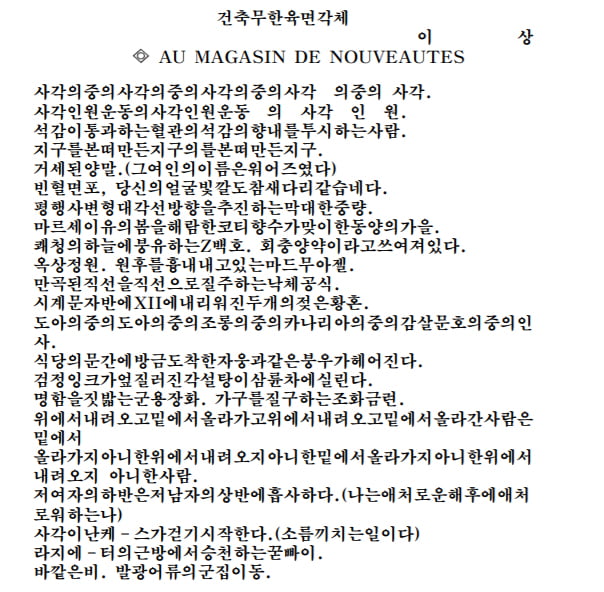
Lee Sang’s most famous work, the serial poem Ogamdo (Crow’s Eye View), was published in the Joseon Joongang Ilbo (Joseon Joongang Daily News) thanks to Yi Tae-joon, the leader of Guinhoe. However, the series was discontinued after the 15th poem due to readers’ complaints that the work was too abstract and challenging. Despite this, Ogamdo remains one of the most complex pieces in Korean poetry. For instance, two students at the Gwangju Institute of Science and Technology analyzed the fourth poem, suggesting that Lee Sang’s interest in physics influenced its structure.

Crow’s Eye View, Fourth Poem
Issues Regarding the Patient’s Condition
Diagnosis 0.1
26.10.1931
EOD Responsible Doctor: Lee Sang
(Note: “EOD” is a play on words in Korean, as it phonetically resembles “Yi Sang,” the author’s name.)
Their interpretation involved expanding the two-dimensional numbers in the poem into three dimensions. They folded the poem into a cylindrical shape, then connected the ends to form a torus (donut shape). After this transformation, they found that the numbers returned to their original positions, endlessly repeating within the torus. The analysis concluded that the central dot symbolized our world, while the numbers served as tools for diagnosing its state.
2nd Creative peak
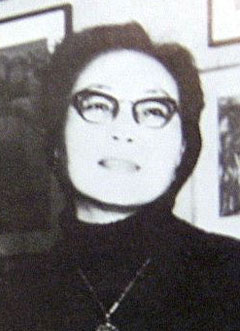
Lee Sang’s determination to live as an artist persisted despite his illness and financial difficulties. Although he managed several tearooms, he eventually had to relinquish control after parting ways with Geumhong. His free-spirited nature made it difficult for him to work in conventional jobs. His second creative peak began after marrying essayist Byeon Dong-rim, during which he published The Wings.
Died as Artiest

In 1936, Lee Sang traveled to Tokyo, his dream city, fully aware it would be his last journey. To his dismay, Tokyo was not what he had imagined. This modernist genius passed away at the age of 26, as so many gifted individuals have. While his works are studied in school textbooks today, their dense and ambiguous nature remains challenging to interpret. Yet one fact endures: as Lee Sang claimed, he was indeed a genius.
Relevant Touristic Place
Lee Sang’s House


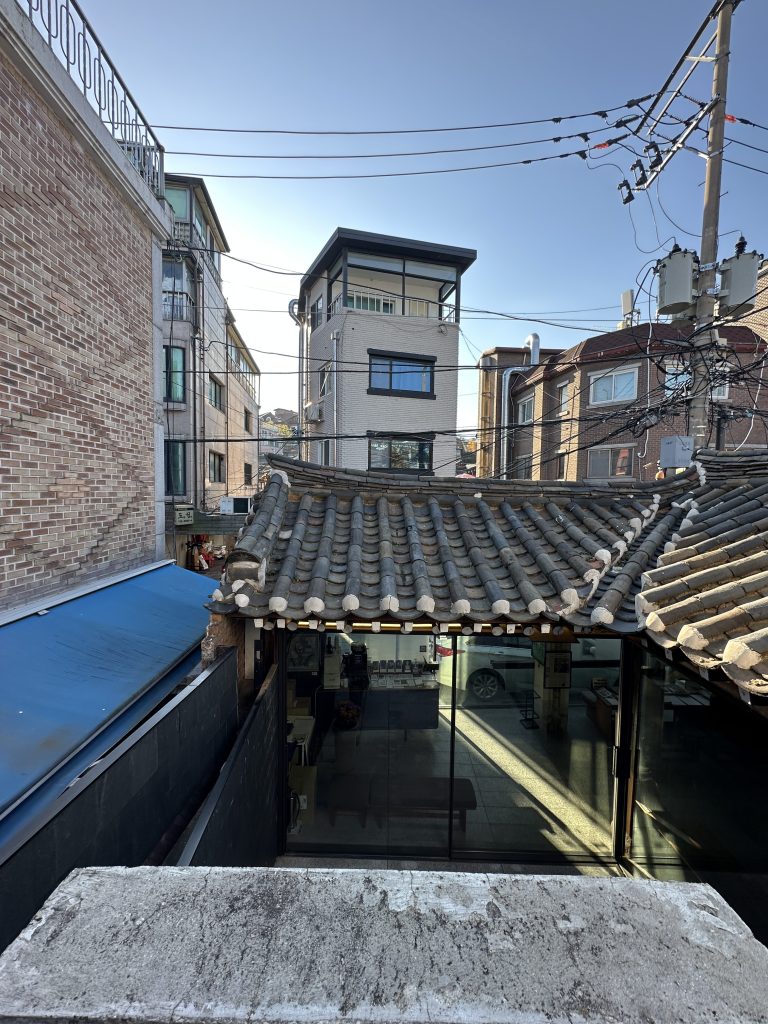
Lee Sang lived in Seochon, about a 15-minute walk from Gyeongbokgung Palace. His house was nearly demolished under a development plan, but funds were raised to save it. Although only half of the house could be preserved, it still offers a glimpse into Lee Sang’s world. The house does not resemble a conventional museum, but as you step through the gate, you’ll feel transported to his realm. If you’re lucky, you might even receive additional insights from the on-site manager.
information
Admission fee : free
Operation hours
10:00AM ~ 5:00PM (Closed on Monday)
Phone: 050-71319-8374
Address: 18 Jahamun-ro 7-gil, Jongno District, Seoul
Jebi Dabang
This live music bar is located in Sangsu, near the vibrant and creative hub of Hongdae. Inspired by the spirit of the genius Lee Sang, Jebi Dabang offers a unique space where artists and creatives can mingle.
During the day, it serves as a cozy café offering coffee and tea under the name “Jebi Dabang” (Magpie Café). By night, it transforms into “Drunk Jebi,” a lively bar serving a variety of alcoholic beverages. One of its standout features is the free live mini-concerts held almost every evening, except on Mondays, making it a must-visit spot for music lovers and creatives alike.
information
Operation hours
11:30AM ~ 2:00AM
Phone: 050-71319-8374
Address: 18 Jahamun-ro 7-gil, Jongno District, Seoul
Website : https://en.ctrplus.com/jebi
Relevant contents
The mystery of the Cube(Film, 1999)
Creative commons link
EZsPEDIA © 2024 by YUNMI LEE is licensed under CC BY-NC-ND 4.0

 EZ K-PEDIA
Leave a reply to HANGANG – EZ K-PEDIA Cancel reply