
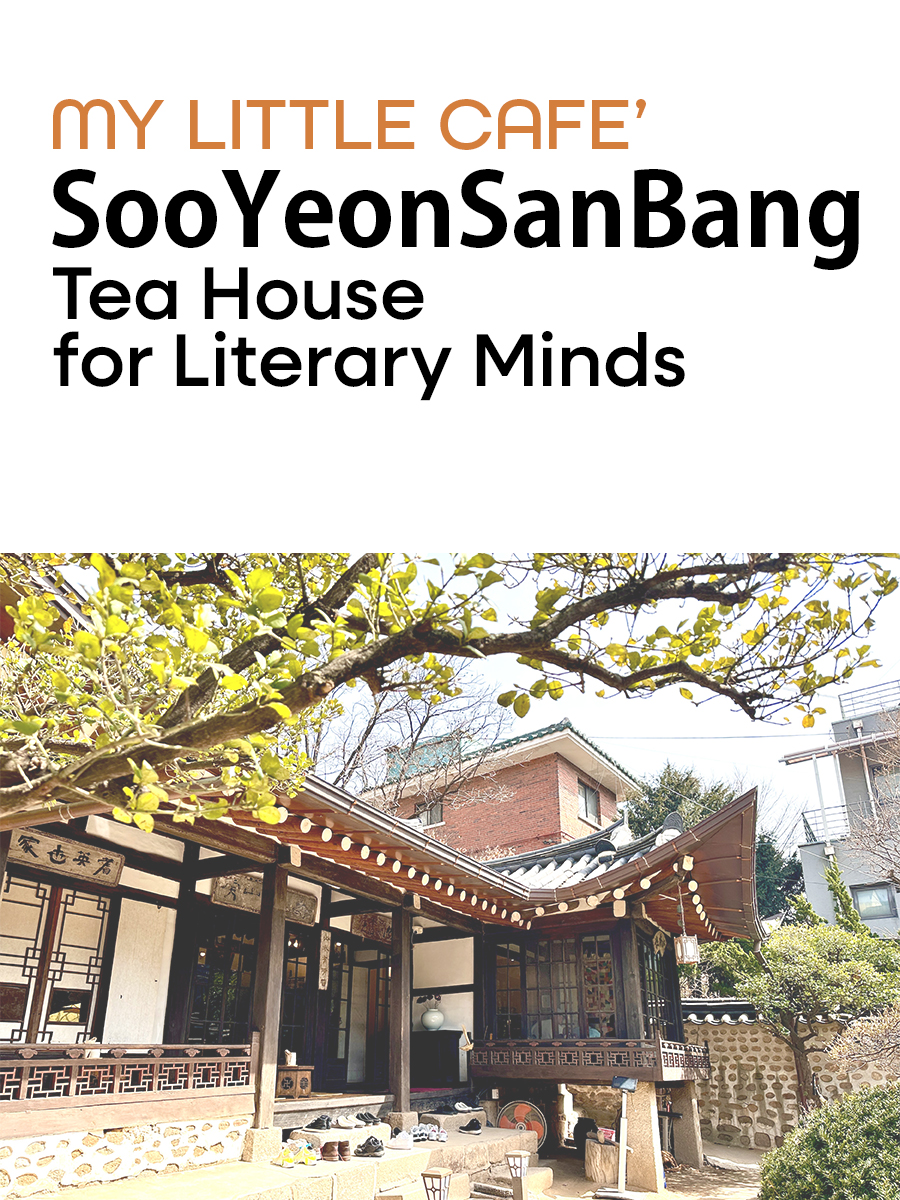
My little coffee shop-07
Korea tea house
If coffee houses serve as gathering spots for celebrities in Austria, tea houses play a similar role in Korea. There are numerous tea houses across the country, but I’ll introduce one located a bit off the beaten path from the main tourist attractions.
The famous spot for tea houses is InSaDong street. Unlike the trendy appearance of coffee shops, tea houses are adorned with traditional designs. However, at times, I sense a lack of peace, a sort of quietness or laid-back atmosphere. I prefer to take off my shoes and sit on the floor in the traditional manner. Moreover, I wish to engage in conversations under natural illumination.
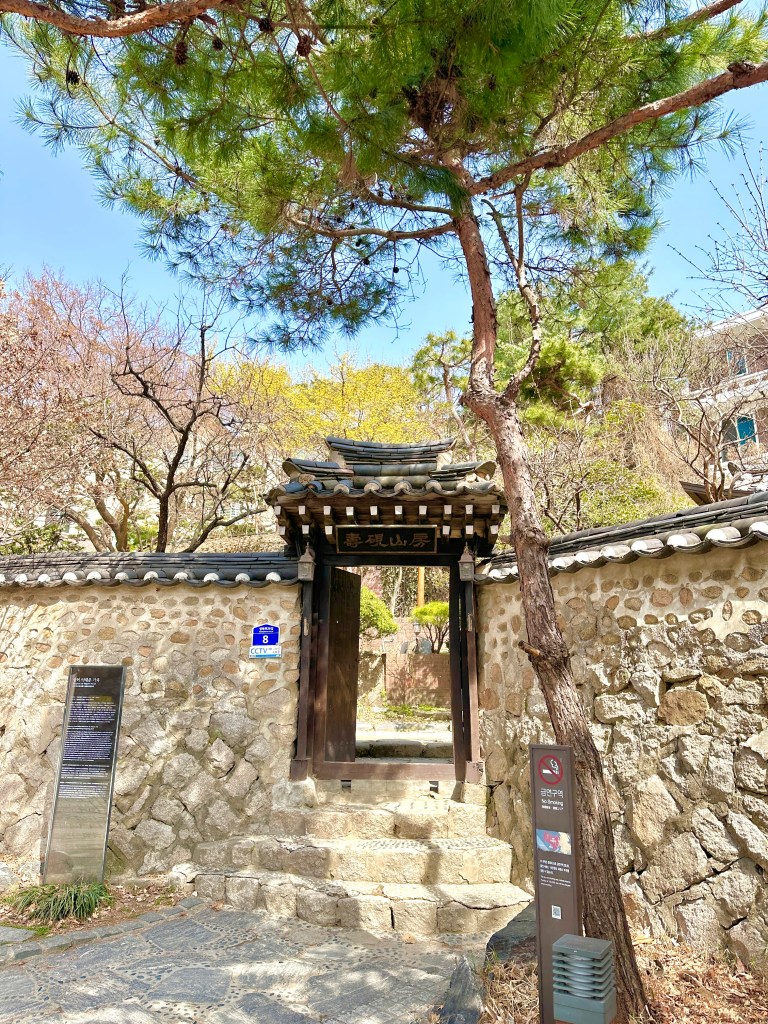
History of SooYeonSanBang
SooYeonSanBang provided the ideal conditions for such endeavors. One notable aspect was its role as a genuine community center for literary figures. TaeJoon Lee, known as the “Korean Maupassant” for his concise writing style, was not only a novelist but also a press reporter. He discovered the talent of Sang Lee, a poet, and advocated for the publication of Sang Lee’s poems in newspapers. Additionally, he organized the GuInHoi (People’s Club), a literary club with nine members, attracting many acclaimed Korean novelists. From 1933 to 1946, spanning 23 years, Lee resided in SooYeonSanBang, meaning “the house for gathering literature people in the mountain,” where he penned some of his most well-known works. It also served as the primary meeting place for the GuInHoi, envisioning an artistic realm.
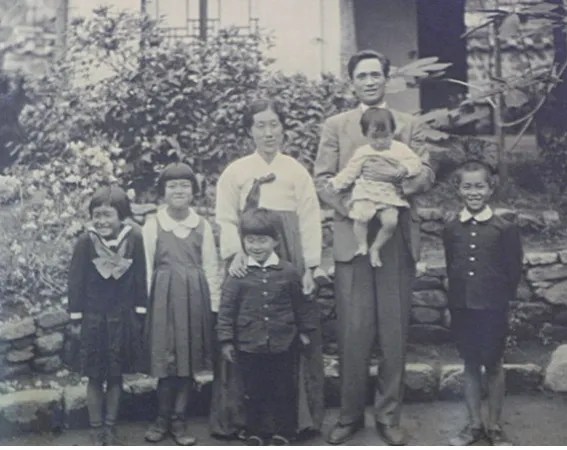
TaeJoon Lee, the taboo name
Meanwhile, TaeJoon Lee led a significant literary movement in Korea, but mentioning his name became taboo for long. Despite writing numerous articles against communism, he defected to North Korea, leaving many questions unanswered. He was later purged, He was later purged, ostensibly for his previous path to against to the North Korean communist party, and died under mysterious circumstances, and died under mysterious circumstances. Around 2009, his works began to be included in South Korean textbooks, sparking renewed interest in his controversial legacy.
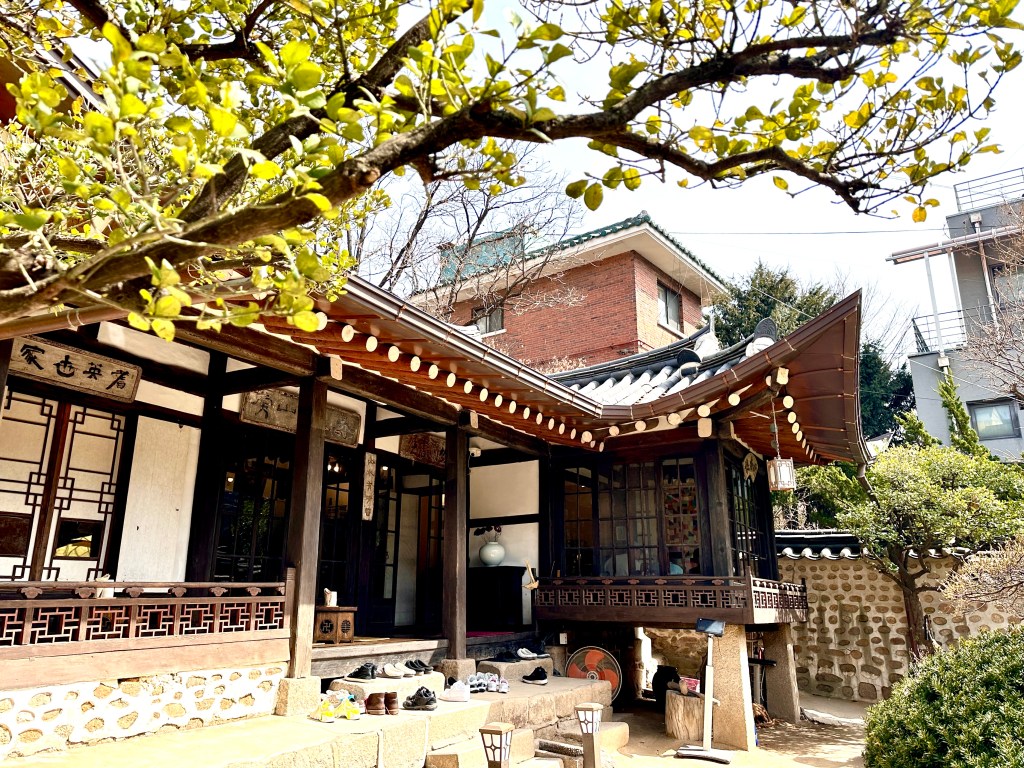
From now on
SooYeonSanBang was succeeded by her maternal granddaughter, who opened the private house as a tea house to the public in 1999. Since then, it has quietly attracted people with its unique ambiance and traditional tea and snack menu. I enjoy engaging in deep conversations while waiting for the tea to infuse in the teapot. Especially during the flower blooming and falling leaves seasons, the atmosphere adds its own flavor. While it may be a bit pricey, it’s worth the cost for the peace it brings.
Information of SooYeonSanBang
Website
https://www.instagram.com/sooyeonsanbang
Address
8, Seongbuk-ro 26-gil, Seongbuk-gu, Seoul
Opening hours (Closed on Monday, Tuesday)
Weds~Fri 11:30~17:50
Saturday 11:30~21:50(Lunch time 18:00~19:00)
Sunday 11:30~19:40
* Time table can be changed depend on national holidays
Price Range(for two hours per table)
Leave tea
12,500~13,500 won per Teapot
Herbal and Sugar soaked tea
13,500~15,000 per Cup
Autumn squash variation (Ice flake, fottage, Etc)
*main ingredient can be changed according on circumstance.
13,500~29,500
Dessert(Ddeok)
6,500~
Reservation
SooYeonSanBang Reservation
*Available on Weekdays, need to pay 10,000 won as deposit.
Tip
Recommend to visit around open time to select best table for photo.

 EZ K-PEDIA
Leave a reply to Seongbuk-dong Bidulgi(pigeon): GwangSeop Kim: Art Today – EZsPEDIA Cancel reply